See our tasting notes on some of New Zealand's finest.
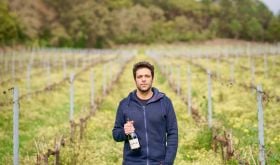
Last week I came across the finest wine I have ever tasted from Marlborough, New Zealand. It wasn't a Sauvignon Blanc, even though this region in the north of the South Island is popularly credited with being home to the modern idiom of this variety, and to fine examples of other aromatic white wines, and many a celebrated Pinot Noir. It was made by sardonic Geordie Andrew Hedley and in a blind tasting it knocked the spots off a range of equivalent wines from the grape's homeland.
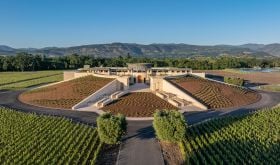
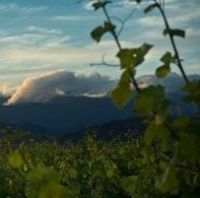
The wine in question was Framingham, F Series Riesling Auslese 2011 Marlborough, tasted blind in a collection of other Riesling Auslesen from the starry German likes of J J Prüm, Zilliken, Heymann-Löwenstein, Ansgar Clüsserath and Georg Breuer. (The picture above is from Framingham's website.)
To produce a fine Auslese (late-harvest) Riesling, you need really ripe grapes chock full of flavour and sugar, searing acidity and some of the famous botrytis mould, or noble rot, to concentrate the sugar and acidity. The purest and most compelling of the six wines shown in the Auslesen bracket of FEIRT, the two-day Riesling love-in in Sydney organised every two or three years by Western Australian Riesling specialist Frankland Estate, was this New Zealand wine.
The previous week I had been in Tasmania at another international wine get-together, the eighth Cool Climate Symposium. At one of several interesting tasting 'workshops' (boy, was it hard work), we were served a dozen Pinot Noirs blind, including burgundies from Marquis d'Angerville and Domaine Fourrier. Both my favourites in the line-up came from New Zealand: the funky but admirably complex Mount Difficulty Pinot Noir 2009 Central Otago and a Martinborough Vineyard Pinot Noir 2009 that was rich but beautifully balanced. I was convinced, incidentally, that it had been made by another star of Martinborough, Ata Rangi.
For the record, I did think the burgundies were from Pinot Noir's homeland Burgundy, but found them a bit tough. Both turned out to be premiers crus from the 2008 vintage, a year that was not prepossessing when very young and, after a brief flowering, may be retreating into its shell once more – only temporarily, I hope.
It is easy after spending a couple of weeks in Australia to come away with a somewhat jaundiced view of New Zealand wine. To the beleaguered Australian wine industry, which has recently been suffering from a terrible glut, a terrible vintage (2011) and an incoveniently strong dollar, New Zealand is the cuckoo in the nest. Sauvignon Blanc, or 'Savvie' in Strine, has become inordinately popular with Australian wine drinkers and, partly because most of Australia is too hot for this super-crisp varietal and partly because of relative currency movements, much of it is imported from New Zealand.
To a large extent Sauvignon Blanc is New Zealand wine – and irredeemably dreary much of it is too. Although there are some admirable and distinctive exceptions, far too much New Zealand Sauvignon Blanc comes from very young vineyards opportunistically planted too recently by those with little real interest in wine. Yields have been too high for the vines to show much distinction and a glut in New Zealand too has seen a tidal wave of the stuff wash over the Tasman to slake Australians' notorious thirst. In a hot climate, Sauvignon Blanc served so cold that all that is left is high acidity and a vaguely vegetal aroma is at least refreshing. And the fact that the world's wine drinkers have loved any liquid with a hint of Cloudy Bay about it has kept the bloated Marlborough wine industry afloat.
But the good news is that there is so much more to New Zealand than this – as witness the three wines above that happen to have performed so stunningly well in my recent experience against tough international competition. But so many other exceptionally fine New Zealand wines have been emerging recently – perhaps partly because in these cases vines are now old enough to yield something really interesting, and also because (as almost everywhere else on the planet) there is a groundswell of real talent and ambition in the North and South Islands.
New Zealanders are lucky. Their high latitude means that their wines are naturally endowed with pure fruit flavours and masses of the sort of acidity that winemakers in warmer climes have to add chemically. They are also substantial growers of the increasingly fashionable Pinot Noir vine – and are ideally suited to producing a wide range of white wines, including the often-overlooked Chardonnay, with a winning combination of fruit and precision. And yet, so Sauvignon-focused is the country's biggest producer, Brancott Estate owned by Pernod Ricard, that they have jettisoned contracts with many of their traditional suppliers of Chardonnay in the country's prime Chardonnay region Gisborne.
Consistently over-performing New Zealand Chardonnays have included Bell Hill's from a limestone outcrop in Canterbury, Neudorf Moutere from Nelson, Millton's biodynamically grown Clos Ste Anne from Gisborne and Kumeu River's example from Maté's Vineyard near Auckland, all of which are very far from the New Zealand super-crisp, technically perfect but ultimately rather soulless norm. But I have recently been particularly impressed by a clutch of 2009 Chardonnays from other producers. Ex Cloudy Bay winemaker Kevin Judd has just released his first Chardonnay under his own label Greywacke, which, like many of the country's best, is fermented using ambient yeasts rather than the popular cultured yeasts that can impose such uniformity. Fromm's 2009 Chardonnay from the Clayvin Vineyard, also in Marlborough, is another standout that is almost Chablis-like in its refinement. Rather fuller bodied but no less burgundian is Ata Rangi's 2009 from the Craighall Vineyard of Martinborough while Man O'War's Valhalla 2010 Chardonnay from the Auckland playground of Waiheke Island provides more evidence that New Zealand (like Ontario and cooler parts of Australia and South Africa) can make seriously fine, ageworthy answers to white burgundy – usually at much lower prices, in the £15–30 a bottle bracket.
For years, however, far more attention has been devoted to New Zealand's extensive plantings of the red burgundy grape Pinot Noir and, fortunately, the wine produced seems to be gaining complexity as the vines age and winemaking techniques are honed – partly perhaps as a result of that New Zealand phenomenon, 'O E', the overseas experience in this case taking the form of working holidays in the likes of Beaune or Gevrey-Chambertin.
But my tastings suggest that Pinot Noir is far from the end of the New Zealand red-wine story. The country is now a source of some very respectable bordeaux blends and is perhaps even more distinguished as a source of fine, savoury Syrah. See below for some of my favourites among those tasted recently.
BORDEAUX BLENDS
Cable Bay, Five Hills Merlot/Malbec 2010 Waiheke Island
Craggy Range, Sophia, Gimblett Gravels 2009 Hawke's Bay
Matariki, Quintology 2007 Hawke's Bay
Hans Herzog, Spirit of Marlborough 2002 Marlborough
Man O'War, Ironclad 2009 Waiheke Island
Mission, Jewelstone Cabernet Merlot 2009 Hawke's Bay
Trinity Hill, The Gimblett, Gimblett Gravels 2009 Hawke's Bay
SYRAH
Elephant Hill, Te Awanga 2009 Hawke's Bay
Trinity Hill, Homage Gimblett Gravels Syrah 2009 Hawke's Bay