Let’s play spot the difference! Here's an easy one to start with: what distinguishes one of these wines from the other?

Of course, it’s only an easy one if you already know that in Burgundy, the word domaine indicates that the grapes were estate-grown rather than purchased from other growers, as with the non-domaine version pictured first.
Intrigued, the enthusiastic wine novice might therefore quite reasonably assume that all four of the following bottles are different.

But in this case, the first three are (ostensibly) the exact same wine, albeit bottled by different importers, and assuming that none of them are in fact fake. But either way, the fourth is definitely an entirely different wine, from a different appellation, although with an identical name.
Undeterred, the keenest of amateurs should study the labels of the next trio very carefully to identify any discrepancies.

They would be correct to attest that these labels are absolutely identical, but wrong to deduce that the wine inside is similarly uniform. Revealing the tops of the bottles tells us that they are, from left to right, the regular bottling, the 'Goldkapsel' and the 'lange Goldkapsel'; each one sweeter and more botrytic than the last, following a cheerfully abstruse system helpfully explained here by Justerini & Brooks.

Fun, isn't it? Finally, how about the difference between these three?

Before you start scrutinising each and every pixel, I should confess that the distinguishing feature appears only on the back label, where an ID number reveals the raw materials used in that particular release of Krug’s famous multi-vintage blend. In this case, the wines are as follows:
- 111004: blend of 121 wines from 1990 to 2004, disgorged in winter 2011
- 211016: blend of 121 wines from 1990 to 2004, disgorged in spring 2011
- 213035: blend of 142 wines from 1990 to 2006, disgorged in spring 2013

So, while the uniform front appearance intimates consistency of product to the blissfully ignorant, the ID codes tell the wretchedly well-informed that not all Krug Grande Cuvée is created equal.

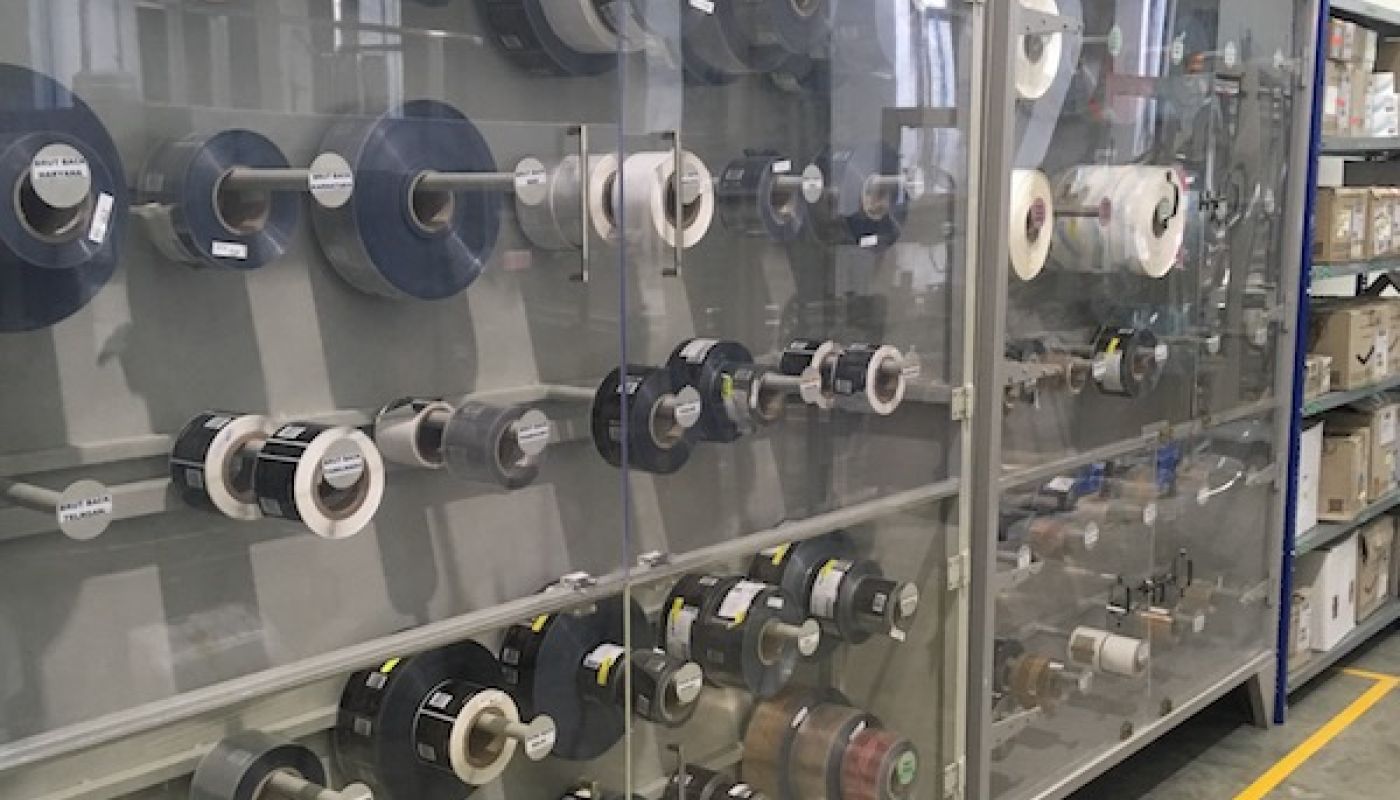
The examples I've given might be edge cases, but they show how infinitesimally differentiated wine can be. The picture above shows all the labels required for just three different wines sold in various states in India. Yet such minutiae hasn't dissuaded people from trying to exercise control over the world of wine by creating a universal database.
This concept proposes that every wine is given a unique identifier – the equivalent of ISBNs for books. For anyone who works closely with wine, or has a wine collection, or enjoys solving abstruse mathematical theorems in their spare time, the prospect of a comprehensive database for wine might seem tantalisingly feasible. Consequently, many have tried – though none have yet succeeded.
The most recent endeavour is the Global Wine Database, about which Tamlyn wrote recently. The impressive scale and structure of their enterprise seems well equipped to deliver an ultimate solution, although I can't help thinking that the fundamental nature of wine makes a truly comprehensive solution impossible – not that mere impossibility ever stopped wine obsessives.
But the past is littered with similarly ambitious schemes. The ISWN seemed one of the most successful, which I first encountered as part of a proposed MW dissertation in 2013. For over a decade it was in development, before quietly disappearing some time in 2013 (the ISWN, that is, not my MW dissertation, although the parallel isn't too dissimilar). Now, the only evidence of the ISWN exists as an archived web page, the online equivalent of the bin-end shelf in an off-licence, where it sits alongside similar initiatives such as VinoXML and AVIN.
Of course, technology improves exponentially ever year, and the internet is now awash with enough raw material to feed any wine oracle. After all, platforms such as Vivino, CellarTracker, Wine-Searcher and our own database of tasting notes already hold data on millions of wines between them, though as Tamlyn points out, 'in some respects they add to the problem – spreading the data trail ever wider, and with ever more inaccuracies and holes'. Which is hardly surprising considering the examples pictured above.
The infinite variation of wine is intrinsic to its appeal, despite (or perhaps, for masochists, because of) such infuriatingly arcane differences. Marshalling all that information into a coherent and efficient system may not be beyond technological capability in theory but, in practice, wine's intractable diversity makes all the difference.