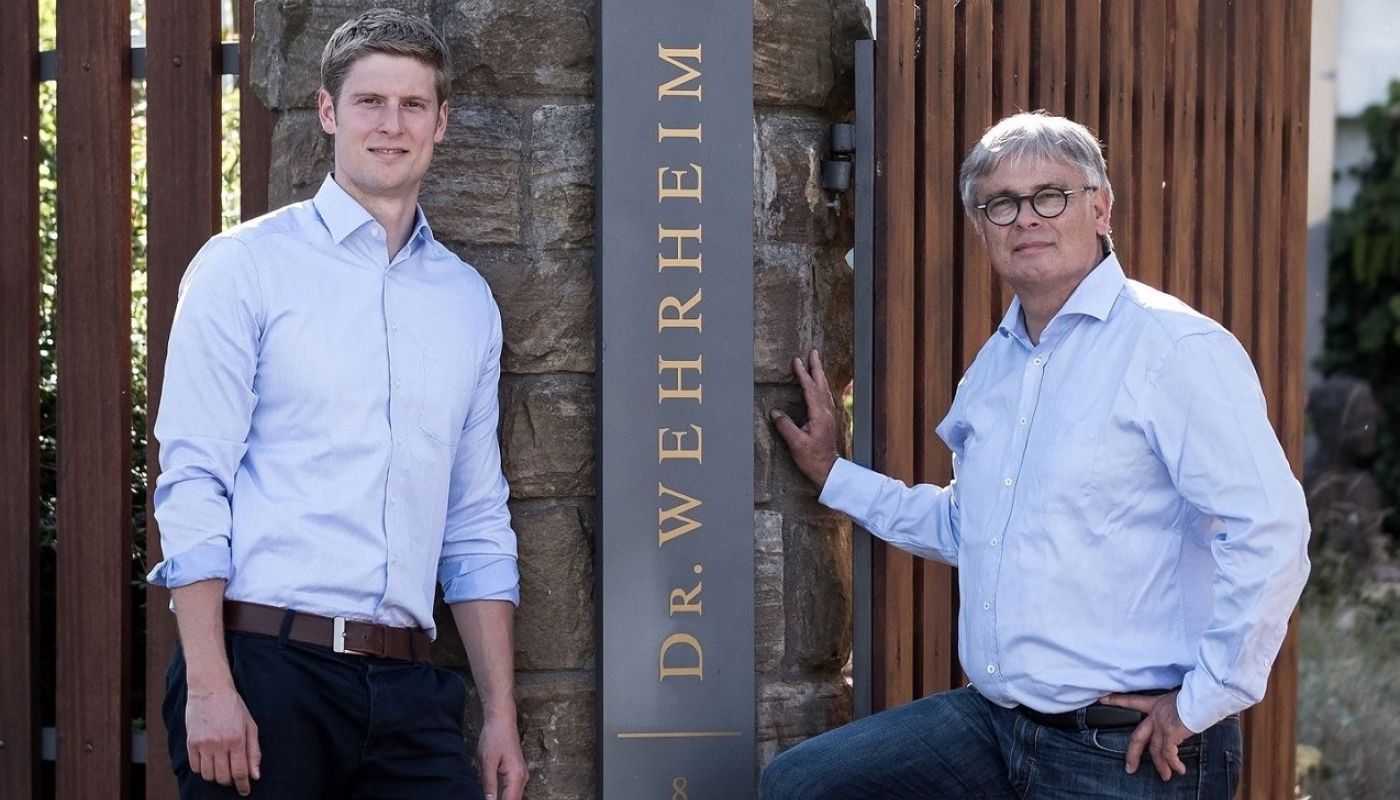
Weingut Dr. Wehrheim is a fourth generation winery, in the old-world region of Pfalz. Great-grandfather, grandfather, father and son. For those of us on the fringes of such legacies, this intro may sound a bit formulaic and, if you’ve read about wine a bit, potentially rather predictable. What can an old ship teach us about the waves and tsunamis of today? With preconceptions of privilege shelved – after all, sustainability is about inclusion – we discover a story of generations past which guide a young winemaker into the mission of today.
‘I grew up in a small village.’ Franz Wehrheim says with a slightly Americanised, Germanic twang. We just sat down to talk on a Sunday morning, after he took his newly betrothed (a fellow winemaker from the area) to breakfast with friends. Franz is immaculately polite, with steady eyes and the kind of overall look which confirms that living in nature and working outdoors must be as good for the health as they say. 'There was never an expectation that I would take over the winery. We were always told to go after what we believe in.’ he continues, 'I am more outgoing and exploratory, like my father, which made me wonder if staying in the same village for the rest of my life would be for me.’
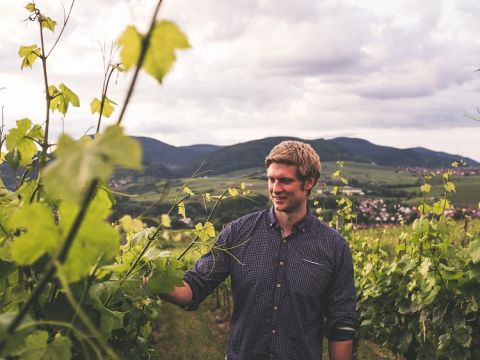
Franz was that modern, Western kid who studied abroad (in Oregon) and seemingly breezed through life, landing at a place at Mannheim, top university in Germany, for a degree in Economics. Until the first semester came with a rude awakening. ‘Almost immediately, I saw that everyone was more motivated than me and by the first term had made huge strides, while I was just … living.’ Franz responded with competitiveness and hard work and started eyeing consulting as a career ‘because by that time banking was not seen in a positive light anymore’. The university campus was awash with consultancy companies attempting to capture the minds of the future. Although appealing, due to their generalist approach, Franz quickly realised that all the TED talks they organised could not detract from one major flaw. After years of working in the field alongside the winery’s workers and his father, he could not see himself stuck behind a desk for the rest of his life. ‘I went to see my father and I said, "Just to make sure I don’t make a mistake, I would like to do an internship at the winery".’ From there, he worked at several other wineries in Germany and abroad, ‘I figured out that you can learn a lot but, in the end, winemaking is a craft. It is something you learn by doing it.’
While completing his fourth harvest, as part of a degree in wine and oenology at Neustadt, his old Economics professor, Dr. Marc Dressler contacted him with a proposition. Dr. Dressler had applied for and had been granted funds by the government to research the sustainability and economic profiles of wineries in the country. As an economist, he immediately saw that something needed to change. ‘We all know that profitability is a big problem, especially in the mid-tier, which is extremely crowded and competitive.’ He developed a theory that sustainability could help with differentiation in the market, while supporting environmental and social needs. Dr. Wehrheim winery had already achieved organic certification 6 years prior and was working towards its biodynamic accreditation. This and the long-termism culture of the winery ‘because we want to pass it on from generation to generation’ made it a good case study for the project. ‘Dr. Dressler wanted to understand how different wineries embed sustainability into their operations in such a way as to make it economically viable. We developed a fast self assessment tool for sustainability and attempted to answer the question of profitable sustainability’, Franz explains.
The Old Chestnut
Franz worked part time in the winery and ran the project with his professor for 2 years. The research focused on a range of wineries and, because of the unique vantage point of looking at the operations from the inside out, developed an understanding of the concerns central to sustainable wine businesses. Following on from an MBA, with a focus on Sustainability and Sales, ‘which allowed me to see many case studies of wineries and what other people go through’, Franz started running the newly formed Sustainability Working Group of the VDP* with Johannes Hasselbach. The Group benefits wineries by using economies of scale for sourcing, though its key goal is to help sustain the region into the future, by identifying and supporting mutual needs of the regional wine community. They have only been around for just over a year, and in that time, secured a contract which saved producers 20% in recycling costs and ensured universal adoption of higher recycling standards. According to Franz, the majority of producers will only back sustainability initiatives if there is a strong financial incentive. ‘If we can save 10– 20% in costs and save the planet then they do it "because it is more sustainable", if we see an ecological advantage but lower returns then we hear all sorts of reasons for why it can’t work’. Sustainable solutions are numerous and rely on the good will of the producer but, ultimately, to go beyond organic/biodynamic certification and include broader concerns such as circularity, carbon exposure and society, wineries have to work together. But how can a small Working Group of volunteers convince a whole winemaking region?
‘Our industry is clustered in very small enterprises yet we exist in an increasingly commoditised environment’, explains Franz. ‘Some of our competitors benefit from advantages relating to climate, costs of production and local market dynamics. In addition to working together for the common purpose of sustainability, collaboration really helps to be more competitive and to have a bigger voice when it comes to promoting the region.’ To what extent do neighbours work together to protect biodiversity, local water sources and resource efficiency? ‘We share bottling machines and agricultural equipment’, explains Franz, ‘we can afford the best quality and the most up to date equipment just by working together.’ New technology often means resource efficiency, and this, of course, plays a big part in sustainable production. ‘Unfortunately, the numbers don’t lie. There are only 9% of organically certified wineries in the Pfalz today*. If we look at the development of wineries in our region and notice that the number becomes smaller every year, this paints a certain picture. Usually wineries are just trying to make wine and to survive. For many, once they get past that point of profitability, they often don’t have the urge for change. This resulting reluctance to change is a particular problem for sustainability, especially because it is not perfectly defined. It is more like an annually adjusted system.’
What is the Value of Sustainability?
With a long-lived perennial, such as the vine, which forces the business model into a 20–100 year projection, long-termism is inevitable. In a family business, such as this, building up a healthy environment and community is non-negotiable. ‘Generationally, our purpose has always been the same: to take care of our vineyard so that it can sustain and benefit the next generation. Each generation in my family faced a different challenge. My great-grandfather founded the winery – that was challenging enough. My grandfather came from a World War to a wreckage – he had to make sure that he could at least get the basics in place to support his family. My father was born into a situation where the qualitative image of the Southern part of Germany was very questionable. His mission was to change this by focusing on noble varieties: Riesling, Weißburgunder and Pinot Noir. Today, for me, quality is a big competitive advantage because sustainability, without higher quality, just doesn’t pay. Many wineries don’t work sustainably because they simply can’t afford it.’ Higher quality drives margins and gives room for manoeuvre to invest in sustainable practices. ‘So, quality is still the number 1 goal in our winery but we need to take this to the next level and ensure that the legacy of progress continues. We are the first generation who can actually afford to take bigger steps than those before us. Without sustainability, we cannot offer the next generation the basic tools for producing quality wine.’
To some extent, the question of sustainable wine production has been around for a long time. We just had different words for it. Nowadays, we have sustainable certification standards in most winemaking jurisdictions. The terminology is complicated, to say the least. More or less traditionally; organic, biodynamic, reasoned agriculture and natural wine are all options for producers with varying levels of commitment to the environment and its living beings. To simplify, sustainability can be described as a measure of the health of the organisation, representing the well being of it, in a similar way it does for people. An organisation/business relies on good relationships, neighbours, management of resources and time, fresh air, clean water, the right balance of nutrients and strength of character and resolve to thrive. This is particularly true for agriculture, which is intrinsically linked with the earth’s resources. As Franz says, ‘Sustainability is not a practice of doing this or that. It is instead like a lens through which you see everything’. None wants to participate in practices which endanger the wellbeing of themselves and the organisation so sustainability is a no brainer, right?
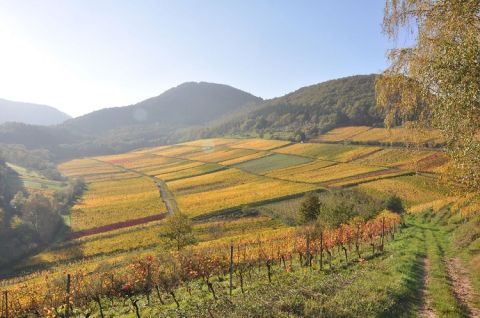
This leads us onto a key topic for sustainability today: if we take a bird’s eye view of the value-chain and assess responsibility for sustainably in the wine industry, the majority of the pressure is funnelled on to the producer. The rest of the value-chain enjoys the stories and the results from sustainable action but the biggest chunk of responsibility, both from a production and brand perspective, is shouldered by the winery. There is a reason why most wineries focus on profits, it was picked up by Dr. Dressler and we know anecdotally that ‘if you want to make a small fortune in the wine industry you start with a large one’. In order to support producers and thus the sustainability of the wine industry, we will need to distribute some of the initiative to suppliers, vendors and customers. At the moment, there is little incentive to do so, in part, because of a general confusion in the market about what sustainable wine actually means. Though we are seeing more willingness to pay for sustainable practices, the boundaries between organic, biodynamic and sustainable are too vague to offer industry-wide consensus on how these deliver true value.
Beyond the Label
Sustainability certification has brought to light many questions about how wine is made. As we look beyond the practices in the vineyard and begin to assess broader issues, such as community, ecosystems and product safety, we start to see the cracks in the label. One of the reasons for the diversity in sustainability certification in the wine industry is that the context greatly affects what can be achieved in that area. For instance, in Germany, local legislation on human rights, such as the Modern Slavery Act and child labour, are embedded in the culture to the extent that they are considered the bare minimum. In other regions, these policies may not be as deeply entrenched and the context provides less support in achieving them. Equally, rules for organic certification reflect local policies. Activity in the winery is less regulated in organic certification than in biodynamic. Very few wine buyers understand these complexities, let alone the end consumer. As sustainability reporting matures, we will begin to see shifts in the way wineries are certified. For now, we rely heavily on the good will of the buyer to research the meaning behind the label.
It was interesting to learn from Franz that Dr Werheim view accreditation as a communication tool, both internally and externally, ‘Certification sends a clear message to everyone who works at the winery, it also voices our commitment to protect the environment to our neighbours. Additionally, it has become a way for us to connect with a broader community of similarly minded producers.’ Franz is represents German growers and is a Board member at respekt-BIODYN, a leading biodynamic organisation which supports growers through a range of activities, including events with leading experts on topics such as carbon footprinting. ‘We are considering assessing our carbon exposure but to get reliable numbers you need an expert to conduct a survey at winery-level. It is an expensive and time consuming exercise and the main reason for why many wineries are reluctant to do it. We have both onsite energy generation and solar at the winery and I would be keen to assess our CO2 impact, and to invest in becoming fully energy independent. Our main priority has been to focus on aspects which we can influence and those which have the biggest direct impact.’
With such a complex mix of concerns and contexts, how do we incentivise a move in the right direction for the wine industry? Franz believes in leading by example. ‘Future generations care about this topic even more than my generation. What changed for us is the attitude. We might be very successful but chose not to drive the latest Mercedes. The power to say no and stand by your principles is the new luxury.’ The future in this context is to produce higher quality and more sustainably. In agriculture, this means adjusting objectives. For instance, subsidies could be allocated beyond the size of a field. We could benefit from incentives to plant trees and cover crops for carbon sequestration and biodiversity and for promoting soil health. 'Perhaps we need to admit that capitalism is not working here. The consumer is always going to go for the cheapest product, so policies need to be adjusted to support sustainable goals.' Pressure from the local municipality will need to come with support if it is to have considerable uptake, the same is true for governments and clients. It generally follows that a better understanding leads to better choices and, in marketing terms, to differentiation and higher margins. Luckily, the trend of sustainability seems to have an infinite momentum and gaining increasing interest across continents, demographics and industries. ‘With social media, the news is not a one way street any more. A recent scandal was the purchase of Glyphosate by Bayer from Monsanto. This was all over the German media. Some workers would see the chemicals in the vineyard and post images of containers online. Agricultural practices which are bad for the environment are exposed on social media and people respond en-masse.’
A Bit of Balance
The move to biodynamics is always a serious consideration for producers. It is a commitment to a whole system of working, from farm to cellar and beyond the four walls of the operation. Zero tolerance to agro-chemicals and additional measures are used, which require time, resources and often resulting in much lower yields. In this case, Franz explained that an average fall of 20% in yield is expected. Rudolf Steiner, an Austrian philosopher, founded the key principles of biodynamic agriculture towards the late 19th century. The methods saw wider adoption around the world at a time when the use of agro-chemicals started to backfire. Farmers noticed that the overuse of fertilisers actually had the opposite effect to what was expected. Weakened resistance and growth and imbalances in the ecosystem from over reliance on agro-chemicals. Issues with effluent rich with chemical applications from farms is widely known, some of the impacts include blocked water sources from widespread vegetation, caused by fertilisers and a breakdown in biodiversity (to name a few). Biodynamic farming is similar to Eastern medicine and homeopathy, in that it focuses on prevention rather than cure. The use of naturally derived applications such as plant tinctures and soil fortifiers are used in line with other natural indicators (seasonality and planetary cycles), which aim to strengthen the natural resistance of plants. Biodynamic certification is generally considered as the highest standard within the organic spectrum of practices.
The benefits of biodynamic farming are numerous, including better soil health, water retention, reduced erosion and balanced nutrient uptake by the plant. Natural applications promote biodiversity including insects and bees for pollination. Dr. Wehrheim support a local beekeeper who sets up bee hives of over 40,000 bees in the vineyard, at certain times in the year. ‘This is Germany, so we had to seek permission from the local Mayor to have the bees there, as we are next to the local hiking path’, smiles Franz. The benefit to the winery? ‘We receive 6 small pots of honey each year and it’s great for social media! We shared our findings about bee-friendly cover-crops through the Sustainability Working Group, and recently helped secure a more cost effective contract for cover-crops on behalf of the producers.’
One of the biggest growing concerns of climate change for wine producers is water. In the Pfalz region, annual water fall is abundant but rainfall and underground water tables are beginning to dwindle during the warmer seasons. In 2018, water resources were shut down locally. ‘Though we only irrigate on a small parcel of the vineyard on naturally dry red slate soil, I believe in the relatively near future we will have major challenges receiving enough water when we really need it.’ Biodynamic applications enhance the organic components in the soil. Microbes and insects, cover-crops and naturally seeded vegetation help hold water in top layers. ‘We have been working for 12 years to build up the humus (top-soil with high density of biological components) and we can clearly see the difference between these parcels of land and others.’
Inside Looking Out
‘I know every person in the winery’, says Franz, ‘we eat and cook together every day. Sometimes my father cooks. Our team sees that we are certified and there is a general awareness that we all need to "look beyond the plate", as we say in Germany. When things go wrong, we talk about the cause and never about the person. People learn from each other. This is how we communicate sustainable thinking. Once a year, we take the whole team on a trip to see wineries from which we can learn. We go on hikes (last year we went to the Black Forest) and evaluate if the things we saw are valid for our winery and if we can learn from them. In the wine industry you need a lot of hands and working power. Sometimes, the person who owns the winery comes from a very different background and vantage point to the person working in the field. This can be a challenge. If the person working the land is not respected and taken seriously, of course, his approach to work will be affected.’
‘With sustainability you can always do more. I never feel like we have arrived. Now we are sustainable. That would be the wrong approach. Perhaps, in 30 years we will not have water issues at all because we will have access to technology which provides sustainable, cyclical access to water. Right now, ecological challenges are our biggest driver for change, perhaps in 50 years the social aspect will become our biggest issue. There is an increasing gap between groups of people in our society and it could become our main priority to address this in the future.’
As well as managing the vineyard, Franz represents German producers for the Porto Protocol, an industry-wide sustainability initiative. He acts as a spokesperson for the region and the producers, helping to share ideas through the Porto Protocol portal. As we finish our conversation, I am left wondering how inspiration for change and evolution blossom in an operation, and in the mind of a person. What if the picture looked very different, for instance, if this was a start-up trying to make ends meet, pressured by water-rights, in a country with social unrest, questionable infrastructure and relaxed social policies? Finding solutions can be a daunting and lonely task. Broader adoption of sustainability will inspire dialogue, innovation and action. The drive at the heart of every link in the wine industry is what makes a difference and inspires our future.
*The Verband Deutscher Prädikatsweingüter (VDP) is a German organisation which promotes the country's top wines and estates. It unites 197 of Germany's finest wineries under one banner; offering customers guarantees on quality and yield.
*Source: Statistica https://de.statista.com/statistik/daten/studie/378222/umfrage/rebflaeche-im-oekologischen-landbau-in-deutschland