Italy's great challenge for a sustainable wine: the case of Venica & Venica
In 1986, a tragic event marked the Italy of wine, the methanol scandal. From that moment on, Italian wine was no longer the same: a slow and profound rebirth took place, it is began to bet on the quality and territoriality of its products, which allowed over time to achieve an excellent results that are now clearly visible internationally.
The new challenge that the world of viticulture must facing in recent years is that of climate change. In the future, this topic will not only change the geography of wine, but also the markets and the opinions of consumers, who will be increasingly attentive and oriented towards corporate philosophies and ideals in which they can be recognized, such as the sustainability. Today it is no longer enough for a wine producer to be organic or biodynamic in the vineyard to be considered eco-sustainable but he must also operate in other areas such as packaging, the transport of the finished product, the recycling and the use of renewable energy with the goal of a more sustainable viticulture.
Venica & Venica
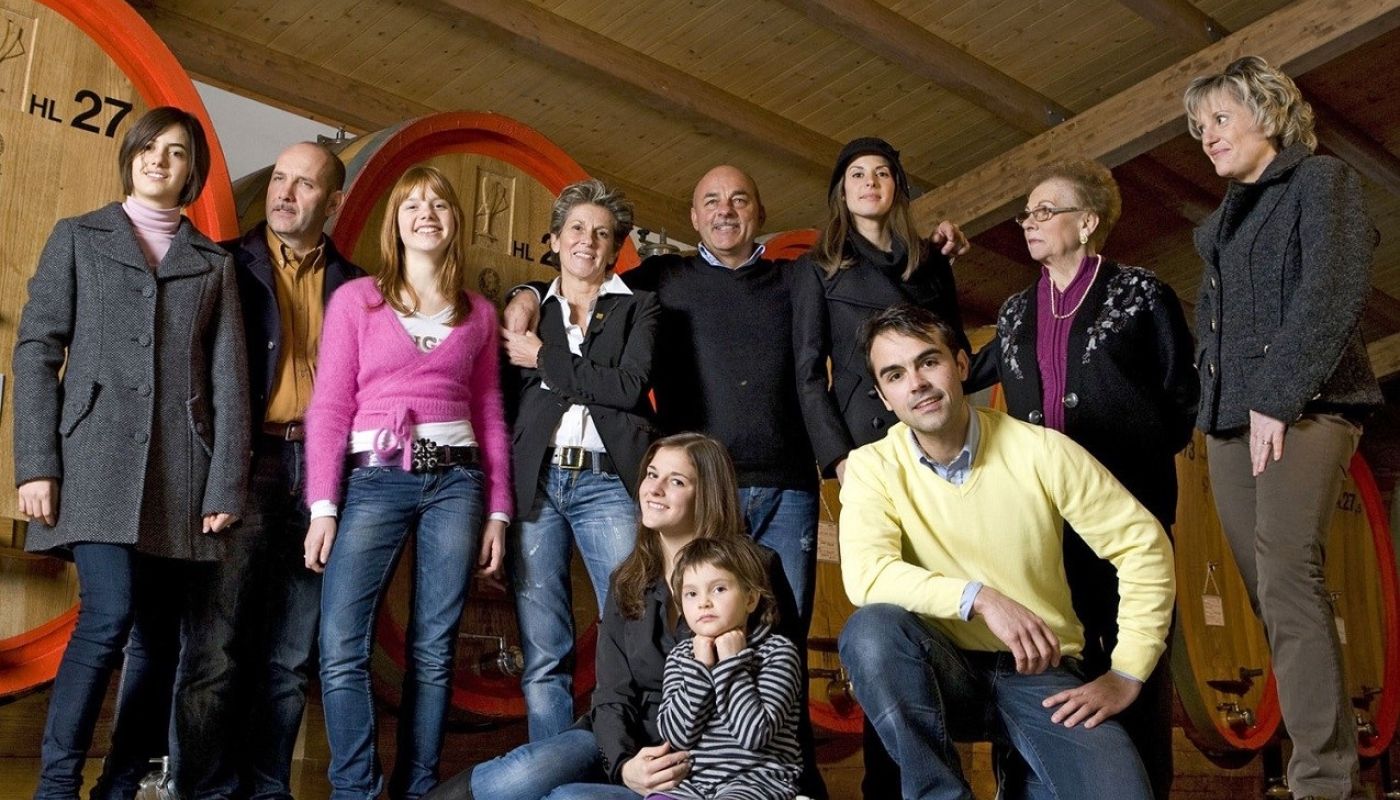
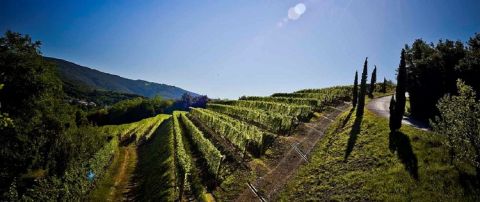
In Dolegna del Collio, in Friuli, the Venica family has been involved in the production of wine since 1930, defining itself as a sentinel of the territory; biodynamic estate, it has 40 hectares of vineyards all located in the production area of the Collio DOC denomination. In 2011 the winery joined to the V.I.V.A. SUSTAINABLE WINE – Assessment of the impact of Viticulture on the Environment – a national pilot project launched by the Ministry of the Environment in collaboration with nine companies and three research centers for sustainable wine made in Italy. Since 2013, Venica & Venica's commitment to maintaining the integrity of the soil and safeguarding biodiversity have become topics of primary importance, allowing the company to achieve, over the years, countless goals with a view for a sustainable viticulture.
The first Venica & Venica sustainability report, published on February 17, 2019, highlights several interesting points:
Involvement of the local community
The commitment and strong bond of Venica & Venica to the territory is evidenced by the preference for local staff, 83% from Friuli-Venezia-Giulia and 17% from neighboring territories within a maximum radius of 20 km away from the estate. Since the latter is located between the borders of Friuli-Venezia-Giulia and Slovenia, the local community includes both territories.
A special attention to guarantee equal opportunities
There is a special attention also for ensuring equal opportunities within the company. Out of 29 employees, 13 are women, representing 45% of the working staff.
Important investments in the staff training
In 2017 Venica & Venica involved 21 people in training for a total of 445 hours distributed to each employee according to their duties within the company. The compulsory training concerned: occupational safety, first aid and food safety (HACCP). The optional training instead concerned the management of treatments in the vineyards. A managerial training course on commercial organization and management control was also organized.
The Wine Resort, green areas and biodiversity
Visitors have the opportunity to stay inside the Wine Resort of Venica & Venica, a historic family settlement with 6 rooms and 2 apartments. The rooms are located on the upper floors of a late 1800 country house located at the beginning of a natural forest where you can walk and experience nature during the season changings. In 2007, the 60 kW wood-fired boiler was put into operation and is fed through the wood collected in the woods used for heating the estate and the rooms.

The defense of the landscape and biodiversity are among the fundamental values of Venica & Venica. The company owns and manages over 40 hectares of forest and actively commits to its maintenance and the safeguarding of biodiversity by preserving the wooded areas. The conservation project of forests and vegetated areas with different essences than vineyards, aims to create habitats for the survival of numerous species of mammals and birds. It is interesting to note that 18% of the working hours are destined for the maintenance of different green areas than vineyards.
The soil and the vine
To walk the land means taking the necessary time to observe it, evaluate and perceive its needs, analyze the critical issues and develop solutions. It means living the vineyard: the goal must be to guide every single plant and the vineyard in its entirety, letting it express its potential.
In this vision, Venica & Venica, adopts the role of custodian of the place and the vineyard by applying management practices that not only improve the quality of the soil and the vine but protect the place itself and the quality of the grapes.
Some practices applied on the soil include:
- The use of multifunctional sowing to avoid soil erosion, in order to safeguard the vineyards and generate biodiversity.
- The use of manure that has a guarantee of biological origin.
- The presence of a local honey producer inside the hives to encourage animal and plant biodiversity.
Some practices applied in the vineyard include:
- A particular leaf wall management technique that compacts less the soil producing less greenhouse gases.
- Specific vineyard defense plans that provide for the exclusive use of natural products and, alternatively, products provided for in the integrated pest management.
- The use of a rotary atomizer to avoid dispersing pesticides in the environment.
- The respect of the moon phases for the agronomic practices.
- The maintenance of the oldest vineyards in order to protect the estate's historical memory.
Carbon footprint data
The total of greenhouse gas emissions (expressed in tons of CO2 equivalent) generated by the corporate activities of Venica & Venica are for the 22% generated directly from sources owned or controlled by the company, for the 13.6% due to indirect company energy consumption and for the 63.7% due to indirect emissions generated by external sources outside of corporate control.
The total greenhouse gas emissions (expressed in kg of CO2 equivalent) associated with the life cycle of a 0.75 L bottle of wine are for the 48.6% generated in the vineyard and in the cellar. The bottling and packaging represent the 38.2%, the wine distribution generates 12.5% and at last the use and disposal phase represent 0.7%.
(VIVA data reference year 2015. Issuing certification year 2018.)
The water footprint data
The volume of water (expressed in m³) that Venica & Venica uses during a solar year, for the field activities and for the cellar activities is for the 95.8% composed of rainwater, (normally not accounted for in water consumption), for the 0.4% made up of surface or groundwater (intended for agricultural, domestic and industrial use) and for the 3.8% made up of polluted water.
The volume of water (expressed in liters) consumed for the production of a 0.75 bottle of wine is for the 98.3% made up of rainwater, (normally not accounted for in water consumption), for the 1.5% compost from surface or groundwater (intended for agricultural, domestic and industrial use) and for the 0.5% composed of polluted water.
(VIVA data reference year 2015. Issuing certification year 2018.)
Use of renewable energy sources
Venica & Venica covers all the company energy consumption with energy from renewable plants. The rooftop photovoltaic system installed in 2006 has a nominal power of 19.95 kWp. From 2017, charging stations for electric vehicles and spaces dedicated to Tesla vehicles have also been installed, as well as the possibility of charging electric bicycles in the Wine Resort. Energy production in the same year was 22,736 kWh and was all exchanged on the spot.
Waste management
Venica & Venica has total control over the management of its waste: the differentiated ones (paper, plastic and glass) are collected by the municipality of Dolegna del Collio while the more bulky ones are deposited in an authorized collection center.
As for recycling, tartrate from wine stabilization is recovered and sold to the industries that produce cremor tartrate, produced for various culinary and domestic purposes.
Economic sustainability
The amount of added value generated by the estate was defined by the classification of the financial statement data, that is the wealth produced in the year by Venica & Venica. In 2017, the winery have generated revenues of approximately 3.7 million euros and a gross global added value of 1.6 million euros.
The sustainable future of Venica & Venica
It is essential to consider sustainable viticulture as a path and not a point of arrival. Based on this assumption, the winery will make a number of improvements over the next few years, including:
- An extension of the existing photovoltaic system.
- Adherence to an innovative recycling project for waste material of self-adhesive labels.
- The construction of a new water treatment plant for the washing stand for agricultural vehicles.
- The improvement of the communication of the naturalistic riches and biodiversity linked to the place, with the creation of naturalistic paths on foot and by bike.
Conclusions
If the methanol scandal represented the lowest step from which to start again for quality viticulture, today the response of Italian wine on the theme of sustainability takes place with a highly positive development trend, through a path started since 2012 and carried forward by many estates in all the Italian territory, among which stands out Venica & Venica. In addition, the 2019 editions of Vinitaly and Wine2Wine had the theme of sustainability as their main focus, aiming for the recognition of a unique certification of sustainable viticulture. The common goal of Italy of wine must be able to guarantee a higher quality of its products and communicate to the consumer the strength and the importance of sustainable wine made in Italy.
















