
The last vine standing
Not so long ago, there weren’t enough vines growing anywhere in the world to produce a bottle of wine from the Manseng Noir grape variety. A single vine was all that remained, and the variety might have been lost forever. Thankfully, there are now 40 hectares planted in Viella in the south-west of France, and 30 of these will be in production in 2021. I had the privilege of tasting the eponymous wine on a sunny day in June, while I was visiting a remote site in Sarragachies, where another special vineyard, a ‘monument historique’, is located.
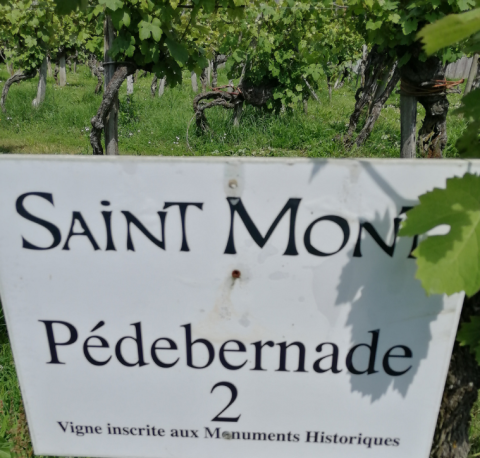
In 2012, the vineyard at Sarragachies in the Gers was designated a historical monument by the French government, the only vineyard in France to be given this status. It might have been lost had André Dubosc not begun to pay particular interest to the unique grape varieties here. He took steps to protect this plot, which sat next to the Pedebernade family home. Because, if Manseng Noir felt lonely in Dubosc’s parcel down the road in Viella, the Tardif variety was hardly in a more comfortable position here. Two Tardif vines stood alone in the world in this small plot where 21 different grape varieties grew, including seven that remain unknown to this day.
In 1810, or thereabouts, during the Napoleonic era, this plot was planted in the traditional method and comprised numerous grape varieties and other crops, as polyculture was the common practice at the time. It was laid out in squares rather than rows, so that the oxen could work the land in both directions. Because of this layout, two vines were generally planted together and grown on high trellises next to one stake. Two hundred years later, I visited the site, availing of the tour offered by Plaimont who now manage the vineyard, and took the time to appreciate those gnarled trunks that show their age. These are truly ‘veilles vignes’ or old vines.
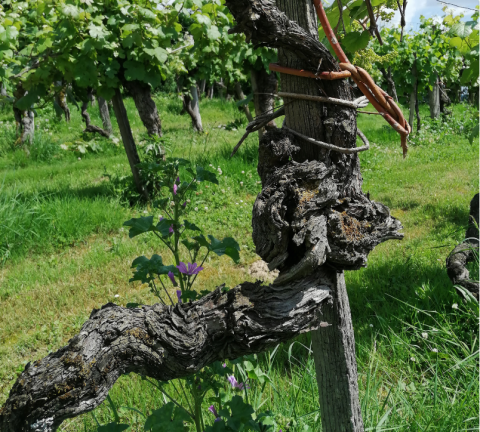
Back in the 1970s and 1980s, the vignerons, or winegrowers, could have been tempted to pull these out because the tendency – the recommendation, even – was to replace old vines with high-yielding varieties. There were premiums available for ‘arrachage’ – uprooting the vines or, literally, ripping them out of the ground – but for many reasons, possibly because this plot is practically a part of the family’s garden, the vines remained. Historically, it was common for families to have a ‘vine garden’ and produce their own homemade wine for their personal use. This was made using different grapes, including a mix of red and white varieties. Standing on the hillside, as our guide explained the history of these vines, I admired the Gers countryside and the impressive panorama that took in the wide sweep of the Pyrenees. This is where the legendary d’Artagnan hailed from – the swashbuckling hero of The Three Musketeers – with his Gascon attitude and adventurous spirit. In summer, tourists cycle through sunflower fields on their way to the jazz festival in Marciac, or dawdle over a long lunch of foie gras, duck confit and croustade à l’Armagnac.
I moved here in 2004. I had a view of the vineyards from my house, so visiting the annual wine festival was a must. The Fête de Saint Mont offered wine tasting, but also a chance to chat with the vignerons, who showed real passion for their wines. And so my interest in wine began. I didn’t grow up around vines. Ireland is hardly known for its wine, after all! My father was a farmer and, while the wheat and barley and sugar beet went straight to the factories, leaving us with no connection really to the finished product, the potatoes were another story. He would take the time to lean back in his chair at the dinner table and admire them. Look at those spuds, kids! A sight to behold! An Instagram moment, before such a thing existed. Look at those balls of flour, fresh from the ground an hour ago – you can’t beat that! Although he never got to visit the Gers, I imagine him at home among the vignerons of Saint Mont, enjoying a glass of wine at the festival banquet, and appreciating its journey. From ancient vines, through the generations, through the centuries. Tended by monks, enjoyed by kings and queens, and looked after by each generation. All the way from vine to bottle.
André Dubosc knew that the plot in Sarragachies was old and held many secrets. He understood that ripping out old vines and replacing them with vigorous high-yielding varieties, to produce cheap wine in high volumes, was not the path he wished to take. So, he spoke to other like-minded winegrowers. If they didn’t want to compete in the race to the bottom, at least they could make the kind of wine they wanted to drink. Dubosc set about finding out exactly which varieties were growing in the old plots around the Gers, embarking on a journey that would eventually lead to the parcel in Sarragachies being recognised as a historic monument. To date, many of the varieties have been identified – Pinenc (also known as Fer Servadou), Tannat, Muscadelle, Tardif, Aouillat, Claverie, Courbu Blanc, Graisse, Morrastel (known to have originated in Spain), Miousat/Humagne (of Swiss origin), Candolle, Canari, and Blanc Dame (also known as Clairette de Gascogne). Seven are unknown varieties, named after the family who took care of the plot all these years, Pedebernade 1–7, with two of these being female vines (Pedebernade 1 and 5), and one unknown variety was named Arrat, after another family located in Lasserre. Dubosc created a private conservatory in 2002 to study the development of the 21 varieties from Sarragachies, as well as other varieties found locally.
The future of these varieties has yet to be determined. Some may have been abandoned for good reason, but some may be of interest. Tardif, for example, which turns out to be a direct offspring of Pedebernade 4, is, as the name suggests, a tardy, late-ripening variety (coming to optimal maturity in mid-October). It was probably not so well loved in the past for this very reason, and because its alcohol content was low. Whatever the reasons for its decline, until those vines were discovered in Sarragachies, it was believed to have been lost. From just two vines, when it was discovered, to 40 in 2002 and, following much observation, rehabilitation, research, and painstaking efforts to have the variety registered in the ‘Catalogue Officiel’ in 2017, its future is now secure. Those 40 plants have now been grafted to produce 3,000 vines, which have recently been planted in Saint Mont. The first cuvée was 100% Tardif, but it is destined to be blended with other red varieties (especially Tannat), to add complexity, thanks to its spicy, peppery note and its roundness on the palate. This is the second parcel of Tardif – the first was planted in the spring of 2018. It’s still tardy, of course, but that may prove to be an advantage with global warming and rising temperatures. And because of climate change, the alcohol levels of the wines have risen, but still remain low – an outcome that is becoming harder to achieve in other grape varieties around the world, and that is more desirable nowadays.
Of course, 200-year-old vines are rare in France, indeed in the world, because phylloxera, a tiny aphidlike insect that attacked the vines of Europe in the mid 1800s, wiped out most of them. The plot in Sarragachies lies on deep sandy soil, which prevented these pests from building tunnels in order to reach the roots and latch on, stunting the vines’ growth and eventually killing them.
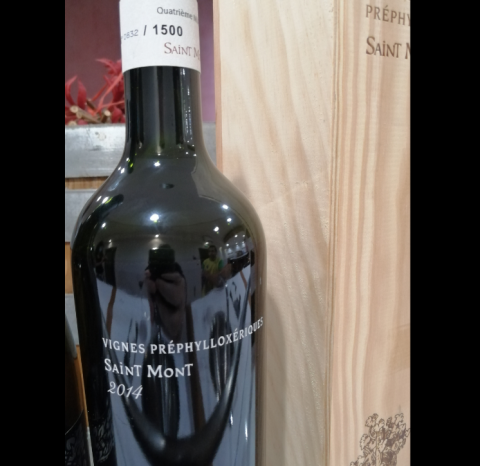
In the village of Saint Mont itself, opposite the 11th century Benedictine Monastery, another parcel of vines can be found – also growing on sandy soil, two metres deep and surrounded by fig trees. These vines also resisted the dreaded phylloxera. They date back to 1871 and the majority are Tannat. From this tiny plot – just a little over an acre – Plaimont produces a limited number of ‘Vignes Préphylloxériques’ wine every year (1,500 bottles in 2016). The wine is rare because such vines are rare. They have not been cloned, and they remain ungrafted – they are propagated through layering only. The harvested grapes are handled carefully, and fermented and matured in barrels (12 to 15 months). To my delight, I was offered a tasting when I visited. What a joy to sample a little bit of history: peony and bramble and fig.
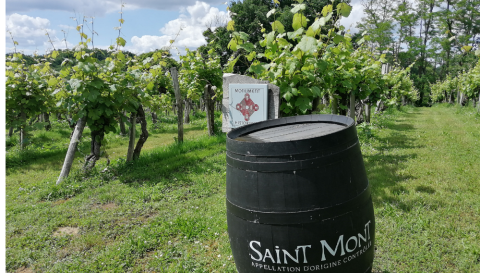
Apart from their venerable age, why are these vines really of such importance? Wine can be made from vines planted, say, just three years ago, so why should we care that these are so old? The tendency, over the years, has been towards bigger and better, aided by the use of chemicals and sprays. Though these methods were considered progress at the time, we are now starting to recognise the value of more natural viticulture – adapting planting methods and encouraging biodiversity. The south-west of France is lucky to still have so many native varieties. Of the thousands and thousands of grape varieties in the world, the vast majority of wine is made from a tiny number of varieties. Like heirloom apples or heritage tomatoes, the almost-forgotten varieties are now considered hugely interesting and desirable.
Dubosc’s private conservatory contains the better-known varieties that are included in the AOCs of Saint Mont, Madiran, Pacherenc du Vic-Bilh and PGI Côtes de Gascogne (including Manseng Noir and Tardif), as well as eight ancestral varieties and 22 wild vines (‘lambrusques’) from the region. It is the largest such conservatory in the world. We can’t tell how many grape varieties have already been lost but let’s celebrate those that have been saved. It’s not just about finding old vines and marvelling at their grand old age, but about taking steps to bring them back and preserve those that are of no immediate interest, as they may turn out to be useful in another 200 years. Manseng Noir had dwindled to one single vine but is now thriving. The wine is low in tannin and light in alcohol, a perfect drink for that sunny afternoon during our visit to the vineyards of the Gers. Tardif had been reduced to two lonely vines – there are now four hectares, two and a half of which will produce wine in 2021. What becomes of Pedebernade 1–7 remains to be seen.
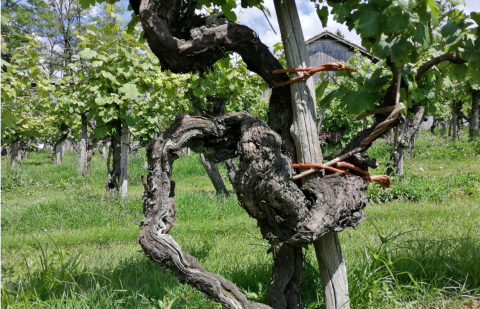
We may not have had vines in Ireland when I was growing up, but I can still imagine my father advising us to raise our glasses and contemplate those beautiful old vines on the hillside: a sight to behold!
The photos are all by Hilary McGrath and the main picture at the top of the page is 'Old Vine', original artwork by Élise Razakazafy published here with permission.
















