
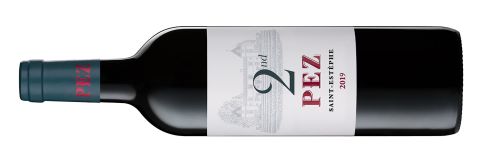
Last week, mere minutes after hanging up a call with Richard where I told him that I don’t drink much red bordeaux, I wandered into my closet looking for a wine for dinner and tripped over the only red bordeaux in there: Château de Pez, 2nd Pez 2019. I shrugged and grabbed it.
Twenty minutes later I was sitting on my porch, staring into the best wine I’ve tasted this month, contemplating how Bordeaux would do itself a heap of favours if, instead of pushing to sell wine en primeur (before it’s bottled), it would hold back wine and sell it when it is ready to drink.
Take this wine, for example – the inaugural vintage of Château de Pez, 2nd Pez. It was released to the market in 2021. At the time, according to a review from Richard, it was a decent wine but not particularly special. Being that it’s a second wine with average reviews, it’s unlikely that many people bought it to cellar. Instead, people were probably purchasing it for dinner – they drank it immediately, thought it was nice enough, and continued on with their week.
Four years later, with the bordeaux market soft as peach fuzz, I ran into a Trader Joe’s to buy crackers for a party, thought ‘that’s a decent price for a wine with a bit of age’, bought it and threw it in my closet. When I opened it, it wasn’t just good, it was everything I want in a bordeaux – savoury, tobacco-y tertiary complexity, vibrant but well-integrated acidity, well-balanced alcohol (14%), plummy fruit and tannins that were just beginning to mellow. It may not be as long or complex as Château de Pez’s ‘first’ wine but the fact that it is in exactly the right spot for drinking made the whole experience utterly blissful. I called my local shop, Sec Wines, and ordered half a case at $38 a bottle.
Now, does the fact that I can buy six-year-old bordeaux off the shelf in a supermarket bode well for bordeaux in general? Not particularly. But is it great that wine lovers, especially those who live in un-air-conditioned apartments with no cellar, can more easily access properly matured bordeaux at an accessible price? I think so. And this one is so tasty that it could win new drinkers for the region – and it wouldn’t even need to plug its pedigree! But if you are concerned with those sorts of things …
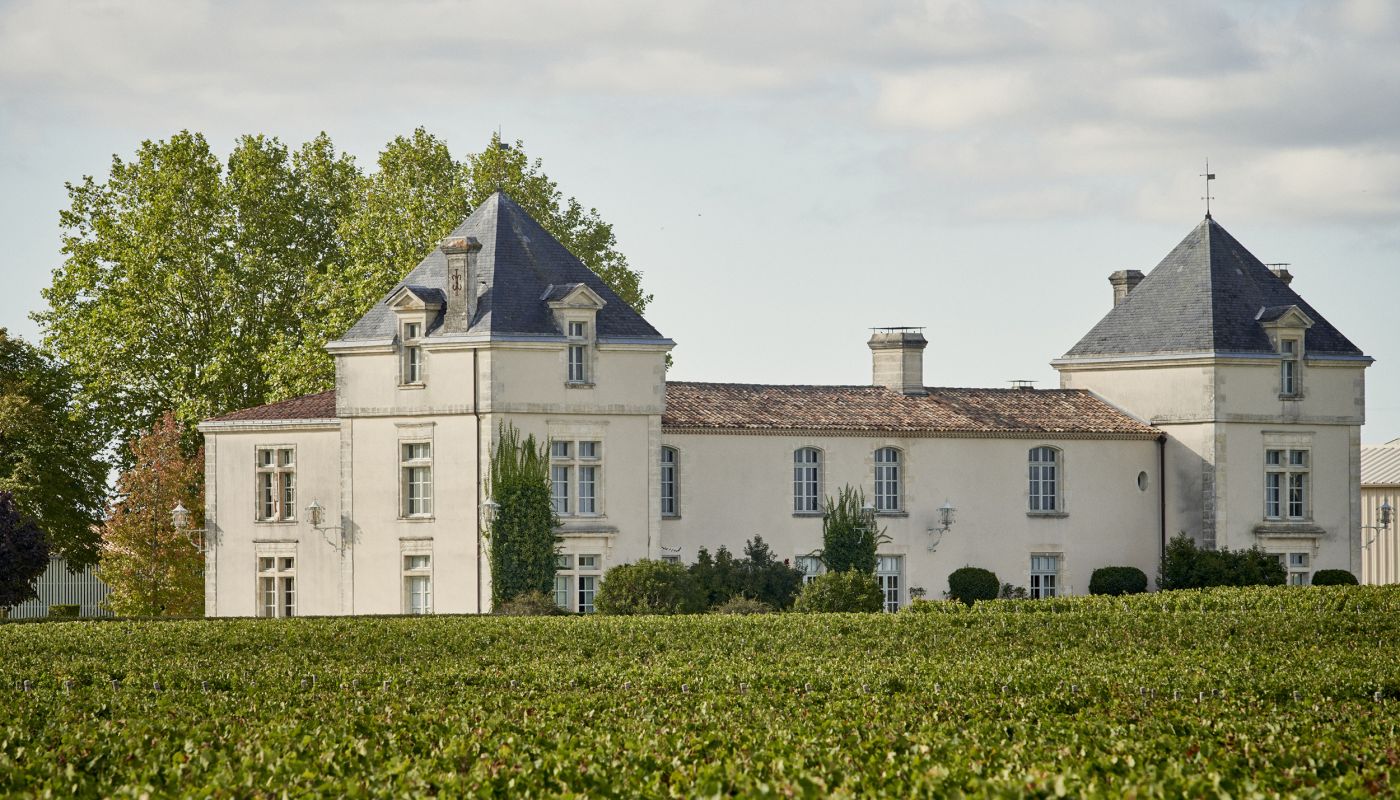
Château de Pez was established in 1452 by a squire named Jean de Briscos. Alongside neighbouring property, third-growth Château Calon Ségur, it is one of the oldest domaines in St-Estèphe. In 1585 it was acquired and planted to vineyards by the Pontac family – the same family who, at the time, owned Château Haut-Brion. After the French Revolution, the château ended up as property of the state. It then went through a number of owners before 1995, when it was acquired by the Rouzaud family, owners of Louis Roederer and second-growth Château Pichon-Lalande.

At present both those properties are managed by Nicolas Glumineau (pictured above), who studied under renowned oenology professor Denis Dubourdieu before working at Châteaux Haut-Brion and Margaux. So, if you like impressive names to go with your impressive wines, the Pez team has you covered!
In terms of property, the estate spans 48 ha (119 acres) with 42 ha (104 acres) planted to 50% Cabernet Sauvignon, 43% Merlot, 4% Petit Verdot and 3% Cabernet Franc. The vineyards are planted on a gentle north-facing slope with elevations of 12–18 m (39–59 ft). Soils are gravel atop sedimentary bedrock containing limestone.

Chateau de Pez 2nd is taken from the estate’s ‘young’ vines – though at 25 years old, I think most people would consider the vines mature! In 2019, a warm, dry vintage, harvest began on 17 September and concluded on 7 October.
Once harvested, grapes were destemmed and transferred to French oak and conical stainless-steel tanks. Varieties and plots were kept separate throughout fermentation. Fermentation temperatures peaked at 25 °C (77 °F) and total time on the skins ranged from 18 to 22 days depending on the plot and variety. After pressing, the wine was transferred to French oak barrels, 35% new, until January. The wine was then blended (58% Cabernet Sauvignon, 38% Merlot, 4% Petit Verdot in 2019) and returned to barrel. The wine was fined with egg whites prior to bottling.

While I am recommending the 2019 because I think it is at a perfect point in its evolution and will probably continue to drink well for the next two years, I did ask Nicolas Glumineau what he thought of the 2019 compared with the 2020 and 2021. His response was, ‘While 2021 is light and floral, 2020 has more complexity and opulence, while 2019 presents a beautiful tannic structure.’
Considering how lovely the 2019 is, I will be seeking out additional vintages of Château de Pez’s 2nd – especially if I can find them already aged!
This wine, according to Wine-Searcher, is available in the US, the UK, Spain, Belgium, France, the Netherlands, Bulgaria, Austria, Taiwan and Denmark. In the US the lowest listed price is $28.33 from Daily Drinkers in California – but this requires the purchase of a three-pack. Single bottles can be had for $28.95 from Third Base Market and Spirits in California. In the UK, the lowest price for this wine is £28.99 from Roberts & Speight.
Explore St-Estèphe through this map from The World Atlas of Wine and in our many wine reviews.