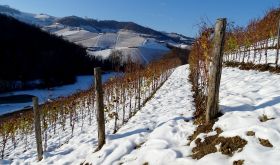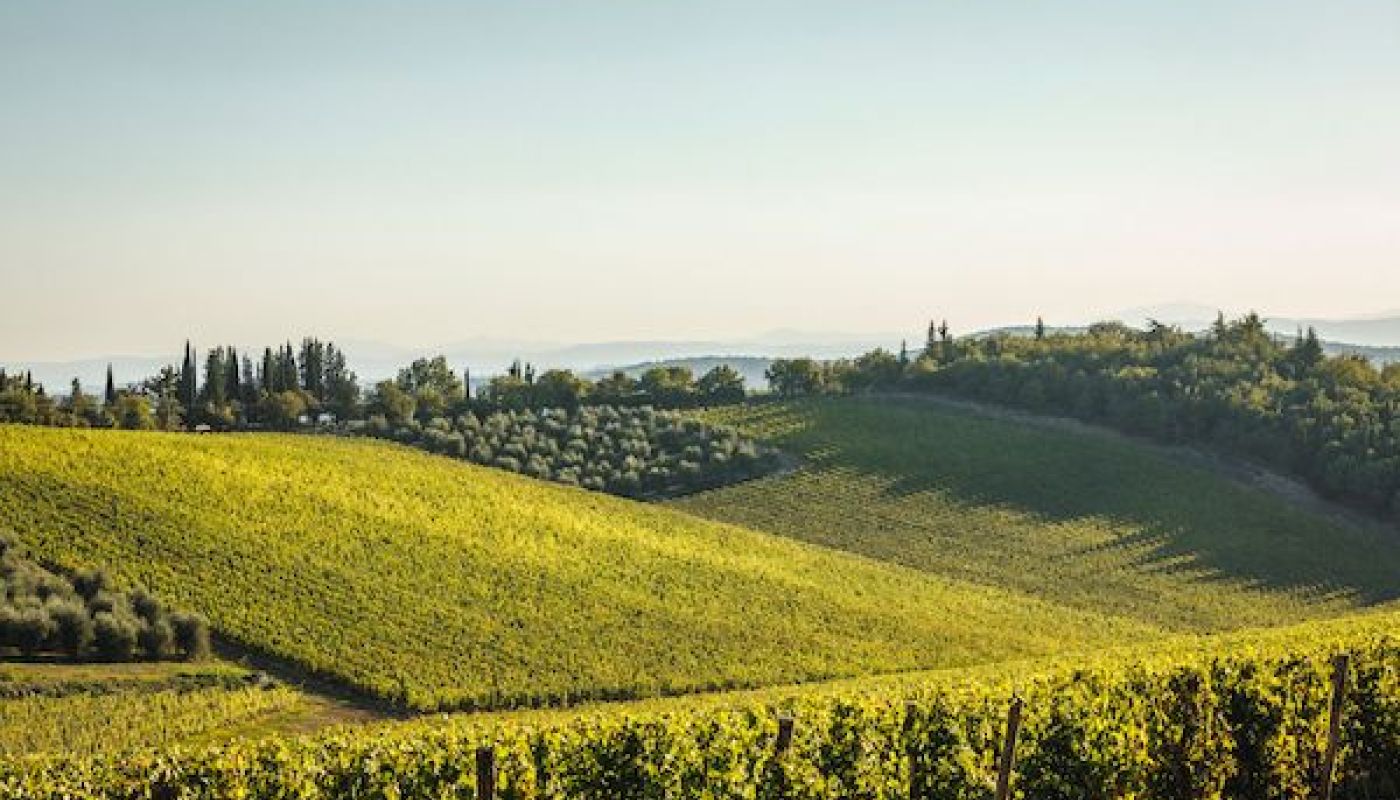
The word Classico is enormously significant in Italian wine. It denotes the historic heartland of a wine region that became so popular that its name was borrowed by producers outside it. Nowhere is the difference more critical yet widely misunderstood than south and west of Florence.
The Chianti Classico region runs from the southern outskirts of the city almost to Siena, taking in the beautiful cypress-lined hills around San Casciano, Greve, Panzano, Castellina, Radda, Gaiole and Castelnuovo Berardenga – the classic names of Chiantishire.
Chianti Classico is surrounded by a much bigger region whose wines may be described as Chianti, but never Chianti Classico. Some of them can be very good. The majority of them much less so. The real problem for Chianti Classico, however, is just how bad some Chianti tout court has been. Memories of vinegar in a straw-covered flask linger long and have tended to muddy perceptions of Chianti Classico.
This is most unfortunate because Chianti Classico has never been such an exciting wine as it is today. In the sixties and seventies white wine grapes were allowed into the mix and the poor-quality clones of the Sangiovese vine that defines it had such difficulty ripening in the many high vineyards there that the wines were notoriously boosted by fuller-bodied wines imported from the south. Better Sangiovese plants went into the ground but then, like virtually all Italian wine producers, those of Chianti Classico fell in love with French grape varieties such as Cabernet Sauvignon and Merlot and the wines went through a bit of an identity crisis.
But today good sense and global warming have prevailed. Sangiovese vines are the norm, have little trouble ripening fully, and once more dominate the much-loved vineyards of Chianti Classico.
This, together with the huge variation in elevations, exposures, soil types and ageing regimes, not to mention producer intention and ambition, means that Chianti Classicos can be intriguingly varied. But a recent comprehensive tasting demonstrated that nowadays virtually all of them show an impressively high standard of winemaking. And what I particularly like about Chianti Classico is that it shares something of the profile of red bordeaux (I can hear Walter groan in Padua from here) – being intensely appetising, fairly rigorously structured and designed for food, but without necessarily being alcoholic. The 48 examples I tasted the other night started at 12.5% and only seven were more than 14%.
One of these 14.5 percenters was admittedly my favourite of all, the oldest too. Castell’in Villa 2010 Riserva is a marvel of subtlety, composure, integration and freshness. It’s admittedly about £80 a bottle from the only UK stockist found by wine-searcher.com (though much less in the US) – but a bordeaux of the same quality and maturity would be much more. Apparently in blind tastings it ‘beats’ many a Brunello di Montalcino.
Castell’in Villa is how many of us imagine an archetypal Chianti Classico estate. The owner of the medieval tower, huddle of outbuildings housing an agriturismo and restaurant and its 48 hectares (120 acres) of vines is known throughout Tuscany as La Principessa (she is Princess Coralia Pignatelli della Leonessa). ‘Call me Coralia', she greeted us disarmingly in an elegant tweed suit when we visited there last April, and proceeded to vamp us with courtesy, hospitality and wit.
It had been difficult to fix up this visit. For several weeks her emails declared, ‘I’m too busy moving barrels.’ But in the event she took time off from supervising the reconstruction of her cellars to cook us a memorable four-course lunch. However, soon after offering the pecorino at three different stages of maturation and a Piemontese goat’s cheese (the Tuscan equivalent being deemed under par), she was called away to advise the visiting cooper, in French, on exactly where to put each of the giant Slavonian vats, called botti, in which her wines are aged, for up to three years before bottling. She explained that her days were so busy that she had had to do the complex preliminary calculations, taking into account the different capacities and dimensions of each botte, at night.

Greek-born, and still a frequent flyer between Rome and Athens, she was introduced to wine via first growths served by her uncle in Paris. She arrived at the estate outside Castelnuovo Berardenga with her ‘dreamer’ diplomat husband in the late sixties. It was meant to be a holiday home but she found herself sucked in to wine production. Her first vintage was 1972 but the turning point came five years later when she met the iconic Tuscan oenologist Giacomo Tachis, the Antinoris’ eminence grise, whom she adopted as a successor to her late father. Her husband died in 1985, which was not part of the plan. But she sought solace in the vineyards and cellar. The wines never looked back and Castell’in Villa is now one of the most admired names of the region, having steadfastly remained true to the Sangiovese character of Chianti Classico.
Almost within sight of Castell’in Villa’s hilltop tower is another very different female wine producer who has also carved out an enviable reputation for her wines, though with more modest beginnings and less conventional aspirations.
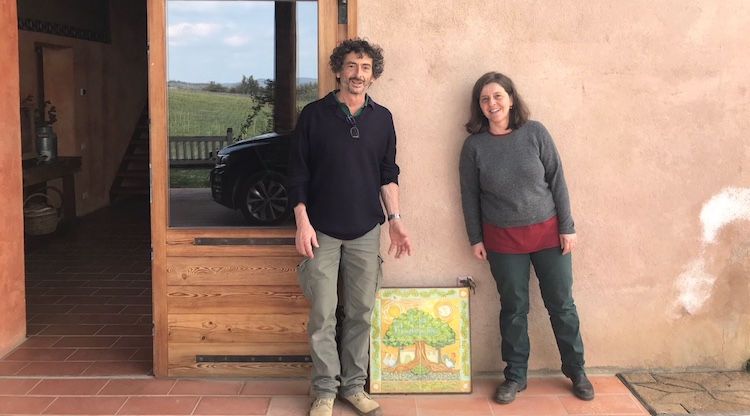
Giovanna Morganti has just five hectares of organic vineyard at Podere Le Boncie. She runs it with her husband Giorgio but it is very much Giovanna who is in charge. The small fermenters in her tiny gravity-fed winery, for instance, were deliberately designed with her height and reach in mind. And it was her (and her oenologist father’s) enthusiasm for ancient Tuscan grape varieties that led her to plant 3% of seasoning to her rich mix of densely planted Sangiovese vines.
Her first vintage was 1990 and in the first decade of this century her particularly delicate, immensely pure, long-lasting, ethereal wines were regularly rejected by the Chianti Classico tasting commission as being ‘atypical’ – as indeed they were when most other producers were infatuated with the addition of French grapes and the oaky imprint of small French barrels. In those days she therefore had to sell them simply as Toscana, which has clearly left her bruised, and determined to stick to Toscana rather than apply to put Chianti Classico on the labels, even now that the wheel has turned full circle and her style of wine is so much more widely admired.
‘I don’t want to belong', she told me defiantly, adding, ‘I like being on the outside’ while together we enjoyed her 2006 Le Trame in giant Burgundy glasses. This 12 year-old wine was still very much alive, just like the pregnant cat who refused to be put out of the tasting room. ‘I don’t consider myself better than the rest. Just different,’ said Giovanna.
GREAT WINES FROM THE CHIANTI CLASSICO HEARTLAND
Castell’in Villa Riserva 2010 Chianti Classico
$49.54 Saratoga Wine Exchange, NY; £79.92 Tannico.co.uk. See also Wine Source for other vintages
Castell’in Villa, Poggio delle Rose Riserva 2010 Chianti Classico
Podere Le Boncie, Le Trame 2015 IGT Toscana
$46 Morrell & Co, NY and many other US retailers; £34.95 AG Wines
Podere Le Boncie, Le Trame 2006 IGT Toscana
See this recent tasting article with its reviews of 60 top Chianti Classicos and see also details of our Chianti Classico Night in New York on 24 October.