If I had been a Camino de Santiago pilgrim back in the 12th century, I’d have got as far as the Benedictine monastery of Joncels, 150 km (95 miles) into my 1,280 km (800 mile) journey, and gone no further. Having walked for 33 hours and climbed nearly 700 m (2,300 ft) in elevation, I’d have enthusiastically parked my pious ambitions at the door and offered to prune vines in return for a steady supply of wine and a rather less arduous plan to evade eternal damnation.
Alas, it seems that the vinous inclinations and remote location of the monastery proved to be its undoing. By the end of the 14th century the bishop of Béziers had been ordered by Pope John XXII to ‘restore monastic discipline and address lax practices among the monks’. The abbey of bibulous, lackadaisical monks was wound down and finally shuttered and sold off during the French Revolution. The vineyards, abandoned, gave themselves back to the garrigue and the mountains. Until Cédric Guy rattled the ghosts of the past.
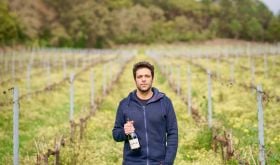
‘We spent years poring over geological maps’, said Guy, a Faugères native, who is the son and grandson of winemakers and was co-owner of the Abbaye Sylva Plana in Faugères for many years. He tells me that it was vintage 2001 that triggered an alarm and an obsessive hunt. ‘Climate change forced us to harvest in August instead of September, and the wines exceeded 14% alcohol.’ He became determined to find a place where they could make wines with naturally moderate alcohol levels, where they could work with nature and not against it.
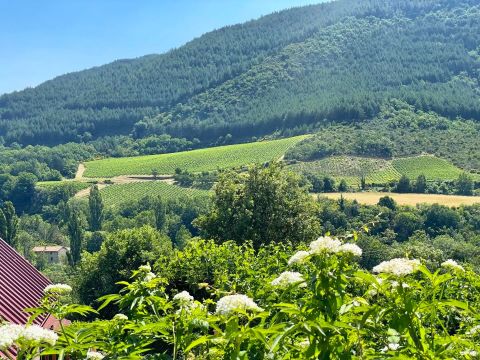
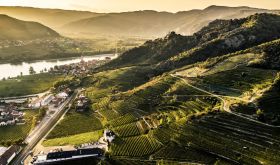
The search took nearly a decade. But eventually Guy stumbled across the forgotten vineyards of the Abbey of St-Pierre-aux-Liens de Joncels, high up in what he describes as ‘the mountains of the hinterland … the Wild West of Languedoc’, in the heart of the Upper Orb Valley. Bordering the Hérault and Aveyron departments, the region is, in Guy’s words, ‘the new frontier, or rather, its rediscovered frontier’.
He explains that he had been looking at the geological maps that the Laroche winery had made after settling in Languedoc and noticed that they’d earmarked Joncels as an exceptional white-wine terroir.
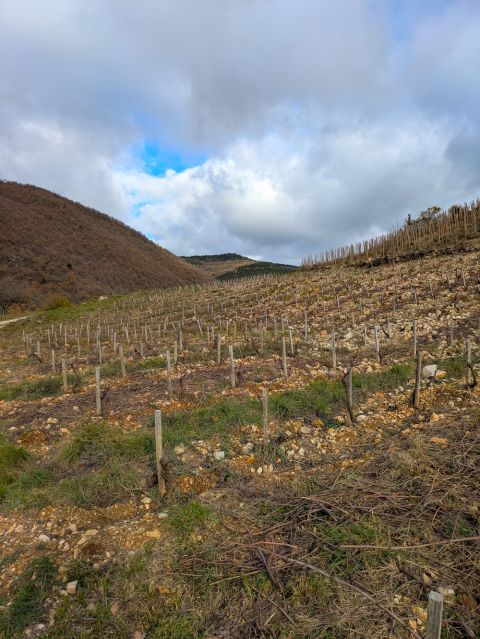
With a bit more digging, he found out that there had been vineyards cultivated in the mountains behind the ruins of the Joncels Abbey, which had owned 300 ha (740 acres) of vineyards, mostly worked by civilian labour. Consulting the cartulary (an abbey’s record book), he discovered that there had been a clos, a walled vineyard of 10 ha (25 acres), cultivated only by the monks themselves.
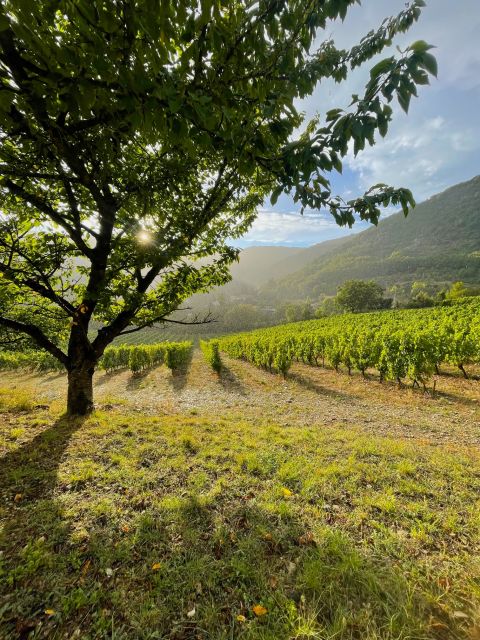
Everything about the place, he felt, was right: very stony clay-limestone soils (a rare, distinctive limestone breccia soil thanks to the glacier that formed the valley); elevation, aspect and climate with significant diurnal swings to slow and extend the growing season; reliable rainfall; and rich biodiversity.
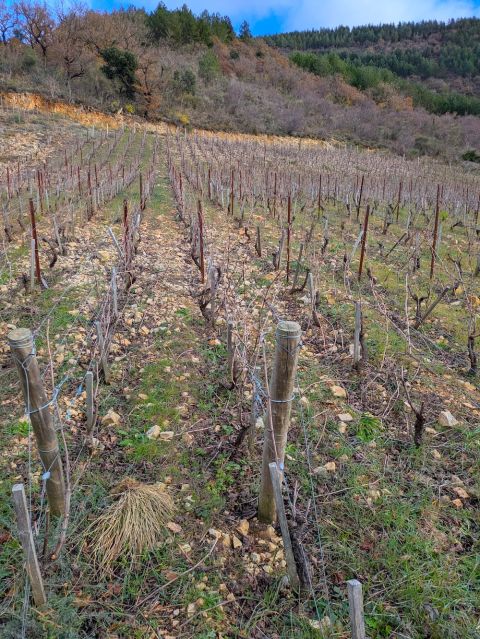
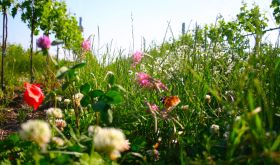
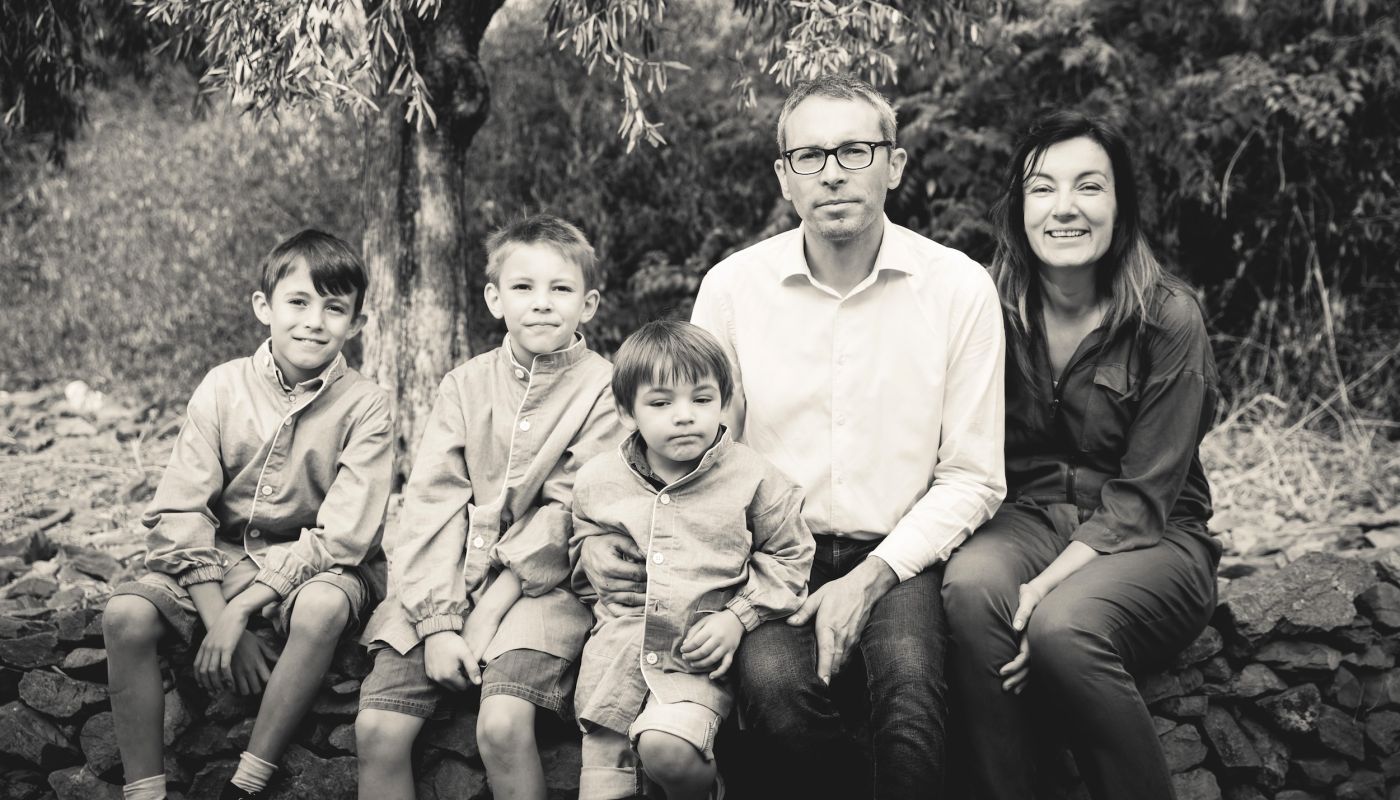
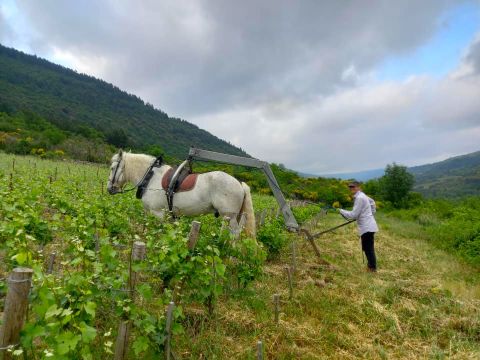
On the outlines of a monastic past, he established Domaine de Bon Augure in 2013, restoring and replanting the abandoned clos. Together with his veterinarian wife Alice they now have 9 ha (22 acres) of vineyards, all planted on steep slopes that are farmed without any synthetic chemical inputs. They’re organic but also committed to agroecology, which means that they go way beyond the reductionist approach of organic farming. They use clay and orange-terpene sprays for fungal management, cover-crop their vineyards, have installed nesting boxes for birds and bats, and have planted trees and hedgerows. When they need to till, they use a horse.
I came across Bon Augure thanks to importer Daphne Teremetz of Saison Wines. From among a table of excellent wines, the two wines made by Cédric Guy were easily my favourites. But while his Aux Innocents Les Mains Pleines is a stunningly vibrant blend of Pinot Gris, Grenache Gris and Sauvignon Gris, I was particularly intrigued by the striking purity and intense energy of the Joncs-cella.
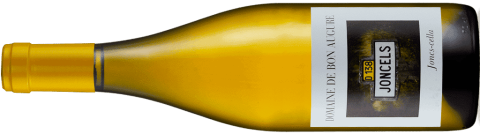
A blend of 80% Chardonnay and 20% Petit Manseng, barrel-fermented with ambient yeasts and bottled with only a very small dose of sulphites, it was mesmerising in the way it tasted succulent and rich and yet was racy and glitteringly precise. It’s not oaky but it’s imbued with spice. Creamy white stone fruit gives the wine a sort of spheroid weight in the mouth, offset by bright citrus. Effortless length. ‘This really takes my breath away’, is what I scrawled.
More than anything else, this and the other three Bon Augure wines that I tasted showed that the little-known Haute Vallée de l’Orb might be a very exciting place to make wine, especially in the face of climate change. Guy in fact believes that it should be recognised as a Languedoc cru. ‘Looking to the future, together with young winegrowers established in the valley, we have initiated an application for AOP classification of our vineyards. The first step begins in 2026 with our own geographical designation, “Vins des Monts d’Avène*” which will help introduce wine professionals to our unique identity’ he wrote to me.** It will be interesting to see if this happens. I hope these wines are indeed a bon augure – good omen – for the future.
Not surprisingly, considering the small production, it’s not a wine that is widely available, and Wine-Searcher proves to be somewhat unhelpful in tracking it down. But that doesn’t mean it’s impossible to find.
In the US, the 2022 vintage is available from Princess & Bear in Seattle for $34, and I’m told that they have just placed an order for the 2024 vintage.
In the UK, it’s imported by Saison Wines and is available retail for around £25 from John Dory, Dvine Cellars and Museum Wines.
You can also find it in France and Belgium from €14.60.
*The lake in the valley is Lake Avène.
**Thanks to Louise Hurren for the translation from the French.
Find thousands more Languedoc wines in our wine review database.