Sometimes patience pays off. At least it did last week, when I spent an afternoon in a honky-tonk seaside tourist town looking for a decent bottle of wine to drink. The convenience store traded only in convenience – as in canned beverages that would get a beachgoer drunk quickly. The liquor store traded up into larger sizes. The wine store had wine bottles at the back, beyond the end-cap stacks of spiked seltzers, canned cocktails and ‘functional’ beverages and shelves of flavoured vodkas.
The first pass through the wine shelves wasn’t inspiring, the focus clearly on mass-market bottlings sold on the promise of ease (amazing how many wine labels reference sweet things like cake, jam, chocolate, or a state of vacation – beach, sea, mom – in name or imagery). Nearly all were from France, Italy and California.
But at the very end of the row, alongside a New Zealand Sauvignon Blanc, a Portuguese Vinho Verde and a generic German Riesling, was a Greek wine – Douloufakis Vidiano, from Crete.
How this got there I have no clue, but I grabbed a bottle and hotfooted it out of there.
See, Vidiano is to Crete what Assyrtiko is to Santorini: a grape variety capable of complex, long-lived wines that excels in its homeland as in nowhere else. It’s just taken longer for Vidiano to gain market recognition – which is a blessing as far as pricing goes. I bought my bottle for $21, though the importer tells me that's high – the suggested retail price is $19, and Wine-Searcher shows it going for as little as $14.95 or £19 (and €8.20 in Greece!).
Douloufakis have been central to the rise of Vidiano’s reputation, thanks to the work of Nikos Douloufakis, a third-generation winemaker who returned home from his studies in Italy in the 1990s to upgrade his family’s winery, installing stainless-steel tanks and bottling the wines in glass. By 2000, however, he was turning away from the international varieties that were Crete’s bread-and-butter in the 1990s in favour of local varieties such as Vidiano and Liatiko. (Julia once made their red Liatiko a wine of the week.)
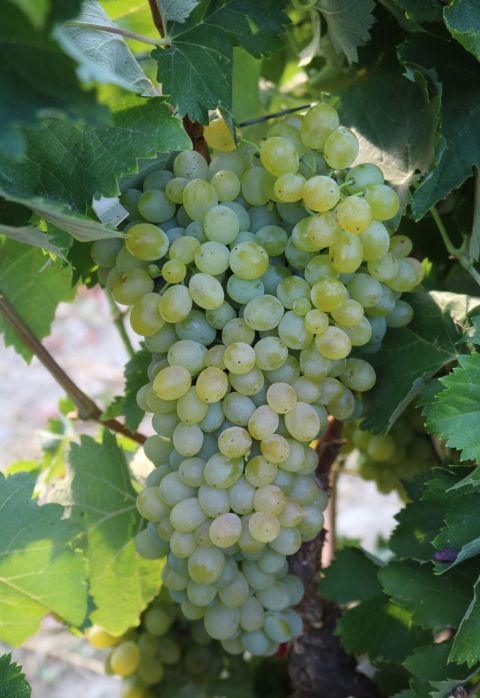
At that time, neither variety had any cachet; Vidiano in fact had been nearly forgotten, and Douloufakis had to search the island for old plots from which to take cuttings; the highly respected Greek vine nursery Bakasietas then grafted the cuttings for them to plant. Today, Douloufakis have 25 ha (62 acres) of vines, all farmed organically (certified since 2006), and buys in fruit from another 25 ha of vineyards they supervise. More than half the vines they work with are Vidiano.
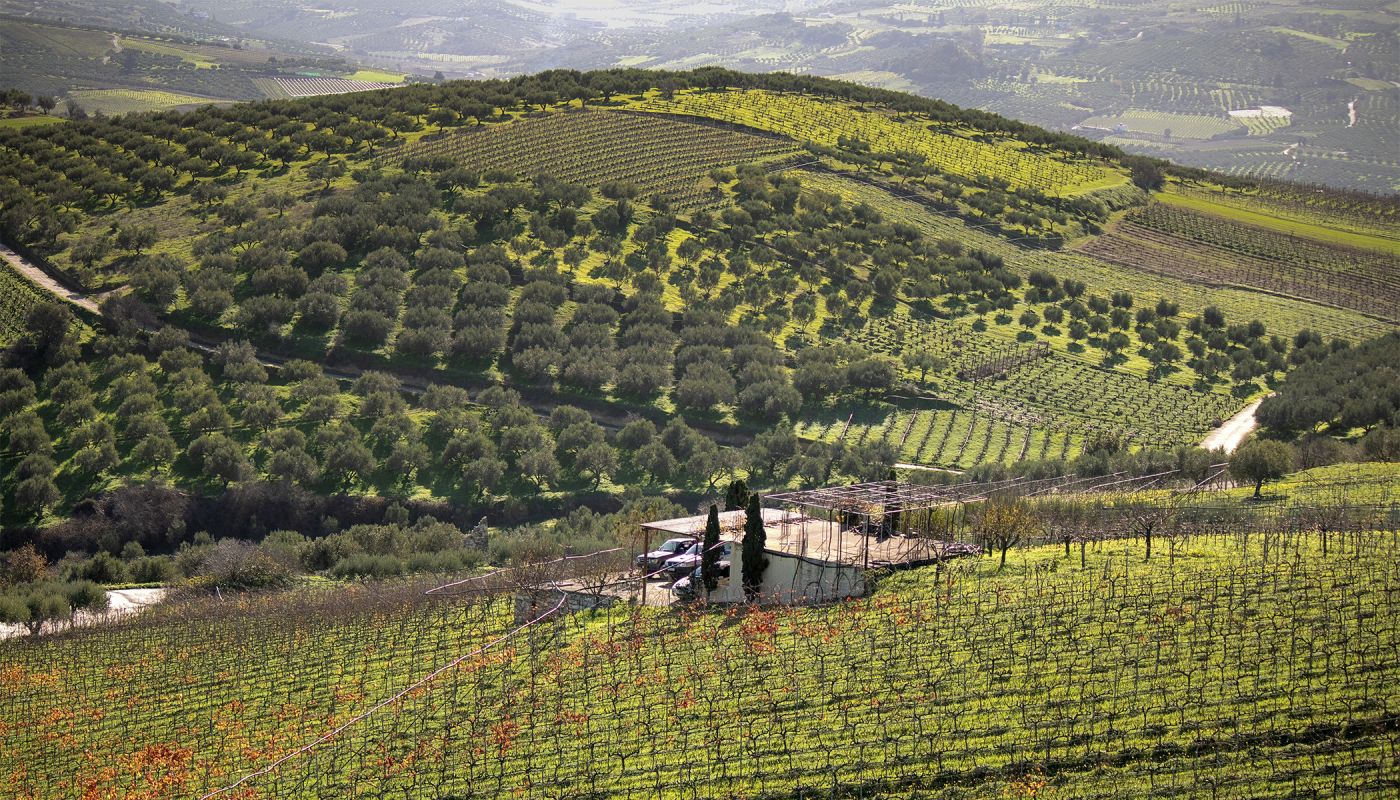
While the variety deals well with heat (just like Assyrtiko), Douloufakis finds it grows particularly well in Dafnes, a region in the centre of the island, on the eastern side of the imposing Mt Psiloritis, Greece’s highest peak at 2,456 m (8,058 ft). The landscape is challenging, craggy and dry, the land distinctly Mediterranean in its fragrant, scratchy herbal scrub. (The name of the region is said to come from dafne, or bay laurel, referencing a laurel tree that grew in an ancient churchyard.) Grapes are one of the few crops that can thrive here; grape-growing here dates to the Minoans.
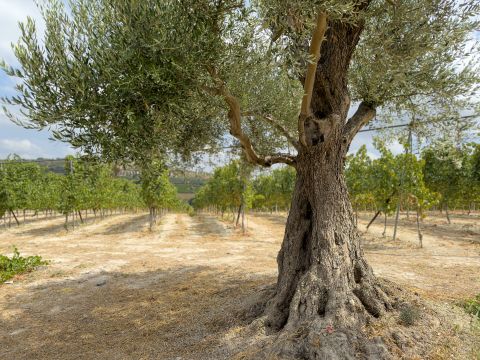
Although the Dafnes PDO applies only to wines made from the red Liatiko, one wonders how much longer it might take for Vidiano to be accepted into the PDO as well, as it clearly thrives on the region’s limestone soils. Elevation is also key: the vines sit at about 350 m (1,150 ft) – not terribly high but high enough to take advantage of cooling breezes and diurnal temperature swings.
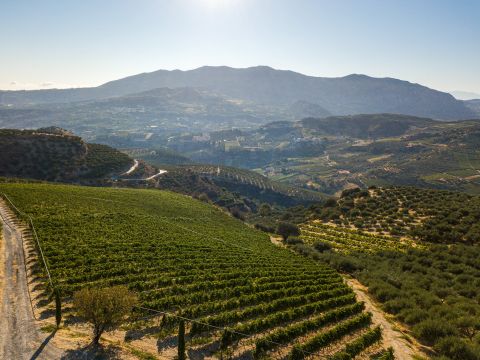
You can taste the effect in the balance of Douloufakis’s Vidiano: the wine is always broad in texture, almost reminiscent of Sémillon in its smooth breadth and quiet green-apple flavour, but has a bright, invigorating acidity that keeps it fresh and agile. Douloufakis works to emphasise this character in his basic Vidiano, picking by hand and vinifying the grapes entirely in stainless steel at cold temperatures. The 2023 clocks in at 13.5% but it doesn’t feel at all hot or spicy. Rather, as I describe in my tasting note, it’s elegant and restrained, with notes of raw almond, bay and lime zest.
There, I suggest pairing it with roasted fish doused in olive oil and lemon, which was what my mouth started watering for as soon as I tasted the wine. But the possibilities are far wider than that, as I proved in a week of meals in a vacation rental. It got along fine with pesto pasta one night and sang with a deliciously fatty Filipino pork belly over rice the next; it was also terrific with a Cuban pork roast with a side of garlic-drenched yuca. I drank the last little bit one night before dinner with a handful of salted peanuts – not normally a snack that’s kind to wine but this one held its own.
Douloufakis proves Vidiano’s flexibility in a number of other variations, too, including a traditional-method sparkling version and Aspros Lagos, an elegant, barrel-fermented, single-vineyard bottling that shows the possibilities of Vidiano as a wine worthy of cellar ageing. (Julia loved the 2023 Aspros Lagos.) But for sheer value and summer-readiness, you can’t beat the straight Vidiano.
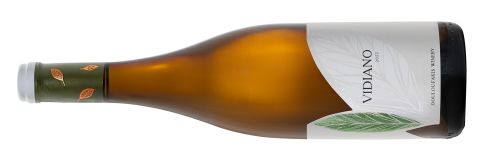
The wine goes by two names: in the UK, where it is imported by Maltby & Greek, it is called Dafnios Vidiano; in the US, the importer Diamond Wine has dropped the ‘Dafnios’ from the name so as not to cause any confusion with the PDO Dafnes; it is just Douloufakis Vidiano 2023 PGI Crete (as shown in the photo above). To find the 2023 on Wine-Searcher wherever you are, search both for Dafnios Vidiano 2023 and just Vidiano 2023. The 2024 is just landing; while we haven’t tasted it yet, we’ve never had a disappointing vintage of this wine. Even so, if you find the 2023, grab it – this is a wine that takes well to a little age.
All photos but the grape bunch courtesy Diamond Wine Importers, Chicago, IL.
To learn more about Crete’s wines, see Julia’s extensive coverage in A Cretan feast as well as our wine review database.