New year, new resolutions, new, healthier you. With all that may come a determination to cut back on alcohol.
For wine drinkers, this can be more difficult to achieve than for those whose habitual drink is beer. I am assured that there is no shortage of de-alcoholised beer that tastes perfectly nice but I have encountered so few successful examples of de-alcoholised wine that I have been content to let the talented Tamlyn Currin do the heavy (lite?) lifting of tasting her way through this rapidly expanding sector of the drinks business.
Her conclusion? ‘De-alcoholised wines? Whether halfway or fully stripped of alcohol, I am yet to find a single wine in this category that I would actually want to drink. Mostly, they are hollow, all taste the same, and often only a little short of disgusting. I would describe the best of them as “I can tolerate a single sip of this in my mouth”, and it goes no further than that.’
Presumably beer can withstand the often brutal process of de-alcoholisation better than wine because there is much less alcohol to remove. Also, while hops provide beer with a source of non-alcoholic flavour, wine is essentially nothing more than grape juice and yeast. Wine’s flavours are therefore arguably too delicate to withstand the likes of spinning cone technology, reverse osmosis or various forms of aggressive filtration needed to remove alcohol (see Back to basics, below).
The sensible solution for the moment is probably to avoid drinks claiming to be like wine but without the alcohol – at least until all the R&D currently being devoted to solving the problem delivers a way of successfully removing alcohol but not flavour and character from wine.
My advice to wine drinkers wishing to cut down their alcohol intake is to find a non-alcoholic drink that they like and perhaps adopt this new zebra-striping fad: alternating it with wine on wine-drinking days. Even I, a hardened wine addict, have to admit that water is an awfully good (and healthy) drink. All year round I do my best to drink as much water as wine, even when there is wine on the table.
I could on the other hand suggest they adopt a rigorous timetable of wine-drinking days and abstemious days, but I suspect that this might not result in a sufficient reduction in overall alcohol intake.
While there is little to recommend in the current market of de-alcoholised wine, Tamlyn directed me towards her favourites among the growing army of new, non-alcoholic drinks aimed at the health-conscious. These are not sold as ‘wine’ with the alcohol removed but instead as an alternative drink aimed at those who enjoy the look and approximate structure of wine. My first reaction was to marvel at how expensive some of them are, considering that, unlike alcoholic drinks, there is no duty to pay on them.
Sparkling tea has become quite a category, and in general carbon dioxide helps, making any non-alcoholic drink seem more festive. I tasted the beautifully packaged Saicho with its exotically floral aroma of osmanthus and decided it is one you are likely to love or loathe. The aroma is so strong, I suspect I might tire of it quite soon. Julia Harding MW is a fan of the Copenhagen range of sparkling teas, which is made up of six complex blends of various teas – some 0% alcohol, some 5% alcohol – with a little sweetness and varied flavours. On the other side of the Baltic, Lithuanian sommelier Martynas Žemavičius has created his own Acala range of six brightly labelled, certified-organic sparkling teas. The white-wine-style version I sampled, designed specifically for wine lovers, was actually dark gold and really rather watery.
What wine lovers tend to appreciate in wine is its relatively high acidity. I think that’s why I find sparkling elderflower, with its use of lemon juice, a pretty good substitute. When it comes to other ingredients, wine vinegar is a bit too strong – and reminiscent of wine that’s gone off – but cider vinegar has proved useful in what we might call drinks for wine lovers. It’s the active ingredient in the widely advertised Botivo aperitif, which is designed to be diluted with soda. The cider vinegar provides the acidity while ‘orange zest, fresh rosemary and thyme finished with the bittersweet notes of gentian, wormwood leaf and organic wild flower honey’ provide the distinctly bitter flavour that will appeal to some – although for those looking for a bone-dry drink, the honey may be slightly overdone.
Just as with the recent rash of new gin brands, botanicals are again being put to work to distinguish many a new alternative drink for wine lovers. My fellow wine writer Matthew Jukes has been devising non-alcoholic drinks since 2017, many of which depend heavily on cider vinegar for their wine-like tanginess. I was quite taken by his new Believe, a crown-capped 75-cl bottle of sparkling water, cider vinegar, sugar (but not that much), amaranth, lemon, lime, pineapple, fennel and ‘hops, herbs, spices’. I am personally reassured by the imprimatur of a long-standing wine expert. Though I found his certified-organic Jukes 8 The Sparkling Rosé, which comes in a 25-cl can, a little sweet. In fact, handling all these different samples, I found my hands quickly became sticky, something that doesn’t happen with my favourite drink. Harrumph.
The cleverest name for an alternative to wine is a range called Moderato. I tasted them all and thought by far the best is the 0.3% alcohol Cuvée Révolutionnaire Blanc de Noirs, a sparkling white rather perversely based on dark-skinned Merlot grapes. But then, I suppose, thanks to the glut in Bordeaux, it’s easier to find inexpensive Merlot than inexpensive Chardonnay grapes. So long as it’s well chilled (something advisable for all these drinks), this is drinkable, with fresh acidity and an attractively dry finish.
The driest example I tasted was Bölle Blanc de Blancs, made from de-alcoholised Chardonnay aged, presumably in tank, on the lees of a second fermentation for six months. It is packaged in the style of a sparkling wine, like many of these drinks, with ‘NO ADDED SUGAR, NO ADDED FLAVOUR’ on the back label. Some may find it even too dry.
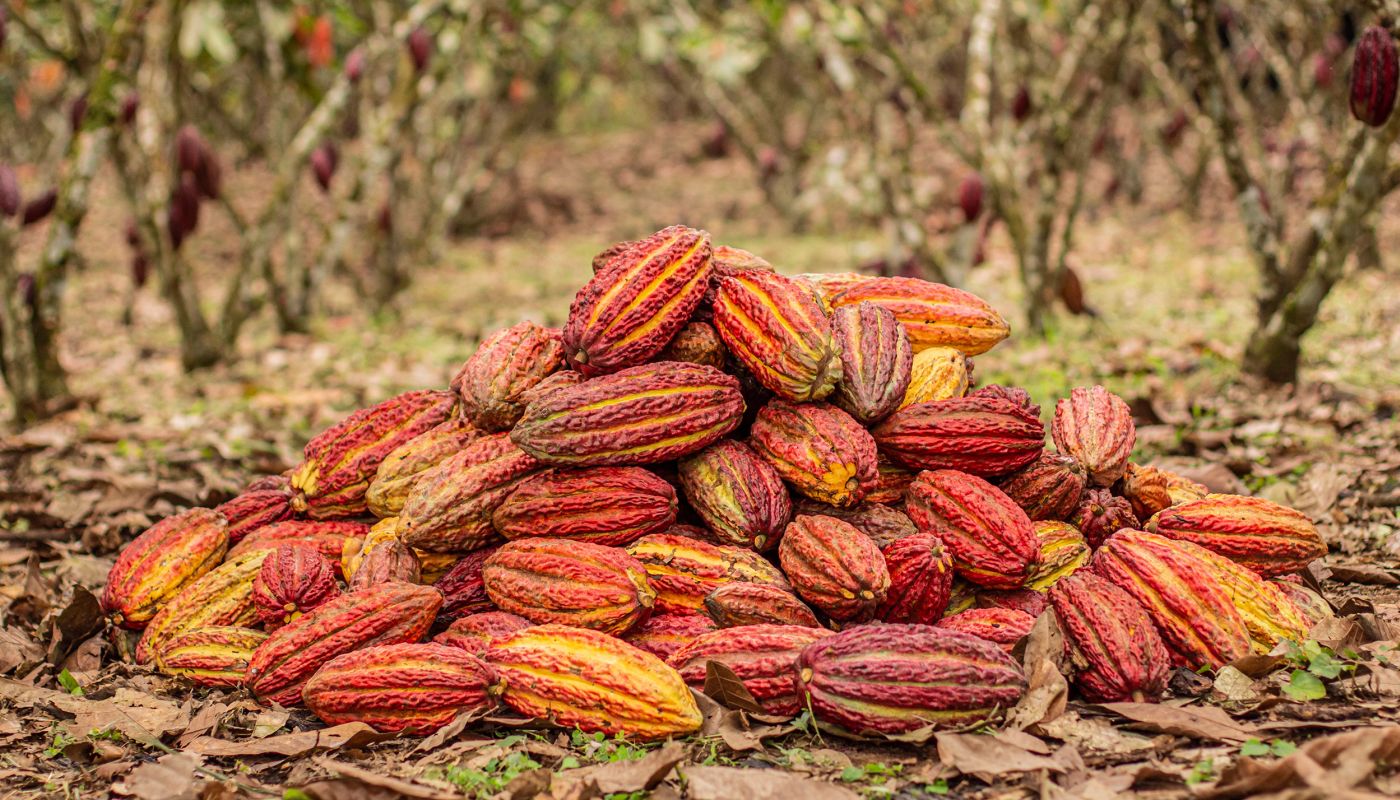
Perhaps the most unusual and distinctive non-alcoholic drink to turn up on my doorstep recently was a pack of 25-cl cans of Kaoba, a blend of just two ingredients: sparkling water and cacao fruit juice. On a trip to Ecuador, Mathew Halford, a Rutlander who once worked in the City, was struck by how much of the white pulp that surrounds the cacao bean was wasted – nearly all of it. He reckoned its juice – which tastes nothing like chocolate and more like a refreshing mix of lychee juice with a hint of peanuts – could make a thoroughly sustainable non-alcoholic drink. A little reminiscent of coconut water, it has no added sugar and the same sort of fruit/acid balance as wine – certainly a drink with a story.
But I’m afraid I’d still prefer wine, and thankfully there’s a growing number of them with far less than the 12–14.5% alcohol that has become the norm. I wrote at length about the delights of German Kabinett last September. These are top-quality, intricate, ageworthy wines that are naturally only 7–9% alcohol, and are hugely refreshing.
And now that UK duty is calculated according to alcoholic strength, it seems clear that some brand owners have been deliberately reducing it – I know not how, although I’m told that grape concentrate is turning up increasingly frequently as a (non-alcoholic) ingredient in wine imported into the UK.
One of the lowest-alcohol wines of all is a sweet, lightly sparkling Italian Moscato. It’s traditional to be snooty about Asti Spumante yet none other than the late Michael Broadbent, Master of Wine, famous chronicler of fine wine and founder of Christie’s wine department, was a great fan of its superior version, Moscato d’Asti. Something not to be sniffed at – and you could certainly afford to do more than sniff it.
Low-alcohol wines
Araldica, Dolce 2024 Moscato d’Asti 5%
£9 Majestic
Forrest Wines, The Doctors’ Riesling 2023 Marlborough 9%
£10.25 Majestic
Dönnhoff, Oberhäuser Leistenberg Riesling Kabinett 2023 Nahe 9%
£28.50 Alexander Hadleigh, £29.95 Vino Gusto
Maximin Grünhäuser, Abstberg Riesling Kabinett 2023 Ruwer 7.5%
£48 Hedonism
J J Prüm, Wehlener Sonnenuhr Riesling Kabinett 2019 Mosel 7.5%
£54.50 Parched Wine
For detailed tasting notes, scores and suggested drinking dates, see our tasting notes database. For international stockists, see Wine-Searcher.com.
No-alcohol drinks
Belvoir Farm, Sparkling Elderflower 0%
About £3.50 for a 75-cl bottle at most supermarkets, £1.50 for a 33-cl can Sainsbury’s
Botivo, Botanical Aperitivo 0%
£24 for 50 cl (20 serves)
Kaoba 0%
£24 for 12 x 25-cl cans drinkkaoba.com
Believe by Jukes 0%
£12 for 75cl jukescordialities.com
Moderato, La Cuvée Révolutionnaire, Merlot Blanc de Noir 0.3%
£14.50 for 75 cl Wise Bartender, Club Soda, £19.99 Amazon.co.uk
Bölle, Blanc de Blancs <0.5%
£19.99 for 75 cl Drink Supermarket
Copenhagen, Blå Sparkling Tea 0%
£19.99 for 75 cl Selfridges
Saicho, Sparkling Osmanthus Tea 0%
£22 for 75 cl Harrods
Back to basics
How is low- or no-alcohol wine made? |
|
If not all the sugar in ripe grapes is fermented out to alcohol, then what results is a sweet, low-alcohol wine. A typical example would be a sweet, sparkling Moscato, such as Asti Spumante or Moscato d’Asti, which is much lower in alcohol than most wines (which in the UK means much lower duty and a lower price).
In cooler parts of Germany, Riesling grapes don’t notch up that much sugar, and if the fermentation stops, perhaps because of low temperatures or the yeast simply giving up, or if the fermentation is stopped by the addition of SO2, the result is a low-alcohol wine. Very sweet examples such as Beerenauslese and Trockenbeerenauslese may be only 5 or 6% alcohol. Kabinett wines from somewhere as cool as the Saar or Ruwer valleys in the Mosel region, for instance, may be only 7 or 8%.
Early picking can reduce alcohol naturally. So can plucking the leaves off the vine as grapes ripen because light on the leaves produces sugar in the grapes and therefore alcohol in the wine. Forrest in Marlborough in New Zealand, founded by doctors John and Brigid Forrest, has had success with The Doctors’ range of Sauvignon Blanc, Riesling, Rosé and Pinot Noir, each 9 or 9.5%. And there’s always adding water to reduce alcohol, of course.
But most no-alcohol wines are manipulated physically, with equipment designed to distil the wine in a vacuum or perform processes such as various dramatic forms of filtration, reverse osmosis, electrodialysis, perstraction or pervaporation. Not very appetising. |