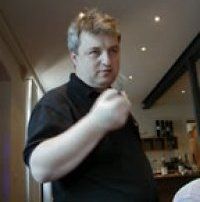
Not many winemakers would decide to demonstrate what they had done wrong to a group of Masters of Wine and, probably even less forgiving, MW students. But that’s exactly what Dr Joachim Heger (pictured) travelled from the southern German region of Baden to the historic Vintners’ Hall in the City of London to do last September.
It has become traditional for the Annual General Meeting of the Institute of Masters of Wine to be preceded by an educational tasting. This year the theme was one unfamiliar to most Masters of Wine, German Spätburgunder, or Pinot Noir. This is a wine style that has changed out of all recognition in the last 10 years or so. Now that Germany is producing red wines that really are red as opposed to greyish pink, and smell ripe and fresh rather than sweet and tinged with rot, Spätburgunders have become some of the most popular wines of all in Germany – so popular that even though there is no shortage of wine (Germany produces almost as much still Pinot Noir as France does), both demand and prices in Germany are too high to encourage much export.
But some of Germany’s most admired Spätburgunder producers – Meyer-Näkel of the Ahr, Kloster Eberbach of the Rheingau, Fürst of Franken and Bernhard Huber and Dr Heger of Baden – brought over some great examples to titillate the palates assembled in London. Most of the 20 examples shown were from this century’s particularly successful vintages, such as 2007, 2005 and 2003 – although Dieter Greiner of Kloster Eberbach brought a fabulous 1959 from this state-owned enterprise’s historic Höllenberg vineyard in Assmannshausen. Joachim Heger, however, dutifully followed instructions to the letter: to make his tasting as educational as possible.
He therefore showed us not just the highly successful 2005 vintage of the top bottling from his Ihringer Winklerberg vineyard and the transitional 2001 vintage, but also a 1999 that was probably quite flashy in youth but had already lost its fruit, and the really dried-out 1993. He admitted that in the 1990s, at the start of the Spätburgunder renaissance, he and most German winemakers had tended to pick too late, a hangover from Germany’s worship of high must weights for their white wines. They also tended to over-extract what was in the fruit, and used oak heavy handedly, too much like a seasoning rather than as a vessel with useful physical properties. ‘We used hi-tech methods then,’ he told us. ‘Today we use lo-tech methods, more or less like the way that 1959 was made.’ The other winemakers nodded in agreement.
This was a particularly brave, public and dramatic demonstration of the way in which wines, winemaking styles and techniques have been evolving in recent years for this particular combination of variety and country, but it is very far from unusual. The only unusual aspect is that Dr Heger was so explicit in describing what he believed he had done wrong.
He reminded me of the pioneer, if not the leading light, of the Agly Valley in Roussillon, the far south west corner of France that I believe is currently one of the most exciting wine regions in Europe. When I last visited Gérard Gauby of Domaine Gauby in the summer of 2005, he had already renounced his late 1990s style of wines he described as ‘bodybuilder’ and was thrilled to be able, thanks to following biodynamic farming techniques, to pick his grapes much earlier than before, but chock full of flavour at under 13% potential alcohol as opposed to nearly 15%. I have recently particularly enjoyed his top red, Muntada (though I enjoy his whites even more) from both the 2002 and 2003 vintages. Even at six or seven years old, they are wines with real freshness, transparency, energy and character, whereas I see from the notes I took in 2005 on the thick, heavy 1998 Muntada that it was already starting to dry out and smelt burnt and tarry.
But even higher profile winemakers admit that their styles have been changing. Michel Chapoutier of the Rhône Valley, Australia, Portugal – and the Agly Valley – admits that there’s been an evolution in the style of his wines that is evident to ‘people who know my wine over time’. I’d say his wines are definitely more fluid and graceful than they were and, perhaps also because of his devotion to biodynamics (although I would not want to draw a necessary relationship here), seem to show more vitality and potential for ageing. En passant, I tasted Chapoutier’s white Ermitage, Cuvée de l'Orée 2004 next to Domaine de la Romanée Conti’s 2004 Montrachet in double magnum at September's Copenhagen tasting, and I have to say that it was the white Hermitage that kept me enthralled until the end of meal.
Incidentally, at the tasting at which Chapoutier admitted to an evolution in wine style, a fellow wine writer asked him about the alcohol levels of his wines. This did not go down well. ’That’s like asking a woman about her age’, he observed crossly.
At the risk of sticking my neck out, I would say that the signs are that the trend towards making ever bigger, more alcoholic wines is either peaking or has peaked, depending on the wine region. High-alcohol wines are still common, perhaps inevitable, in parts of Spain and are still common in some famous parts of California and Australia. But subtler wines from cooler sites in all these places seem to me to be gaining traction.
And I think perhaps the most dramatic recent trend towards more refinement in a country not previously known for it is in Argentina (on which we will be publishing a set of tasting notes soon). I have certainly recently tasted quite a sea change in the wine styles there – from wines that sometimes seemed more like thick oak syrups to very much more sophisticated and refreshing liquids. I asked almost a dozen of Argentina’s top winemakers to comment on whether they thought their wine styles had evolved, and almost to a man they volunteered that their wines were now much fresher and less oak-dominated than they used to be. The reason most of them cited was their greater understanding of the vineyard. Daniel Pi of Trapiche put it particularly clearly, ‘Over the past 15 years we have changed from "corrective enology" to "preventive enology", then from "technological enology", to "sensitive enology", and lately I have gone back from "high-intervention enology" to "low-intervention enology".’
I do believe (and, it has to be said, hope) that this is a worldwide phenomenon.