
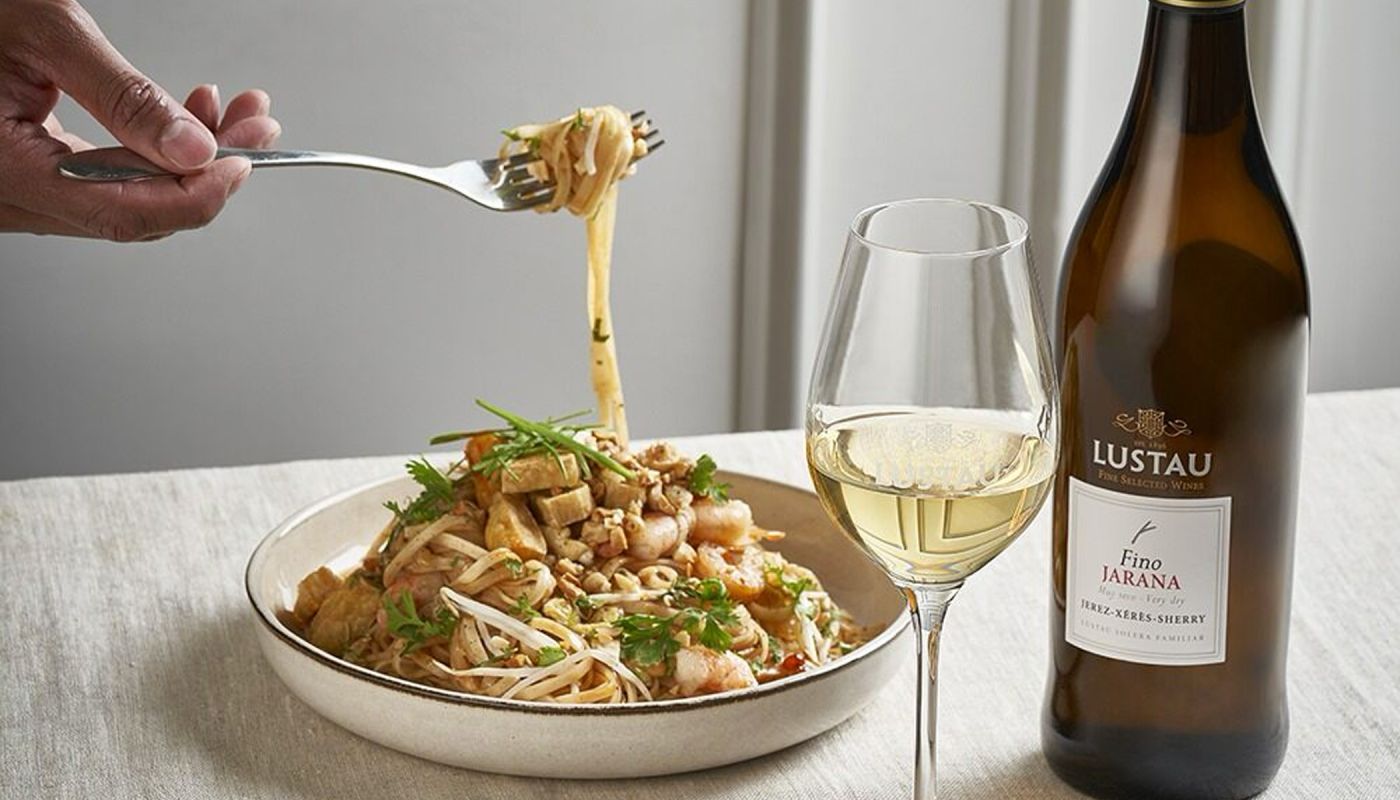
The guy stepped out of the door onto the patio, a very large glass of white wine in his hand. The scent was so unmistakable I didn’t have to ask what he’d filled it with – only sherry can transmit the scent of the salt and sea so vividly. But I did want to know if he knew what was in it. ‘I don’t know, but it’s delicious’, came the reply.
I completely agree – I’d bought the wine for the party, along with a bunch of others I’d left open in the kitchen for people to help themselves. I’d just never thought of sherry as a wine to pour like a Chardonnay. Until very recently, all sherry was fortified, meaning that it has extra alcohol added to it – unlike regular whites. At 15% alcohol, a six-ounce (170-ml) glass of sherry packs quite a wallop. Small pours are the norm.
And sherry, it must be said, isn’t a gulper. A Fino like the one he’d filled his glass with – Lustau Jarana – is more intense than your usual dry white. A sip is as refreshing as a cool breeze off the Atlantic, and that little bit of extra alcohol seems to help carry its scent and flavour into every crevice of your head. A sip can last minutes – and so a glass can go far.
But as I watched him, I realised that he was on to something. Sherry loves food, and sherry loves people, both of which we had in abundance at our climate-week party. And sherry is rarely expensive – in fact, a bottle such as Lustau’s Jarana is incredibly affordable when you know what’s gone into the making of it. Unless it’s really hot outside and your glass will warm quickly, to hell with drinking it in small pours. Fill a regular-sized wine glass just as you would with any dry white wine and enjoy it, slowly, with every bite and every conversation. You’ll find that it’s the perfect party wine.
Fino’s the word
I should clarify that sherry comes in many styles, from bone-dry to richly sweet, and I’m referring solely to the former – to Fino, along with Manzanilla one of the lightest styles of sherry. All sherry wine originates in southern Spain, in the region of Jerez (which we English-speakers somehow corrupted into the word ‘sherry’, the French into Xérès, so all three words appear on a bottle of sherry – Jerez-Xérès-Sherry – as the official name of the protected designation of origin).

The way fino comes to be is really very strange: after the wine has fermented and has been fortified to about 14.5–16% alcohol, in some barrels the yeasts (flor in local parlance) move from digesting sugars in the wine to consuming ethanol. In the process, they become fluffy and buoyant, rising to the top of the liquid, eventually forming a thick, whitish blanket (or veil – velo in Spanish – as it’s termed in the region) that protects the wine beneath it from oxygen.
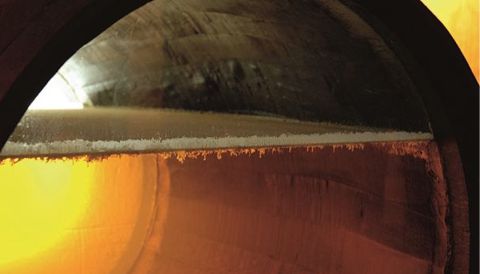
It doesn’t happen to all the barrels – those that don’t form flor are moved into a separate area where they will age in contact with oxygen, darkening and taking on nutty tones (these become olorosos). And sometimes flor will form in a barrel but die off before long, exposing the wine to oxygen (in which case it will go on to become an Amontillado or a Palo Cortado).
A Fino will spend its entire life under the flor, entirely protected from oxygen. This means that the wine stays pale and clear in colour and holds on to its delicate fruity character (think faint, crisp green apple) and stony, saline mineral tones as it ages. It also takes on a crisp, lively feel thanks to the production of acetaldehyde, a byproduct of the flor, which makes up for the relatively low acidity of the wine.
Lustau’s Fino Jarana
My bottle of Fino came from Lustau, a company that’s legendary in Jerez for its extensive array of sherries. The house was founded in 1896 by an almacenista, someone who makes wines that they then sell to the larger houses, who will then age them and sell them under their own label. Lustau continued in that vein until 1945, when they began bottling their wines themselves. The company, owned since 1990 by the Caballero Group, a family-run company based in Cádiz, has now grown into one of the most respected houses in Jerez, with six bodegas in the Jerez region from which they produce more than three dozen sorts of sherries ageing in some 10,000 casks. In charge of this highly complex process is capitaz (cellar master) Sergio Martínez, who has been with Lustau since 2003, taking over in 2016, when his mentor, Manuel Lozano, unexpectedly passed away after 17 years at Lustau. He works hand-in-hand with master blender Fernando Pérez, who started in 1990.
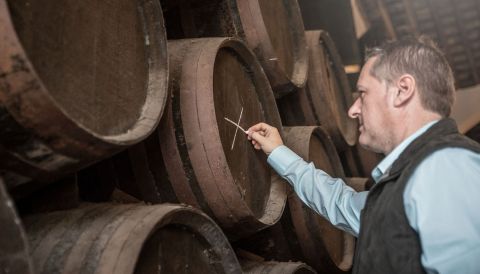
Jarana comes from Bodega Las Cruces, their bodega in Jérez de la Frontera, a town that’s about 20 km (12 miles) inland from the coast. That distance makes a difference in sherry production: there, the slightly warmer climate gives rise to Finos that feel richer and rounder than those aged closer to the sea.
The wine also has an average age of four years, meaning that each bottle is a blend of wines from multiple harvests, the layering of ages creating complexity in the wine. To me, the wine tastes first and foremost briny and fresh – but there is also a fruitiness that rounds it out, and a yeasty note from the flor that reminds me of the scent of the bakery around the corner when the croissants come out of the oven. While I know the sherry is not very high in acidity, it has a zing that my brain interprets as acidity, and it feels invigorating.
Because it has these layers, this body, this freshness and this complexity, it’s easy to drink on its own (some Finos can indeed take the breath away with their sharpness, demanding a bowl of almonds or something to mediate). But it also has loads of personality, and it stands up to all sorts of foods – even those others would find quite challenging.
How to serve it
Do as I did and take the bottle out of the fridge about 15 minutes before serving so that it’s not ice cold. Do not do as my friend did and fill your glass three-quarters full; that’s too full to swirl around and get the full impact of its delicious aromas, and by the time you get to the bottom of the glass it may have warmed up too much to be fully enjoyable. But do pour it into a regular wine glass as you would any other wine.
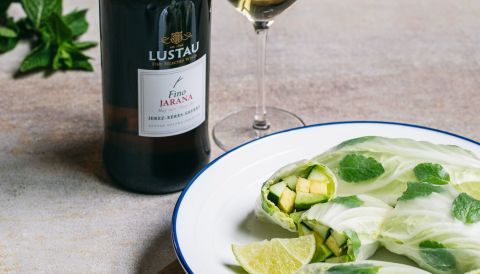
And then sit down to dinner. What goes with Fino? Seafood and salty things are the most popular matches but I can tell you for an evening of intense grazing that just about anything appreciates a Fino. Spanish tortilla, natch. Marinated mushrooms – a lovely way to emphasise the earthier notes in the wine. Saffron risotto – amazing. Any sort of firm cheese, whether young and sweet or aged and nutty – delicious. And if you have any left over, no worries: it will keep well for 2–3 days recorked and refrigerated, ready for your party-recovery takeaway of pad thai and spring rolls later in the week.
All photos courtesy Lustau.
For more information on the unique process of sherry-making, see the entry in the Oxford Companion to Wine, and for more Finos to explore, see our wine-review database.