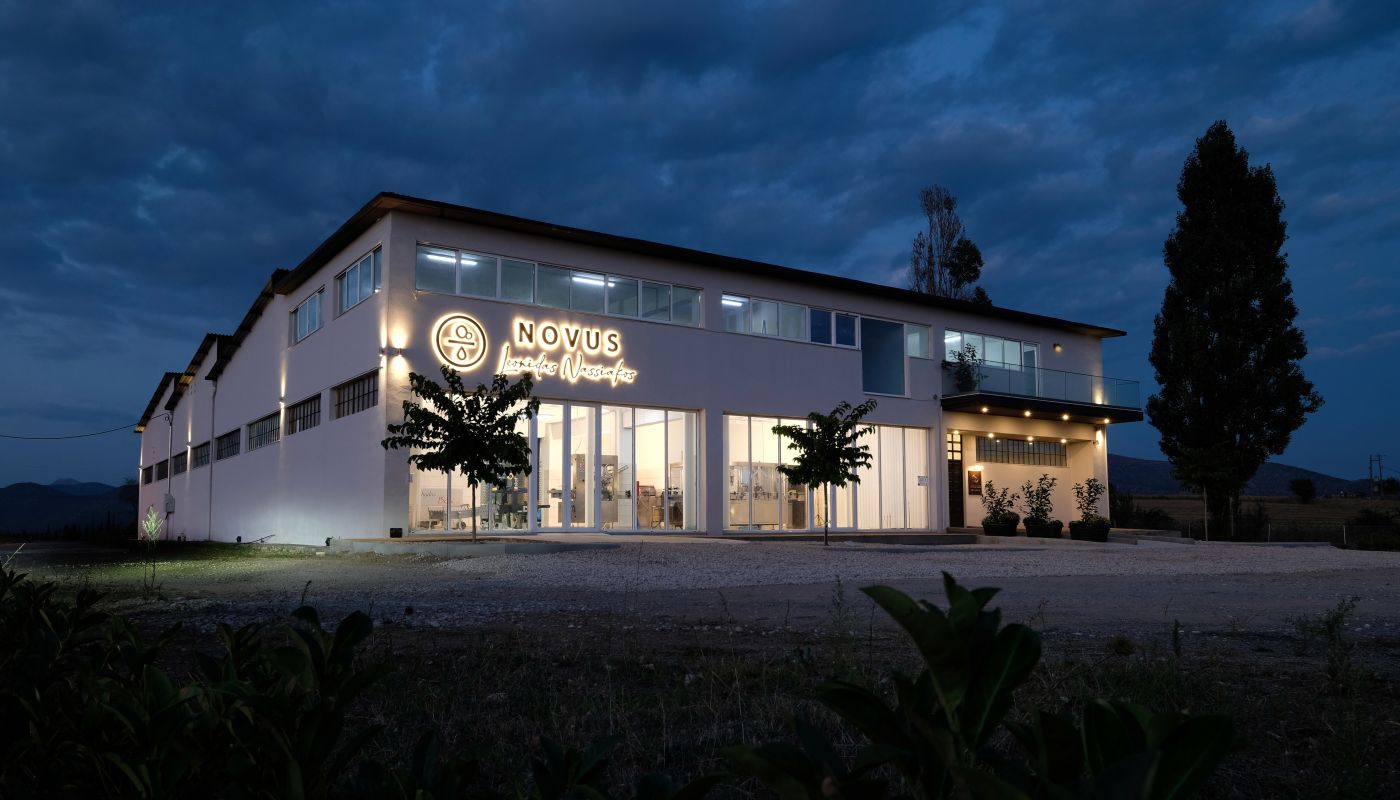
It would be no exaggeration to call Leonidas Nassiakos Mr Moschofilero (pronounced mosco-feel-ero). Not only does he love this aromatic, pink-skinned variety but he’s been working with it for more than 30 years, first at his family winery, then with Semeli and now fulfilling a long-held dream in his own, new winery, appropriately named Novus, on the high plateau of Mantinia in Greece’s central Peloponnese (see this World Atlas of Wine map).
When I asked Nassiakos why he loves this variety so much, he replied:
‘It’s the first grape variety that I was introduced to and it happened at the same time as the Greek wine revolution. It was then that my father – as a pioneer of Moschofilero – was battling alone to convince restaurateurs and liquor-store owners to include Mantinia in their lists. In those years (45 years ago) quality wine in Greece was considered a high-alcohol wine (Moschofilero wasn’t one of them) with low acidity (Moschofilero has moderate to high acidity) and dark-yellow-amber colour (Moschofilero has this intense lemon colour with grey highlights). I remember how much of a struggle it was for my father and I was close to him in it. Something I would like you to know is that Moschofilero was the first Greek wine to be requested by the name of the variety, as until then the Greek wines that the consumer knew were white, rosé, red and retsina.’
Coincidentally, back in the 1990s, it was Moschofilero that first caught my attention among Greek white wines, thanks to Hellenophile UK wine buyer Steve Daniel, who at the time led the buying team at Oddbins, then an idiosyncratic and engaging wine retail chain in whose shops I whiled away many a happy Saturday morning.
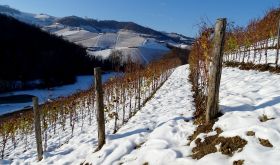
Good Moschofilero is attention-grabbing in a rather delicate way. It’s certainly scented but not heavily perfumed, as Gewürztraminer can be, even though it tends to have a light note of rose petals. But entwined with this aroma is a grapefruit-like citrus purity, a gentle grapiness – more subtle than Muscat – and notable freshness thanks to the cool climate of the Mantinia plateau, where it snows in winter and grapes ripen late yet rarely get above 12.5% alcohol – this wine is 12.4%. This particular example, which I tasted in the summer and again last week, has not only a certain lightness of touch but also a subtle intensity and persistent flavour, finishing with an attractively dry stony impression even though the texture has been rounded by the winemaking.
Canadian-born Nassiakos studied chemistry and oenology at Patras University in the northern Peloponnese. His grandfather started the family company in Mantinia in the centre of the region in the early 1950s. After 10 years in Canada, Nassiakos’s father came back to Mantinia to run the business and Leonidas joined him in the mid 1990s after he had finished his studies. As if that wasn’t enough to keep him busy, from 1996 to 2002 Leonidas also worked as the oenologist at the Nemea Co-operative to get more experience with red wines, specifically the region’s signature variety Agiorgitiko. From 2002 he ran the Semeli winery in Nemea until Semeli and the Nassiakos company joined forces and Leonidas ran the whole shebang until 2020.
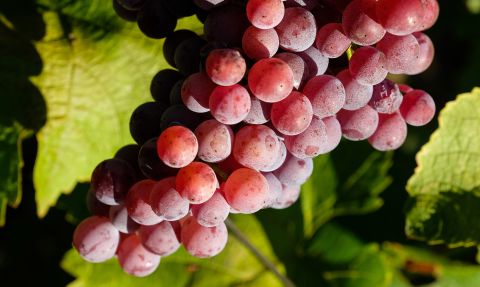
It’s surprising that grapes this pink produce a white wine. In the past, some producers in Mantinia subjected their wines to a charcoal treatment to remove any colours. This is now much less common as producers take one of two routes: embrace the pink tint (even fermenting the grapes with the skins to make a rosé such as this previous wine of the week) or keeping the hand-harvested grapes cold and then pressing them so gently that almost no colour is extracted from the skins. There is occasionally a very slight pink or grey tinge – as there can be with Pinot Gris – but it’s hard to see unless you compare it with a glass of Assyrtiko or Sauvignon Blanc, for example.
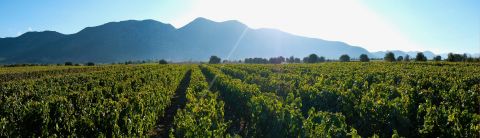
Beware: Nassiakos produces two Mantinia Moschofilero wines under his own label, this one is made from 85–90% estate-owned vineyards in the Zevgolatio subregion at 630–660 m (2,067–2,165 ft) on mostly clay soils. He has 5 ha (12 acres) of 15- to 40-year-old vines and plans to increase that gradually. The other one is slightly less expensive and is made from bought-in grapes supplied by growers whose families sold fruit to his father and grandfather. The difference is clear in the UK, Canada and Europe because this wine from estate-grown fruit is called Novus, A Priori (a nod to his father’s early promotion of the variety), as pictured below.
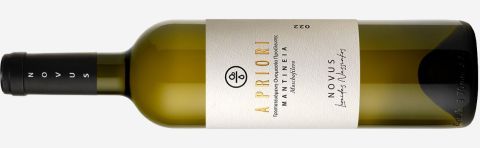
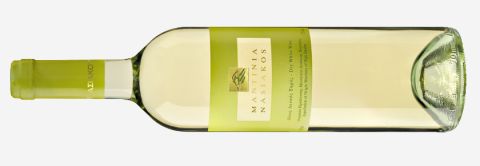
In the US, however, the labels of the two Moschofileros are more similar. Look out for the one below labelled Nasiakos [sic] Mantinia (the green label not the white one). He also makes a more substantial and ageworthy single-vineyard Moschofilero called Optimum, which is part fermented in acacia and concrete eggs.
Winemaking is straightforward but very precise, as you would expect from Mr Moschofilero. The grapes are taken to the winery in refrigerated containers, sorted, then kept with the skins in the press at 7–9 °C (45–48 °F) for 5–6 hours to extract flavour rather than colour. After pressing, the juice ferments in stainless-steel tanks at a coolish 14–16 °C (57–61 °F). After fermentation, the wine stays on the lees for three months with regular stirring, to create that slight roundness on the finish.
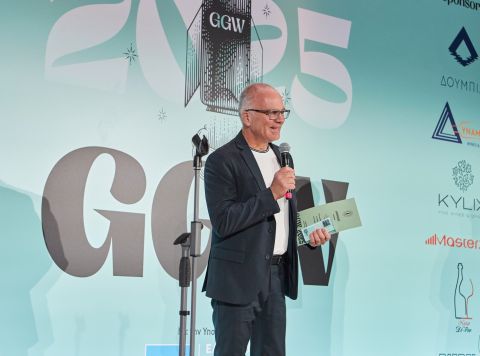
This wine was chosen among the Great Greek Wines of 2025 as well as being selected for that competition’s new category of Great Value Wines, for winning wines retailing for less than €17 per bottle.
My first thought was to drink this as an aperitif but despite its apparent delicacy and fine scent it has the wherewithal to go with shellfish, grilled fish and green salads.
A Priori is imported into the UK by Keeling Andrew under the label Novus, A Priori and available for £20 from their retail business Shrine to the Vine (online or at one of their three London shops). It is currently on offer from the Wine Society at £11.95 but stocks are low. The same label is used in Europe and Canada.
Find Novus A Priori Moschofilero 2024 Mantinia
In the US the wine is sold as Nasiakos Mantinia and imported by Stellar Importing Company. It’s available in 19 states. For local stockists, email [email protected].
Find Nasiakos 2024 Mantinia (green label)
Find many more reviews of Moschofilero wines in our tasting notes database.