See related tasting notes.
We British have a thing about eating out of doors. We love it. I remember our French neighbour being utterly bemused by our sitting outside to eat lunch soon after buying our base in the Languedoc in 1989. For the locals, the harsh midday sun is something to shelter from.
The ideal for us Brits on the other hand is to sit outside eating delicious food washed down with good wine in dappled sunshine screened by trees or under a vine-shaded trellis. The pleasure is all the sweeter if you have been denied it for some time. This year, as I hardly need reiterate in view of all the gloomy reports of the cool, retarded 2013 growing season we have published here, we have hardly had a chance to indulge our passion for outdoor eating.

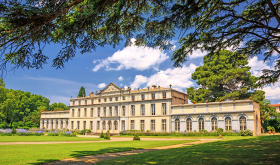
Imagine the pleasure, then, a week last Friday of lunching under oak trees in the grounds of a semi-deserted medieval castle on a Tuscan hilltop while being treated to magnums of Sassicaia, including the 1985. Does my working life get any better than this? No it does not.
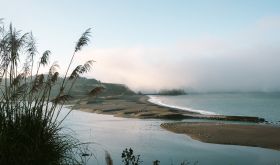
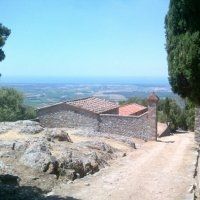
As it happens, the very first vintage of Sassicaia, when it was still strictly a wine for family consumption, was made and aged by the late Mario Incisa della Rocchetta in the Castello di Castiglioncello, up a rough track through the woods 400 m above the blue Mediterranean. The first vines he planted, strictly experimentally as a hobby, were nearby in the small clearing shown below all the way up here. In the 1940s the Tuscan coast was still plagued by malaria and those who could, instinctively headed for the hills – especially in midsummer. In fact Mario’s daughter-in-law and her sister, Piero Antinori’s mother, would regularly ride up to Castiglioncello to escape the summer heat.

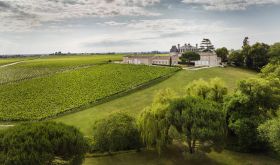
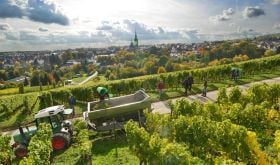
Today of course the coast is (almost) free of mosquitoes and vines stretch virtually all the way from Castiglioncello to the sea (see the view from the castle top left). The famous Ornellaia estate is just downhill of the castle and sometimes it seems that virtually every Italian wine producer of note has invested in a wine operation in the Maremma. So fast and furious was the pace of planting in the 1990s indeed that the local eco group successfully campaigned for a ban on planting major new vineyards. Today, plantings are strictly limited.
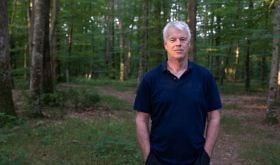
I had the pleasure of revisiting Tenuta San Guido, the thoroughbred stud farm and pioneer wildlife reserve where Sassicaia is made, before our lunch up on the hill with a group of wine writers, sommeliers, wine merchants and private customers organised by UK importers Armit. Mario’s 77-year-old son Marchese Nicolò Incisa della Rocchetta (seen below with a map of the 2,500-estate that stretches from the castle to the coast) was our soft-spoken host. We were all so captivated by the semi-ruined castle (and I was struck by the difficulty of cooking and serving a large lunch here) that we asked why they didn’t do up the property, only to be told that they had about 30 more like it. Volunteers…?

It was fun to meet Monica Larner (below right), the new Italian specialist for The Wine Advocate, who is based in Rome and told me she could no longer go to tastings attended by lots of other wine writers as they so distractingly took photographs of her and so on. (If this makes her sound big-headed, it is misleading.) She brought her dog.

We had been given the impression that we would drink well at this outdoor lunch and I was thrilled to see that all the wines were served in magnums. I was even more thrilled to see that the succession of vintages culminated in the famous 1985 – a truly exceptional wine that was apparently aged in barriques made of Slavonian oak. The oak regime for Sassicaia was that initially when the wine was made exclusively for the family’s own use, it was, like virtually all Italian wines then, aged in large Slavonian oak casks, or botte. Then in the late 1960s production was too much for the family alone and Nicolò’s nephew Piero Antinori suggested it should be vinified at their winery under Giacomo Tachis’s watchful eye and sold more widely. Sassicaia 1968 was the first, highly successful commercial release and most of the wine was made under the Antinori regime, where Slavonian oak barriques were used – then a novelty in Italy – until 1982, when production moved to Tenuta San Guido. I was told that ‘in the mid 1980s’ French oak began to replace Slavonian for the barriques that are used to this day – about 750 of them in total in the smart new cellars of San Guido, where planning permission was so restricted that they have be to stacked five-high on these racks.

The Marchese is no fan of new oak. He points out that his rule is one third new oak, one third second-use and one third third-use barriques. He believes new oak is just a passing fad and that it’s important not to have too much. The results certainly bear out his philosophy.
See tasting notes on the succession of wines I enjoyed in Bolgheri. And yes, I do feel a bit guilty going on about how wonderful this particular experience was so soon after all the great dinners described in Vintage overkill?