The most impressive statistic I learnt doing my homework prior to our very first trip to Seville, the capital of Andalusia, has nothing to do with food, wine, sherry or even the orange trees that proliferate across the city.
An extraordinary number of operas have some kind of association with the city, including of course The Barber of Seville but also Carmen, Don Giovanni, The Marriage of Figaro and about 150 others. And as we walked the city centre on our first morning there, this figure did not seem so surprising.
The narrow, cobbled streets with their opera-friendly balconies, the imposing (and to me overpowering) cathedral, the music and architecture – all of these factors combine to provide a decidedly theatrical backdrop.
And of course there are the tapas bars which today have become part of every tourist’s visit to this city. What they offer – not to mention their low prices – attracts families and couples from all over the world.
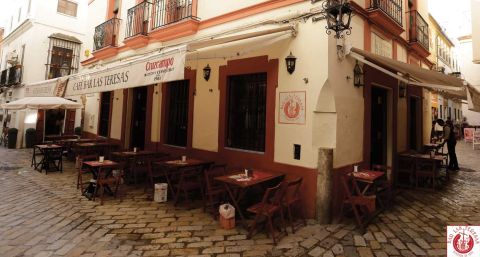
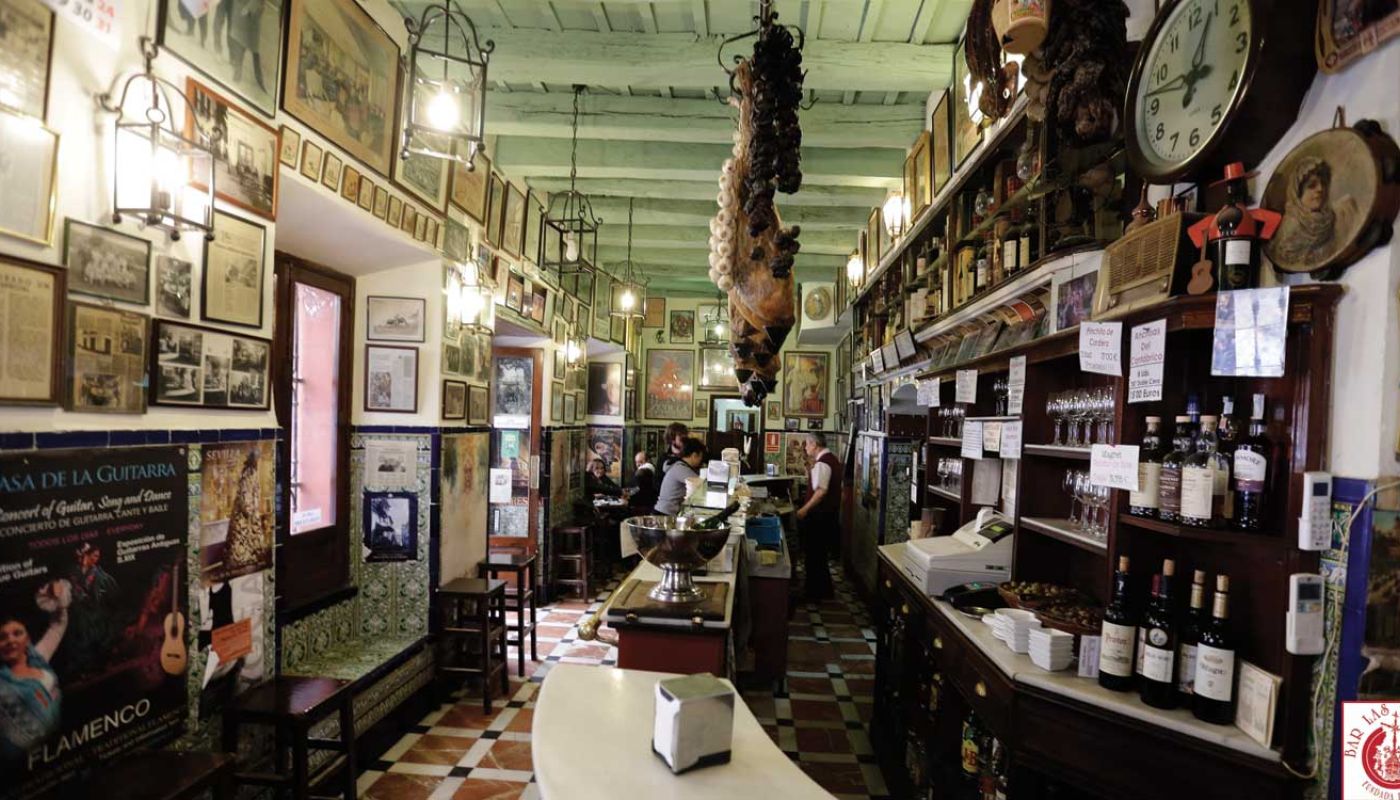
As I handed a euro to one of the guitar ensemble that had just sung for us outside the Bar Las Teresas above (he was completely baffled after asking for JR’s name in order, presumably, to incorporate it in a song), I realised quite how little these wonderful bars have changed since the very sensible 17th-century legislation that required innkeepers to serve food with alcohol to curb public drunkenness. The casks of sherry; the giant hams that are a speciality of Las Teresas hanging from the ceiling; the ancient posters and photographs; the dishes of cold tapas that bedeck the bar surfaces supplemented by hot dishes from a kitchen invariably below are all part of the attraction.
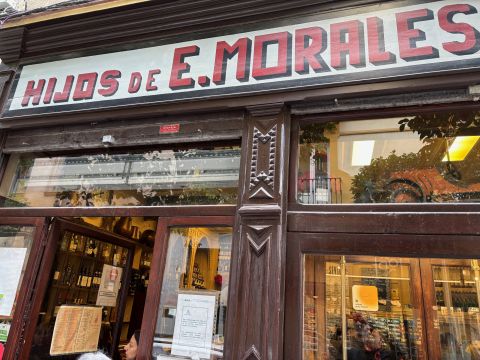
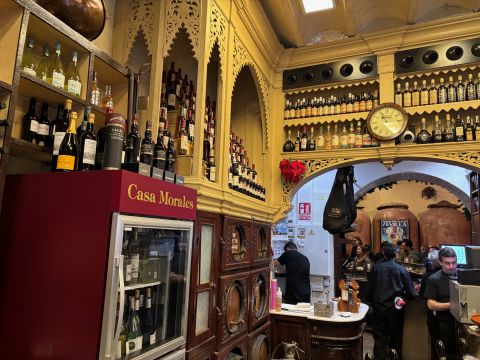
In fact, as I studied the dozen barmen in action at our second tapas bar, the atmospheric Hijos de E Morales, or Casa Morales, founded in 1850, I realised that there has been only one significant change in their make-up since I walked into my first tapas bar in Bilbao in 1977. The barmen still wear black; they still have to be lithe and supple as they glide past their many customers; they still have to be polite and cheery; and they still have to be fleet of foot. But they no longer need a wonderful memory to instantly recall which customer has ordered which drink and how many tapas to calculate every customer’s bill.
That’s because around their black belts is a small credit card machine into which the barman enters a number against each customer, then enters whatever they drink and eat, and then at the press of a button the machine calculates and presents the relevant bill. No brain power is required, although the low total will come as a very pleasant surprise for the happy customer. As little as €2.75 is the going price for a large glass of fino or amontillado (the greatest drink in the world according to this sherry lover). Most of the cold tapas, excluding the jamón, cost around the €5 mark, and my bill at the bar Morales came to €11.50, which included two manzanillas, a dish of olives so plentiful we did not manage to finish them, plus a dish of tuna and sautéed red peppers. Plus a great view of an experienced ham slicer at work in front of the establishment’s ancient sherry vats.
But the tapas bars of the old city attract a vast number of visitors and, feeling somewhat jostled in the crowds, at 2.45 we decided to head back to our hotel, still slightly hungry, if not exactly thirsty. We almost walked past a particularly modern-looking restaurant named Desacato, which translates as disrespect I subsequently learnt. (Its slogan is ‘irreverent cooking’.) We went into a predominantly empty restaurant and were greeted by a waiter who obviously enjoyed debating with himself whether to offer us a table for two. By the time we left an hour later, extremely well fed, the restaurant was full of Spaniards who enjoy lunching as late as they still enjoy taking their evening meal.
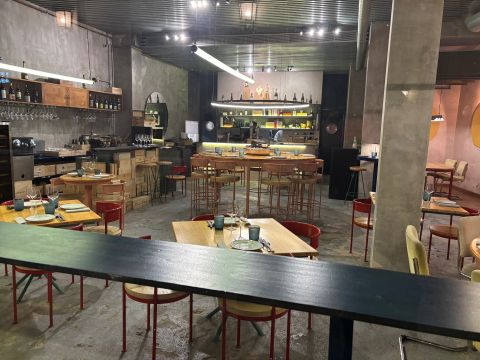
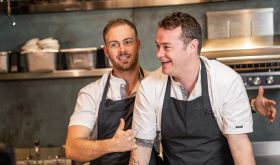
Desacato, seen above before evening service, is very different. So spacious! The walls and floor are finished concrete. The chairs and the lighting are both very modern. All the waiting staff are young as is the chef although here again they all wear black. In the men’s lavatory there is a framed piece of dried fish skin. The menu is a few small pages clipped together, culminating in the invariable steak by the kilo.
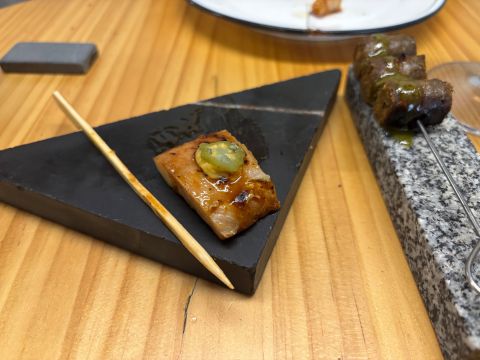
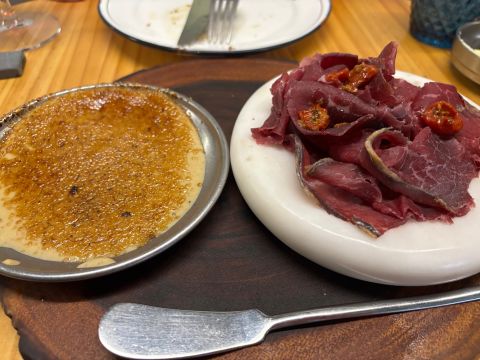
I ordered somewhat warily an eel skewer and a salmon txistorra – a cured sausage that is a speciality of Navarre, northern Spain – for us to share plus a plate of their oxtail-based version of air-dried beef with sun-dried tomatoes and a dish described as caramelised foie gras. JR asked for their list of wines by the glass. It turned out that the relevant iPad was out of service but the waiter responded by bringing a couple of bottles and pouring tastes for her before we settled on a couple of glasses of 2021 Lalama from the Dominio do Bibei in Ribeira Sacra that proved delicious and inexpensive at €7.50 a glass.
Any reservations we may have harboured were immediately dispelled by the food. The ‘meatiness’ of the eel distinguished by a mustard and dill sauce; the dark sausage topped with pickled okra; the numerous, thin slices of oxtail with arbequina olive oil; and a fascinating dish of foie gras purée and crispbread that combined pepper and some sweetness and took the place of dessert. My bill came to €70 which included extremely friendly service
With the exception of a plate of anchovies and tuna, we had ordered no fish so far, despite being in a city that had grown rich as the site of all trade with South America in the 16th and 17th centuries. That was about to change with dinner at Cervecería Salmedina.
This is a restaurant all about fish that is obvious from the time you enter and take in the numerous glass-fronted cold stores filled with oysters, razor clams, sea bream and sea bass.
Just past there is the busy open kitchen separated from the diners by a counter on which is mounted a beer pump that seemed to be dispensing glasses of beer all evening. (Despite Spain’s exceptionally low restaurant wine prices, Spaniards really do seem to prefer beer.)
So much for its physical charms. Less inviting is the restaurant’s layout, with high tables, metal-framed stools and a great deal of white tiles. All of which combined to multiply the noise level within the crowded space by the time we left. Much quieter would have been one of the tables outside (while London froze, Seville was balmy).
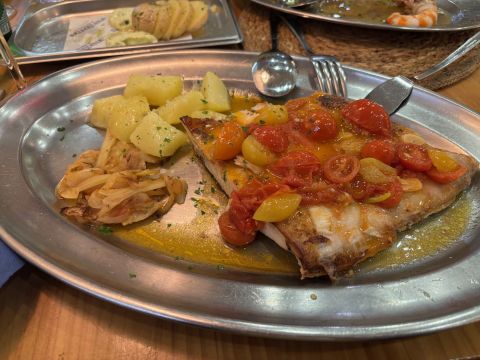
We ate and drank reasonably well. Potato slices (papas) with aïoli and a plate of langostinos swimming in a piquant garlic sauce for JR; a very rich crab gratin and a grilled belly of blackfish, an extremely local fish, for me contributed, with four glasses of wine, to a bill of €135– the blackfish being by far the main item. If the kitchen slowed down and refined its cooking a little, this restaurant could be an even bigger crowd-pleaser. Though to judge from how many locals were turned away at the door, crowds are already pleased.
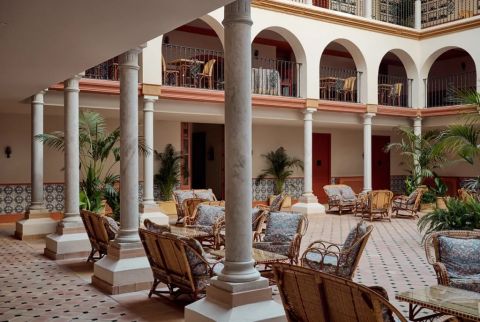
We walked the 15 minutes back to our hotel, the Cristine Bedfor, which came via a recommendation on Mr & Mrs Smith and a contact in Jerez. We had enjoyed dinner there on our arrival as much for the food as the setting. Newly opened and clearly still settling down, its restaurant on the first floor overlooks those enjoying the handsome Andalusian patio lounge below which even boasts a stage where flamenco performances take place at the weekend according to the hotel’s particularly efficient front desk.
In a city that is packed with bars, cafes, hotels and restaurants, we were grateful for recommendations from many sources, including blessed Ferran.
Bar Las Teresas Calle Santa Teresa, 2, Seville, Spain; tel: + 34 954 213 069
Casa Morales Calle García de Vinuesa, 11, Seville, Spain; tel: +34 954 221 242
Desacato Calle Amor de Dios, 7, Casco Antiguo, Seville, Spain; tel: +34 646 41 15 17
Cervecería Salmedina Calle Guardamino, 1, Casco Antiguo, Seville, Spain; tel: +34 954 21 31 72
Every Sunday, Nick writes about restaurants. To stay abreast of his reviews, sign up for our weekly newsletter.