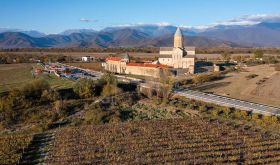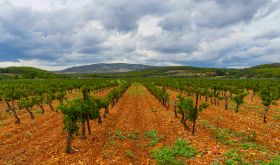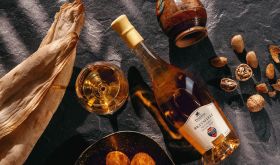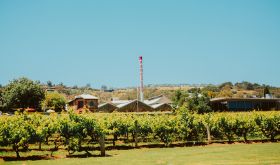
Madrid and Barcelona have always been left to tourists rather than natives in August but now that summers are increasingly torrid, more and more Spaniards are heading north rather than south and east for their summer holidays. A prime beneficiary of this is Spain’s wettest, coolest, greenest region, Galicia in the far north-west, which is of growing interest to wine lovers, too.
In recent years, Galicia, four of whose five wine regions produce mainly white wines, has witnessed tangible, bankable proof of the world’s wine drinkers’ switch from reds to whites as several important producers of Spanish red wine have invested in Galicia. Three years ago, Tempos Vega Sicilia, producer of the most famous Ribera del Duero red of all, 600 km to the south-east, announced a €20-million investment in not just vineyards but a winery to be ready next year in the leading Galician wine region, Rías Baixas. The Alma Carraovejas group, owners of another highly regarded producer in Ribera del Duero, Pago de Carraovejas, had already acquired Viña Meín in Ribeiro a little further inland in 2019. And the important Rioja producer CVNE acquired La Val in Rías Baixas in 2023, having established their Virgen del Galir operation in Valdeorras, the Galician wine region closest to their base, as long ago as 2002. Pago de los Capellanes of Ribera del Duero established their Valdeorras bodega O Luar do Sil in 2015.
All this external attention has come as a bit of a shock to a part of Spain that always felt a little isolated, and distinctly different from the Spanish mainstream. Admittedly the principal grape of Rías Baixas by far, Albariño, has known the spotlight of fashion for many years. Since the 1990s it has been almost Spanish for white wine (and is so much easier to pronounce than Rías Baixas) even if the whites of Rueda posed a more recent challenge. The combination of Albariño’s thick skins and the dramatically indented Atlantic coastline of Rías Baixas, much more rain-lashed than the rest of Spain, has yielded crisp, dry, fruity wines for early consumption that have been much more refreshing than most Spanish whites.
But now there’s a sea change in the style of Albariño from Rías Baixas in which producers of the top wines anyway seem to be heading in a sort of Chablis direction, making much more interesting wines: more saline, mineral, deep-flavoured wines designed to age that are well worth seeking out. As a sign of the increasing seriousness of the wines, Vega Sicilia’s first vintage 2024 will not be released until 2027. The region has been divided into five subzones, of which Val do Salnés right on the coast is by far the most important, and the wettest.
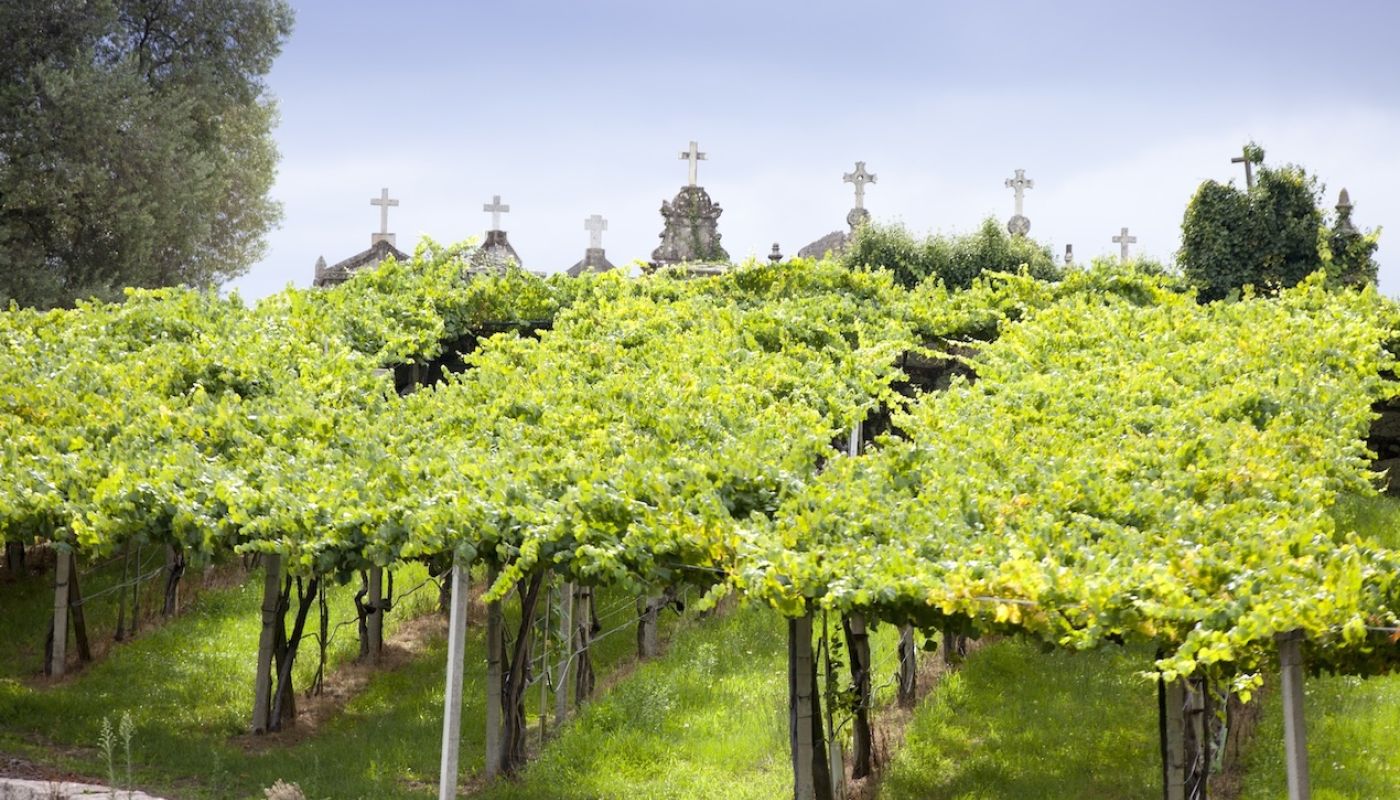
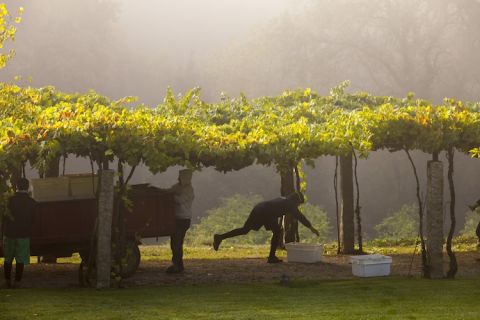
A characteristic of Galicia in general is that vineyards are tiny and often owned by family members who left the region long ago, so buying land is fraught with difficulty. The 4,640 ha (11,466 acres) of vines in Rías Baixas, for instance, have about 16,000 different owners, many of them scattered around the globe. It took Vega Sicilia four years of negotiation to acquire just 30 ha (74 acres). The region is divided into 22,500 plots supplying grapes for fewer than 200 wine producers. Every square inch of land has to earn its keep and granite is so common than many a vine is trained up granite posts, sometimes with other crops planted below.
Of the other Galician wine regions, Ribeiro, Ribeira Sacra and Valdeorras have little more than 1,000 ha of vines each, while Monterrei on the Portuguese border has less than 700 ha.
The river Miño runs through Ribeiro, a provider of wine to England in the Middle Ages, before constituting the border between Spain and Portugal. It’s much drier than Rías Baixas and its dry, firm, often more powerful whites, made from much the same grapes as Portugal’s Vinho Verde, are currently enjoying a renaissance begun in the 1970s when Ricardo Carreiro of Coto de Gomariz revived local grape varieties, notably Treixadura. (The sherry grape Palomino was once widely planted in Galicia because it was usefully productive but its wines were nothing like as distinctive as those based on indigenous grape varieties and it has largely disappeared.)
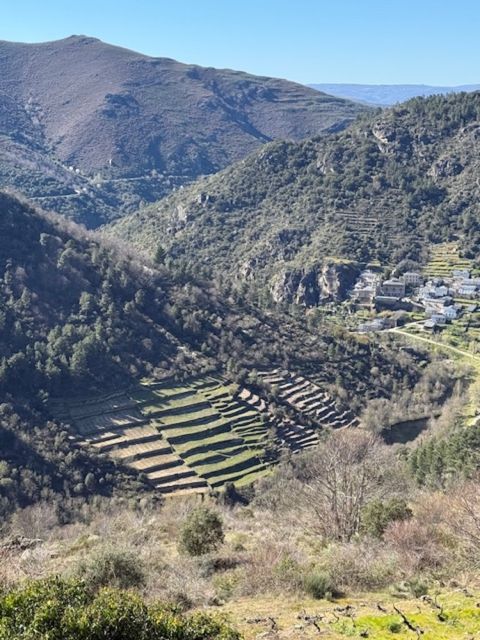
Monterrei is well inland with a much more continental climate than the more Atlantic-influenced regions described above. Although it’s primarily a small, white-wine producer, it can also ripen red-wine grapes, similar to those of Ribeira Sacra to the north, one of the most dramatic wine regions on earth. Largely red-wine vines cling, literally, to the slate slopes of the Sil Valley that can reach gradients of 85%. It’s a miracle that viticulture survives here really. But the likes of Dominio do Bibei and Ponte da Boga show what can be done with the local, fruity Mencía grape (which is also the mainstay of the exciting Bierzo region on the eastern border of Galicia and therefore in Castilla y León rather than Galicia).
Valdeorras in the extreme south-eastern corner of Galicia, bordered by Bierzo, is also on the Sil and now has a track record of top-quality white-wine production, thanks to the recuperation from near-extinction of its supremely distinguished Godello grape variety in the 1970s. The founder of the Godeval winery is seen as the ‘father of Godello’ but the first wine made exclusively from the grape was launched as recently as the mid 1980s. The variety can make such refined wines, with citrus minerality and impressive structure, that they caught the attention of Spanish winemakers from other regions.
Telmo Rodriguez, who makes fine wine all over Spain, first realised eastern Galicia is a treasure trove of old vines in the 1990s. He laid the foundations of his Ladeiras do Xil Galician operation in 2000 and now owns 25 ha (62 acres) of vines in Valdeorras and Ribeira Sacra, nine of them on extremely steep slopes, some of them pictured below.
Rafael Palacios, younger brother of Álvaro, who had already shot to fame for his L’Ermita wine in Priorat in Catalunya, arrived in 2004 and has shown that Valdeorras can produce some of the finest dry whites in the world. His vineyard-specific wines are truly stunning and have the same sort of build as a good Puligny-Montrachet. His vineyards can be as high as 700 m (2,300 ft), and his prices are high too – more than £60 for As Sortes, his first single-vineyard bottling.
Unfortunately, but perhaps predictably, neither of these talented vintners was included in an initiative organised at the end of last year by local officials to show more than 100 Galician wines (and some Galician spirits and liqueurs) in London. In fact when I cross-checked the names of participants with those whose wines are favourites with the JancisRobinson.com team, I found only Fillaboa and Quinta Couselo of Rías Baixas and Coto de Gomariz of Ribeiro among the volunteers to be included. Presumably the exercise was mainly designed to give lesser-known producers, who funded it, a helping hand.
There were a few finds in the tasting, some of them red. But if you’re looking for truly refreshing whites with real character that may surprise those with memories of heavy Spanish white wines, I can thoroughly recommend those listed here.
Galician whites
La Val, Orballo Albariño 2023 Rías Baixas 12.5%
£17 WoodWinters
Ponte da Boga, G Godello 2023 Ribeira Sacra 12.5%
£21 Talking Wines
Finca Vinoa 2023 Ribeiro 12.5%
£18.50 Terra Wines
Pazo Pondal, Leira Pondal Albariño 2023 Rías Baixas 13%
£20.99 Cockburns of Leith, £20.50 The Good Wine Shop
Godeval Godello 2023 Valdeorras 13.5%
£20.50 Les Caves de Pyrène
Fillaboa Albariño 2023 Rías Baixas 12.5%
£20 Montrachet
Palacio de Fefiñanes, Albariño de Fefiñanes 2021 Rías Baixas 12.5%
£22 Waitrose Cellar
Xosé Lois Sebio, Village 2022 Ribeiro 13.5%
£22.39 All About Wine
Coto de Gomariz 2023 Ribeiro 13%
£24.30 The Sourcing Table
Dominio do Bibei, Lalume 2017 Ribeiro 13.5%
£24.99 Thorne Wines
Gargalo Godello 2023 Monterrei 13%
£22.50 L’Art du Vin
Telmo Rodriguez, Branco de Sta Cruz 2021 Valdeorras 13%
£42 Hedonism
Rafael Palacios, As Sortes 2021 Valdeorras 14.5%
£62 The Perfect Bottle, £63.50 Songbird Wines, £64 Vino Gusto, £70 Hedonism
Tasting notes, scores and suggested drinking dates in our tasting notes database and in Galicia came to London. For international stockists, see Wine-Searcher.com. Xurxo Lobato took the first two photographs above.
Back to basics
| How refreshing whites are made |
|
I’ve always thought that the first duty of a wine is to refresh your palate, to have you wanting another sip. A key ingredient in this is acidity, the thing that characterises lemon juice and vinegar. As I explained last month, while grapes, or any other fruits, ripen, the acidity in them falls. So one key to making a refreshing wine is to pick the grapes before the acidity drops too much. But no one wants a wine to taste positively tart, and the grapes need to have built up some flavour (which takes time), so the most crucial decision of any winegrower is when to pick. Too early and the wine will taste vapid. Too late and the wine will be more alcoholic and may no longer refresh. One remedy for this is to add acid, usually tartaric, to the fermentation vat.
This is extremely common in hotter wine regions, especially for cheaper wines. But it has to be done very skilfully if that added acid is not to stick out like a sore thumb. Natural acidity generally tastes better, even though tartaric acid is the most important acid occurring naturally in grapes. The presence of tartaric acid is one of wine’s differentiating qualities and helps explain why wine can last so much longer than other fermented fruit juices.
The other major acid in grapes and wine is malic acid, which tastes sharper than tartaric – sometimes too sharp. It can occur naturally but winemakers often encourage conversion of it into softer lactic acid by introducing special lactic acid bacteria and, sometimes, warming the cellar to get them going. This process is called malolactic conversion, or sometimes, rather misleadingly, malolactic fermentation. (Carbon dioxide is given off, which suggested, before it was fully understood, that it was a fermentation.) Producers can deliberately suppress this process to keep wines refreshing by chilling, filtering or adding sulphites to the wine. Most Rías Baixas producers avoid ‘malo’, for instance. |