
The wind was howling, driving the cold through our coats and deep into our bones. It was only 12 more blocks to our apartment but that was at least 11 too many in this weather. A new restaurant beckoned, warm light spilling through the windows onto the sidewalk. A glimpse of an electric fireplace and a cozy two-top sealed the deal.
As it turned out, the place was slightly weird, the menu in search of a personality, the wait staff a little too full of it. But we decided to make the best of it.
The best of it turned out to be the wine: a peach-hued Spanish rosé called Succés Vinícola Patxanga Rosado, made from the Catalan grape variety Trepat.
When it arrived to the table, we hesitated for a moment, as the drawing on the label – of flip-flops, snorkel, sand crab, watermelon slice and ice cream – clearly radiates ‘summer’. And ‘patxanga’ either refers to a party, to a sort of party music or to a stickball/football game, depending on who’s translating the Catalan.
But one sip confirmed that this is an all-season rosé – and maybe even at this point in its life it’s at its best for winter drinking. This is no flighty pink trifle; while it’s juicy with peachy flavour, a hint of raspberry around the edges, it’s also broad and slightly earthy, with a gentle tannic persistence. It was lovely on its own but really started to shine when it warmed slightly and a bowl of root-vegetable chips landed on the table. From there it went from success to success: it was light enough (only 11.5% abv) to get along with a green salad, but at the same time stood up to the incredible richness of a crab cake on a brioche bun.
The knock-out round, however, was a half a caraflex cabbage (a variation of hispi, which our restaurant reviewer Nick Lander so deservedly praises in Hispi’s moment) roasted into sweet, earthy submission and paired with a rich, creamy curry sauce. Something about the earthy notes of the wine and that of the cabbage; the peachy blush of its fruit and the spice of the dish; the creamy, soft, sleepy richness and the liveliness of the wine’s acidity made this the match of the season.
Reader, we drank the entire bottle. And I’ve stocked up on caraflex cabbages now, too.
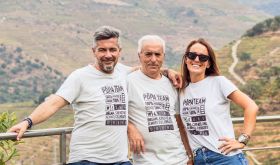
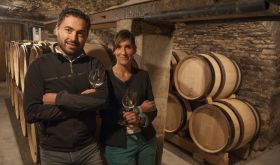
I’ve since tasted the wine again, just to make sure it wasn’t the weather and the food swaying my opinion, and I remain smitten. It turns out that it’s made by a young couple, Albert Canela and Mariona Vendrell, who met while studying oenology at university and decided to go back to Canela’s home region to make wine. They began in Canela’s family’s garage in 2009; by 2011 they moved into a shared facility for budding winemakers and started their label.

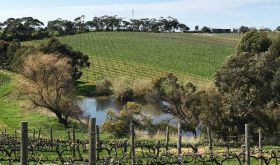
They focus on varieties local to Conca de Barberà, a tiny region (just 3,800 ha/9,390 acres) that sits just inland from Penedès and Tarragona in north-east Spain. (See the map of Catalunya from The World Atlas of Wine.) The terrain is steep and rocky, and the climate is between Mediterranean and continental, so between elevation and sea breezes it rarely gets really hot.

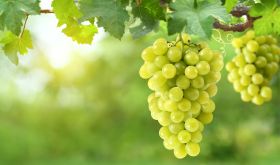
It’s one of the few places in the world that grows Trepat, a light-coloured but thick-skinned red grape that can hang long into the autumn here, taking on full, complex flavours even as it stays light in alcohol and colour. It’s often been used for Cava, either in blends or on its own, but it can also be made into a terrific still rosé by careful winegrowers like Canela and Vendrell. It also helps to have old vines – those used for this wine are more than 50 years old – grown at 480 m (1,575 ft) in white limestone soils, and they farm them organically.
They hand-pick the fruit and direct-press it into stainless-steel tanks, then let the juice ferment with ambient yeasts. After full malolactic conversion and a few months of ageing on the lees, they bottle the wine with an addition of just 10 ppm SO2. Delicious now, it’s likely to stay that way for a good many more months – but buy the 2024 now, while it is still available – it will make all your winter root-vegetable dishes tase all that much better.

In the US, it’s brought in by Coeur Wine and can be found for as little as $19.99; in the UK it’s running £17.30 right now at Uncharted Wines.
All photos courtesy of Succés Vinícola.
For more wines made from Trepat, see our tasting notes database.