I admit it: I’m a sucker for a good wine label. The Contos da Terra red caught my eye, sitting as it was on the $20-and-under shelf of my local wine store, with a delicate drawing of flowers and herbs growing from the pages of an open book, small exotic birds perched among the plants – one of them wearing a necktie. What exactly was going on here?
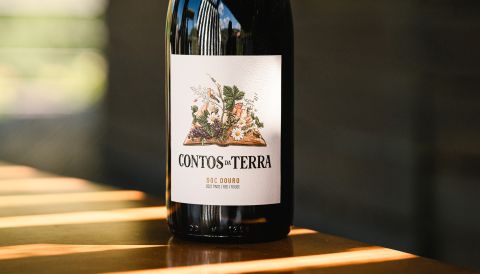
A lot, as it turns out. The bird is a hoopoe, or poupa in Portuguese, a flamboyant little guy with a striking plume of feathers on its head. And Pôpa was the nickname of the estate’s namesake, Francisco Ferreira, a nod to his fashionable hairstyle back in the 1950s.
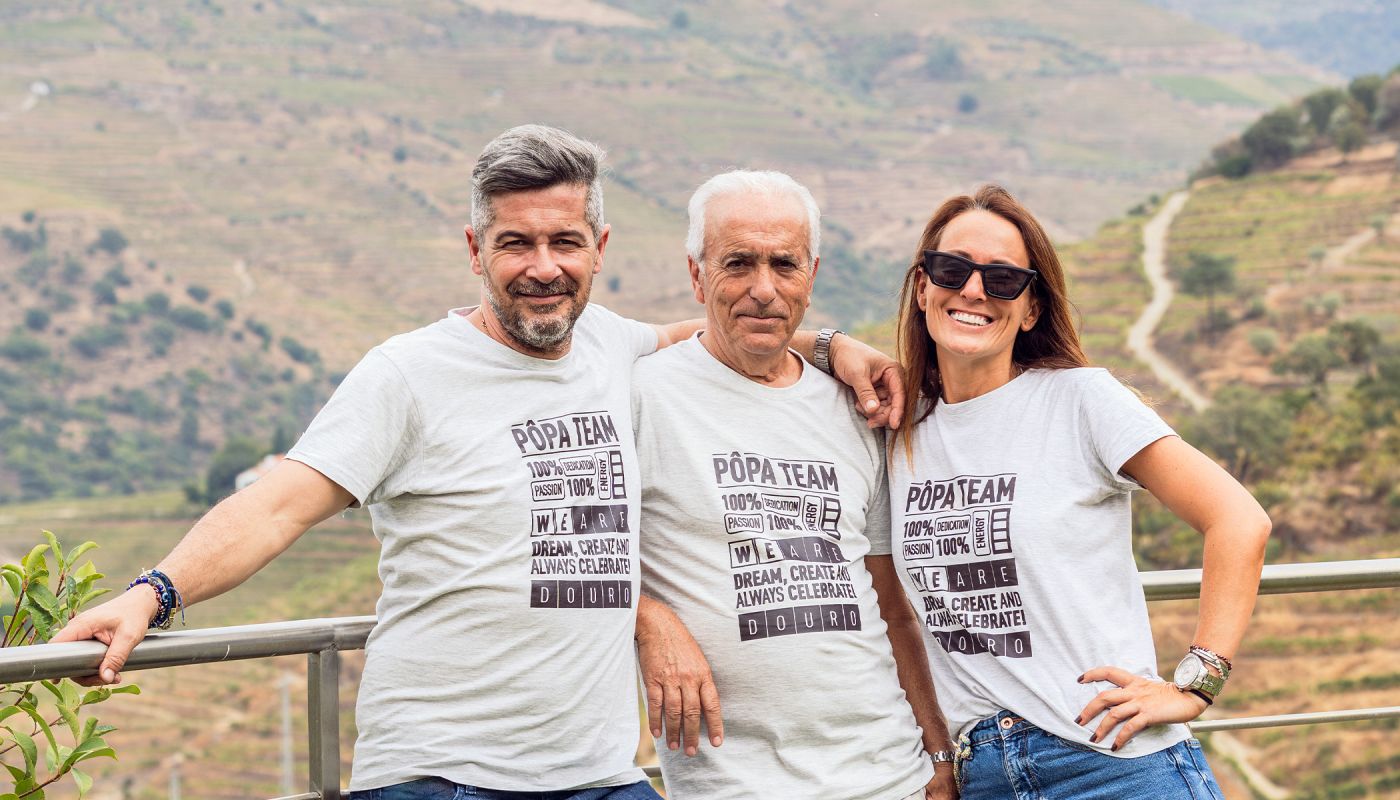
This Ferreira wasn’t, however, a winemaker. As the current owners, Stéphane and Vanessa, describe it, their grandfather was the illegitimate son of a prominent Douro winemaker who’d taken up with his maid. He wasn’t even allowed his father’s surname let alone any vines. It was their father, José (aka ‘Zeca do Pôpa’) who bought the vineyard his father had always wanted, purchasing the 9-ha (22-acre) Quinta do Vidiedo in the Douro’s Cima Corgo in 2003.
Over the next few years, he added more vines and built a winery in 2007 in time for his first vintage; by 2010, Stéphane and Vanessa came on, changing the name to honour their grandfather (and his impeccable hair).
You know the family must be good people, and the vineyards very promising, as the estate has since the beginning attracted incredible talent: the early vintages were made with the help of the legendary Bairrada winemaker Luís Pato, a family friend; today, Carina Baía is the full-time resident winemaker, working with consultant winemaker Carlos Raposo, a wunderkind who worked with Dirk Niepoort for seven years. (He also makes some really nice wines of his own in the Dão.)
In the vineyard, the vines are overseen by Rui Soares, who’s also the head of viticulture for Real Companhia Velha.
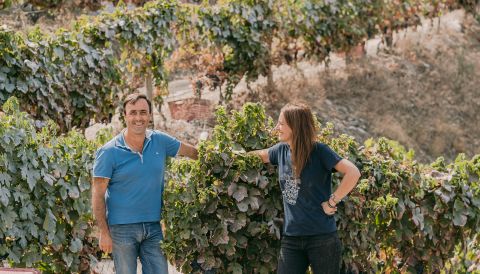
All that talent plays out in a very forward-looking winery. Now 40 ha (99 acres) total, the estate devotes 18 of those hectares to plants other than vines – olives, vegetables, orchards, flowers and native plants, as a way of increasing the biodiversity on the estate.
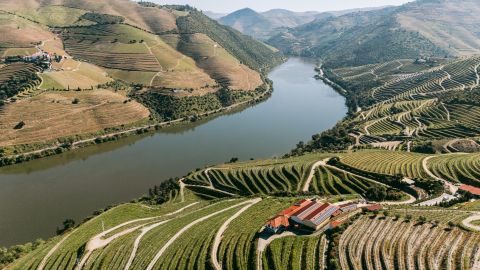
The 22 ha (54 acres) of vines are solely local varieties, the oldest planted in 1932, all clinging to steep terraces carved into the schist slopes that rise up to 350 m (1,148 ft) above the Douro. While they aren’t certified organic, the estate is run under an ‘integrated sustainability plan’ the Ferreiras created with ADVID (the Association for the Development of Viticulture in the Douro Region) that covers environment, economics and social responsibility. This, Vanessa explains, is not only a more holistic way of approaching sustainability for their winery, but it also allows them to react to local pressures in ways tailor-made for the local environment. For instance, she shares:
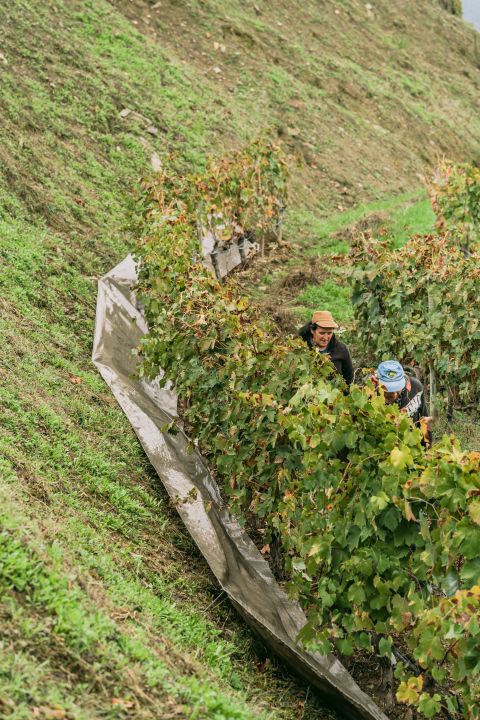
‘The consequences of not using herbicides in a mountain viticulture is significant: a dramatic increase in mowing and verge-clearing hours on steep slopes, higher CO₂ emissions from machinery, and a heavier physical burden on vineyard workers. This led to a key lesson: what works for some vineyards may not be environmentally, economically, or socially viable in a steep Douro context.’
To solve this, José Ferreira developed protective screens they install on the embankments, which keep down the competitive plants; they’ve now installed 30 km (nearly 19 miles) of them, which she reports has helped them eliminate herbicides, reduce mowing, and cut verge-clearing passes by roughly half. ‘This solution is now being followed in a study led by UTAD and the University of Porto’, she adds.
Smart people, clearly. But how does the wine taste? The 2022 red I bought (they make a white as well) tastes like everything it promises on the label: delicate, the red fruit filigreed with herbal notes of Douro scrub; direct, firm tannins imprinting the wine on the palate; and cheerful, a cherry juiciness welling up from the meaty richness that rumbles underneath all that fruit. It’s delicious and immensely flexible at the table (and just 13% abv), moving from a vegetarian mushroom risotto one night to takeaway goat curry the next. I wanted to try it with Portuguese pork-and-clams, too, or even duck rice – but that will have to wait until I get another bottle.
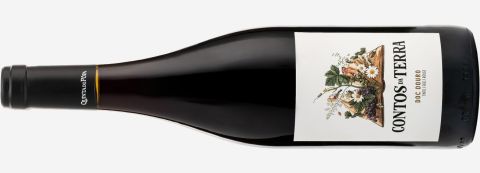
Quinta do Pôpa Contos da Terra Douro Tinto is imported into the US by NLC Wines in Brooklyn, NY, and in the UK Bancroft began carrying it in September 2025, starting with the 2023 vintage. A look at Julia’s tasting notes on several of Pôpa’s other wines suggests that this is a reliable name regardless the vintage and cuvée.
Find this wine in Europe and the US
All photos courtesy Quinta do Pôpa.
For more great-value wines from Portugal, check out our tastings note database and search for ‘GV’ or ‘VGV’ (‘good value’ and ‘very good value’).