My introduction to the world of tapeo – the peripatetic Spanish custom of moving from one tapas bar to another before lunch or dinner – took place in northern Spain 34 years ago.
I had been sent to Bilbao to watch a cargo ship unload. When this had not finished by the Friday night as expected, my former boss informed me in no uncertain terms that I was not to return to London. The Spanish office secretary and her husband took pity on me and took me back to their home village.
After church on the Sunday morning, all the men gathered in the main square and began their weekly ritual. We strolled to every bar, ate tapas and drank in each one, greeted anyone we met with great warmth and then headed back for lunch.
As well as the fun, I can also recall one principle that an experienced tapeador haltingly but emphatically explained to me: that however good the food may be in one particular bar, movement is the key. Even if one tapa is especially good, that is no reason for staying. Keep moving, he told me firmly – you can always come back.
Memories of this excursion, and others on subsequent visits to Spain, come back each time I see the word tapas written either on the outside of a bar or restaurant as an inducement to enter or as a description of a certain section on a menu.
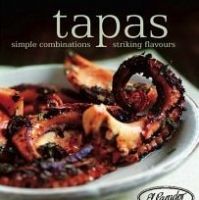
This word also figures prominently in two recently published books. The heavyweight is The Book of Tapas with 250 recipes written by Simone and Inés Ortega, a sequel to their highly successful book 1080 Recipes. The lightweight is the paperback version of Tapas by Carlos Horrillo and Patrick Morcas, an insight into the food served at their much-loved restaurant El Parador, close to Euston Station in north London.
Each book has its distinctive charms and uses in the kitchen. The Book of Tapas, as befits any book published by Phaidon, is clearly laid out with each recipe cross referenced to its appropriate photograph. The recipes are very easy to follow and this principle also applies to those at the end of the book submitted by ten top tapas chefs from around the world. This section includes recipes for a salt cod salad from Carles Abellan at Comerç 24 and for Mallorcan toast from Albert Adrià of Inopia, both in Barcelona; Brussels sprouts and chorizo from Seamus Mullen at Boqueria in New York; and chargrilled Moorish lamb skewers from Frank Camorra at Modiva in Melbourne, Australia.
Tapas, by contrast, exudes the passion for Spanish food which initially prompted Horrillo and Morcas to venture into a career in restaurants and the dedication that has allowed them to prosper. Their introduction is especially moving and incorporates a particularly evocative photograph of Horrillo's family in the delicatessen that they used to own in Málaga, southern Spain.
And while the authors of both books surprisingly choose to ignore an integral part of enjoying tapas, there are also distinct disappointments in both.
The Book of Tapas is let down by some lacklustre photography. Each shot seems to have been taken from precisely the same angle directly over the food and without any last-minute drizzle of olive oil or squeeze of lemon to make the dishes more colourful and appealing.
Gus Filgate has produced a far more inspiring set of photos for Tapas, most appetisingly of chargrilled octopus marinated in rosemary and thyme; half a dozen quinces in a paper bag waiting to be transformed into membrillo, that delicious quince paste; and samphire with sea salt. But his task is much easier because the vast majority of the dishes in this book are not really tapas at all despite the book's title. The dishes are definitely Spanish; they are fun to cook and eat; but virtually all of them require a knife and fork, the antithesis of the tapa.
But what is equally remiss of both sets of authors is their neglect of the role of sherry, that most appetising of aperitifs, in anyone's enjoyment of tapas.
Although the precise circumstances surrounding the origins of the word are now lost, the reason for the name, tapa, is well-known: it originated in Andalucia and referred to either a piece of cheese or a slice of ham that covered the top of a glass and prevented the dust from flying in. But the word sherry figures in neither index; there isn't a single image of an alluring sherry copita in either book; and the only reference to it in the glossary of The Book of Tapas describes fino sherry as suitable as an aperitif because it does not affect the palate before the meal when the opposite is in fact far more accurate. Sherry stimulates the appetite like no other wine.
But the emergence of these books does confirm two particular aspects of this style of eating. The first is quite how adaptable tapas are. Initially conceived to serve a range of diverse flavours to lots of customers who have ample time to relax and enjoy them, they have now become an integral tool for chefs of many different nationalities to serve much smaller tables of customers who want to eat well but, crucially today, in as short a time as possible.
The second is that the long established tapas bars that dot the back streets of San Sebastian, Barcelona, Madrid, Seville and Cadiz, and many other Spanish towns and cities, provide a rare historical link to a way of life where eating and drinking are symbiotic. And strolling between the bars may even remove the need for a subsequent visit to the gym.
The owners of London's tapas bars, initially inspired by their own time as tapeadors, will be hoping that the warmer weather will add this vital touch of authenticity. Tapas Brindisa by London Bridge, Barrafina in Soho, El Pirata close to Hyde Park Corner, Cigala in Bloomsbury, Dehesa and Salt Yard in the West End, Pepito in King's Cross and Moro in Clerkenwell are really not too far from each other one summer's evening.
The Book of Tapas, Simone and Inès Ortega, £24.95 Phaidon
Tapas, Carlos Horrillo and Patrick Morcas, £14.99, Kyle Cathie