‘But classically, it’s supposed to be lighter, and it’s not supposed to show as lactic and broad as it is’, I said through clenched teeth.
‘But it’s really good?’ my partner half-volunteered, half-queried. Others around him were nodding in approval at their wine glasses.
‘Yeah. Sure. It’s really good. But it wouldn’t be recognisable as Albariño if it we didn’t already know that we were blind-tasting Albariño. Try this one – it’s gorgeous and it’s a dead-ringer’, I said, pushing a glass towards him.
He took a sip from his own glass instead. ‘Why does that matter if everyone loves this one and we’re just drinking it for fun?’
… And herein lies the problem with wine education – formal or otherwise.
Wine students, myself obviously included, can very easily get attached to typicality.
And it’s not really a bad thing. If you’re curating an import portfolio, a restaurant list or a retail selection, it’s helpful to have most of the wines you’re offering taste the way that category of wine usually tastes. It allows drinkers to make assumptions about what they’ll like without having to try every bottle.
But when taken too far you can end up committing a cardinal sin – dismissing the best wines of a region because ‘typicality’ has come to mean ‘young, fresh and affordable’ (eg when Beaujolais just meant Nouveau, New Zealand Sauvignon Blanc just meant cat’s pee and gooseberry bush, and all of Chile was relegated to making ‘value’ wine).
Which is what I realised I’d done when the bags came off and the producer of my ‘dead-ringer’ turned out to be the same producer who had made the rich, lactic, textured wine that I took so much issue with. One was their $20 entry-level wine. One was their $50 top wine.
Which is embarrassingly fitting.
Because Bodegas Zárate, an estate established in 1707 that made its first commercial vintage in 1950, began making wine, at least in part, to prove that Albariño is not just a young fresh wine.
Ernesto Zárate – the fifth generation to work the property but the first to make the wines – started the Albariño Festival in Salnés’ capital of Cambados in 1953 to bring awareness to the quality of wine possible with Albariño. After winning the festival’s competition for three years running, he withdrew his wines, promising he wouldn’t enter again until another winery’s Albariño had won three times. (He was never able to enter again.)
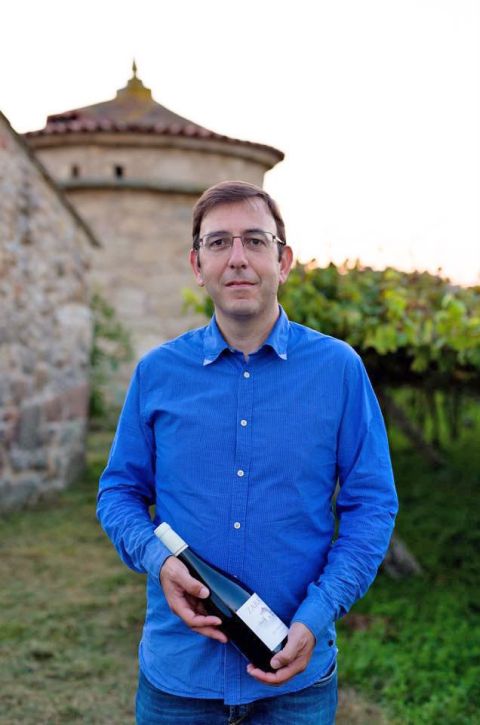
Since then, the estate has continued to push the envelope. In one of the coolest and wettest regions in all of Spain, they utilise organic and biodynamic practices; in 1994, long before ‘regenerative’ was a buzzword, they went no-till to preserve soil structure; when it would have been more economically advantageous to replant old vines to garner higher yields, they prioritised old vines. As a result, seventh-generation Eulogio Pomares (pictured above) is now the steward of some of the most respected vineyards in Rías Baixas – including the oldest Albariño vineyard in the region, El Palomar, planted in 1850.
Which goes to show that the estate has always focused on quality. What it doesn’t quite illustrate is why two wines made by the same person, from 100% Albariño, from the same estate in the Val do Salnés subregion of Rías Baixas (named for its salt flats during Roman times) would be so different.
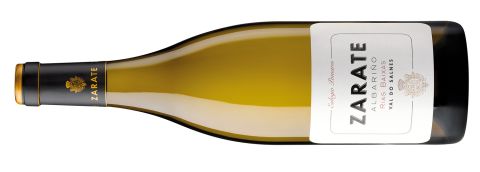
The Zarate Albariño 2023 Rías Baixas – my ‘gorgeous dead-ringer’ Albariño – was from the 2023 vintage. This vintage was relatively cool and rainy until June and then warmed up significantly, providing a good balance of acid and fruit ripeness. The wine is a blend of six of the estate’s youngest parcels, planted between 1992 and 2001, for an average vine age of 25–30 years. Yields are about 60 hl/ha. While the vine age lends more concentration than you’d expect in a run-of-the-mill Albariño, it’s still stylistically recognisable in its mid-weight, lightly peachy fruit profile. The clusters are destemmed and direct-pressed on a low and slow cycle (taking around 3 hours), which adds a lightly pithy textural quality without bitterness. The must is then moved to stainless-steel tanks where it is settled before being clean-racked to another tank. The wine undergoes ambient-yeast fermentation with temperatures starting at 18 °C and peaking at 22 °C, allowing the wine to retain the semi-aromatic orange-blossom aromas often common to Albariño. Part of the wine (one-third in 2023) undergoes malolactic conversion, giving a bit more breadth and padding to the body; the rest of it has malolactic conversion blocked so as to retain tart, crisp malic acid. The wine then rests on its fine lees, undisturbed, for six months – creating a very light yeastiness to compliment the characteristic saltiness. An average 3,700 cases are produced per year.
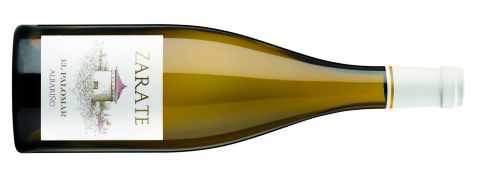
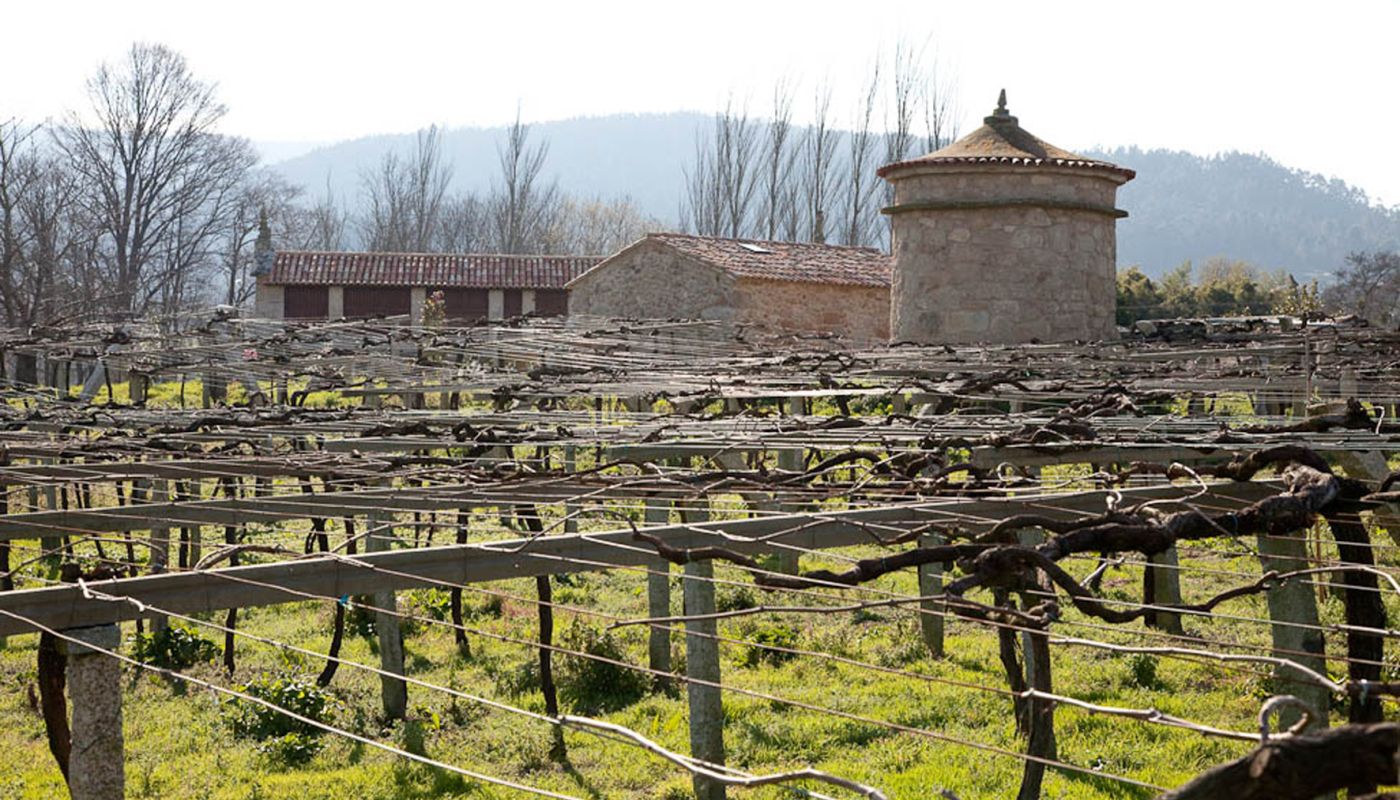
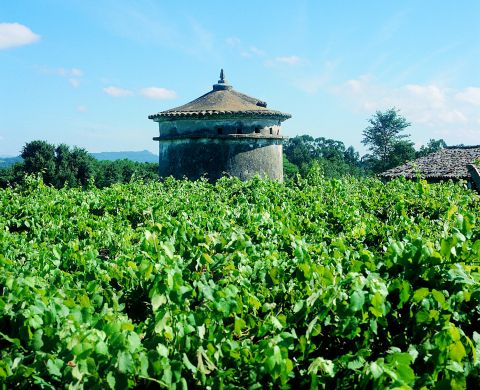
The Zarate, El Palomar Albariño 2022 Rías Baixas – the rippling, broad, unctuous, lactic, layered wine that I eventually, scowlingly admitted was the best ‘non-Albariño Albariño’ I’d ever had (apparently, I can be quite petulant) is from the dramatically hot and dry 2022 vintage. The richness and ripeness of the vintage is compounded by the fact that the wine comes from a single, 0.36-ha (0.89-acre) parcel of vines aged more than 100 years (pictured below and at the top of this article) grown on very poor soils on granite bedrock yielding 40 hl/ha. The result is stunning concentration and fullness. Like the regular Zárate the clusters are destemmed and direct-pressed on a low and slow cycle for three hours but then, instead of settling and stainless steel, the wine goes directly from the press, lees and all, into a 22-hl neutral French-oak foudre. The wine undergoes ambient-yeast fermentation at a higher temperature than the Zarate – starting at 20 °C and peaking at 22 °C – and this, combined with the lees, creates a more savoury, umami nose with less fruit but more richness and power. The wine then undergoes full malolactic conversion, softening the crisp, tart acidity and yielding a round, creamy texture and lactic, yogurty aromas. The wine then rests on its gross lees for six months before being racked and returned to sit on its fine lees for a further three months. An average of 200 cases are produced per year.
Both of these wines are glorious for entirely different reasons.
I encourage you to buy both and serve them blind, side by side, to your guests. What would the world be if producers were allowed to make only one style of wine?
For more on different styles of Albariño, read Tam’s piece on the three main styles and food pairings!
Wine-Searcher tells me that the Zárate is carried in 10 countries, with the best price, as one would expect, listed in Spain at €13.95. For a bit more one can find it in Austria, Italy, Germany, the Netherlands, Denmark, Finland, the US, the UK and Canada. The best deals in the US and UK are, respectively, from Wine Library in Springfield, New Jersey, for $19.99 and from Cork & Cask in Edinburgh for £22.95.
El Palomar is carried in 16 countries – Spain, UK, Portugal, Germany, the Netherlands, the US, Switzerland, Italy, Singapore, Hong Kong, Ireland, Denmark, New Zealand, France, Australia and the Cayman Islands. The best deals in the US and UK are, respectively, from Sec Wines in Portland, Oregon, where I bought my bottle for $51.50 and from Peckham Cellars for £46.
Members of JancisRobinson.com can explore all manner of Albariño wines in our tasting notes database, where there are notes on nearly 600 examples.