
This is an article I wrote for today's wine investment supplement in the Financial Times. For advice on other regions, see our Vintage guide.
One of the pleasures of being active on the London tasting circuit is feedback from readers of the FT and this website over the spittoon. I have recently been reminded several times that it has been some time since I devoted an article to suggesting which vintages of classic wines are best to drink now. To my horror, it looks as though I have not tackled this very important topic for over four years. I see that in late August 2009 I remarked how difficult the Bordelais had found selling their last two vintages. Sound familiar?
Given that red bordeaux seems to occupy such a high proportion of cellar space for our readers, I will begin by considering vintages for this investment favourite. Let us pass very lightly over the overpriced 2012s and 2011s to alight briefly on 2010s. These are looking better and better but even the lesser examples are so stuffed full of everything, including tannins, that it would be a shame to open them now. Some of the lesser 2009s with their voluptuous fruit, on the other hand, are already a pleasure to drink, even if the smarter names should be kept at the back of the cellar for many a year.
The 2008s tend not to be nearly as charming and will probably benefit from prolonged ageing just as much as the 1998s and 1988s have. I know it is not logical to assume the weather follows the Gregorian calendar but there is a certain similarity between the three most recent vintages ending in 8 and those ending in 7. Speaking of which, 2007 is currently offering some of the best bordeaux drinking for those who cannot afford to pay for prolonged ageing. This was yet another vintage that was overpriced initially but at least these relatively light, fruity wines have matured rapidly. If I were still choosing wines for an airline, I would make a beeline for 2007s. Not so the 2006s and, especially, 2005s, which still warrant keeping for many a year, for different reasons. The 2005s are a bit like the 2010s (bless them for respecting my divisible-by-five-years-tend-to-be-superior rule); they are very concentrated and most are slumbering in a quiet, lockdown phase. The 2006s are much less concentrated but the best still need time for the fruit to shine through the structure.
In fact it is only when we get as far back as 2004 that we start to reach a vintage that a classically trained claret drinker might consider drinkable. (The classic training involves waiting at least 10 years before opening any red bordeaux.) I have always liked these rather fresh, rigorous wines and I am beginning to appreciate their direct – yes, quite classical – appeal. The 2004 bordeaux vintage has been rather obscured by the massive reputations of the vintages either side of it, which is a pity. I was not as enthusiastic as some about the 2003s produced in what was the first big 21st-century heatwave year. Many of the wines reached their sugar levels by dessication rather than phenolic ripening and the result is wines without a really interesting, complex mid palate capable of evolving to the subtle nirvana of red bordeaux perfection. We are now in a spate of 10-year restrospectives of this vintage and it is clear that it is only a small proportion of the finest wines, mainly from Pauillac and St-Estèphe, that will attain nirvana. Some of them are plagued by burnt or raisined flavours and I would suggest most should be enjoyed now.
As the years go on, the reputations of 2002 and 2001, once regarded as a pair of lesser equals, continue to diverge. The 2002s seem lighter and leaner with the years whereas some of the most rewarding wines to drink now are the 2001s, especially but not exclusively on the right bank. Although the 2000 vintage was the one that initially drew the attention, and can supply many a delicious bottle today at all quality levels, there are properties where the 2001 is a more elegant and satisfying drink than the 2000.
The 1999s are more – shall we say – serviceable, but the big development I have noticed since last addressing this topic is that the wine of the last two '8' vintages, 1998 and the initially very tough 1988, is at last ready to drink. The 1997s are generally on the way down, along with such wines from 1991 to 1994 period as remain, while 1996, 1995 and 1986 can provide fully mature drinking now. The 1990s, 1989s and 1982s are still great at the very top level but many a lesser wine is fading.
As for red burgundy, there are almost as many opinions as there are burgundy fans today – which is to say that both categories are oversubscribed. There is also more wine-by-wine variation in ageing rate and potential than between different red bordeaux. But, if we take a notional typical Côte de Nuits premier cru red, which is very generally a year or two slower to develop than its counterpart from the Côte de Beaune, I'd suggest 2010 and 2009 are stored away for many a year, along with the best 2005s. Some 2002s may be emerging from the shell into which so much red burgundy retreats after a few years in bottle. Of vintages to drink now with pleasure, 2007 would be my choice from a restaurant wine list for these wines are particularly charming, even if they rarely have the stuffing for prolonged ageing. The 2008s, which were pretty obdurate in extreme youth, are beginning to show the great terroir definition of which they are capable, and many of the less glamorous names are starting to show their mettle (though are for committed burgundy fans rather than newcomers who would probably prefer the flesh of the 2009s). The 2006s, 1999s, and especially 1996s and 1995s are the vintages to pick now at exalted appellation levels, although many of them will repay further patience. Avoid most 2004s and drink most 2003s now while the fruit lasts. Both 2001s and 2000s can be pretty.
As for white burgundy, be very wary of premature oxidation in vintages older than about six years. Bottle-aged premier and grand cru Chablis is in general a much safer bet.
See Purple Pages of JancisRobinson.com for nearly 90,000 wine reviews.
Which (French) vintages to get out of the cellar
• 4 min read

This is a longer version of an article also published in the Financial Times.


Choose your plan

For the dad who loves wine
Start your membership this Father’s Day with 20% off a full year. Expert reviews, honest writing, no guesswork. Or, gift a membership and save 20%.
Enter code DAD20 at checkout. Offer ends 22 June.
Member
$135
/year
Ideal for wine enthusiasts
- Access 295,558 wine reviews & 16,100 articles
- Access The Oxford Companion to Wine & The World Atlas of Wine
- Access askJancis, our AI wine assistant


Inner Circle
$249
/year
Ideal for collectors
Everything in “Member”, plus:
- Early access to the latest wine reviews, 48 hours in advance
- Early access to the latest articles, 48 hours in advance
Professional
$299
/year
For individual wine professionals
- Access 295,558 wine reviews & 16,100 articles
- Access The Oxford Companion to Wine & The World Atlas of Wine
- Access askJancis, our AI wine assistant
- Early access to the latest wine reviews & articles, 48 hours in advance
- Commercial use of up to 25 wine reviews & scores for marketing
Business
$399
/year
For companies in the wine trade
Everything in “Professional”, plus:
- Commercial use of up to 250 wine reviews & scores for marketing
- Access to submit wines for review
- Offer memberships to your employees and manage them from a single place
- API access available for an additional fee
More Free for all

Free for all
18 June 2026 Prizes announced! Académie du Vin Library, the sponsor of the 2026 wine writing competition, has just announced...

Free for all
Here are the questions posed to those striving for those coveted two letters, among them our very own Sam Cole-Johnson...

Free for all
Carefully cultivated wildness in the Home Counties. And an unmissable wine list. Farm to fish to fork to frying pan...
Free for all
Jancis makes a suggestion. A version of this article is also published by the Financial Times. See also South Africa’s...
More from JancisRobinson.com

Wines of the week
A magical sparkling wine from Austria, from €9, £15.50, $16.95. It is, some say, the time when magic is strongest...
Tasting articles
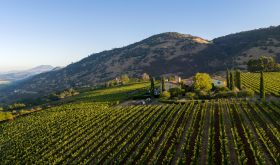
A banner vintage. Above, Dalla Valle Vineyards in Oakville produced two of Sam’s highlights of this vintage (image courtesy of...
Tasting articles
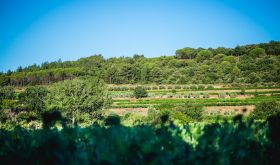
A taster of the quality potential in wines grown in the southern Rhône’s ‘north-west corridor’. Above, one of Domaine La...

Tasting articles
A tour of the southern half of this Portuguese wine region. See part 1 for producers and wines from the...
Don't quote me
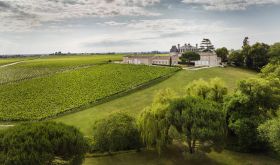
Nick Martin reflects as another en primeur campaign winds up. Château Grand-Puy-Lacoste (pictured above) bundled a visit to the property...
Tasting articles
A tour of this underappreciated and sometimes misrepresented Portuguese wine region. Today, we cover the northern half – Encostas d’Aire...

Inside information
The wines of this Portuguese region are emerging from the shadows of their history. Above, Azenhas do Mar in Colares...

Drinks not wine
An exploration of the transparency of Japanese whisky – and how that sensibility is influencing whisky-making back in Scotland. Above...