Anneleen Straetemans writes I am Anneleen Straetemans, a Belgian lawyer-turned-sommelier and founder of Nova Radix. Nova Radix’ mission is to preserve native grapes and biodiversity in viticulture. To do that, Nova Radix partners with winemakers all over the world to make limited edition wines from native grapes to sell these along with their stories to a community of wine lovers in Belgium. Nova Radix’ first wines were made in 2024 from old vine Criollas with Emiliano Turano, head winemaker at Chateau d’Ancon in Tupungato, Mendoza, Argentina. For more information on Nova Radix, please visit novaradix.eu.
I am not bitter
My ancestors arrived in this land over five centuries ago. They were brought here from far away islands they say. They came by boat and I always wondered what their journey must have been like. To stay alive in the darkness of the belly of a ship, with only salt water to drink. To find no soil under your feet and to have your roots exposed. My ancestors were used to harsh terrains, with little water and the sun beating down on them. But here, in this semi-desert, at the foot of the Andes, they had to adapt quickly to survive and were forced to take root. Their masters brought them for ceremony and for pleasure.
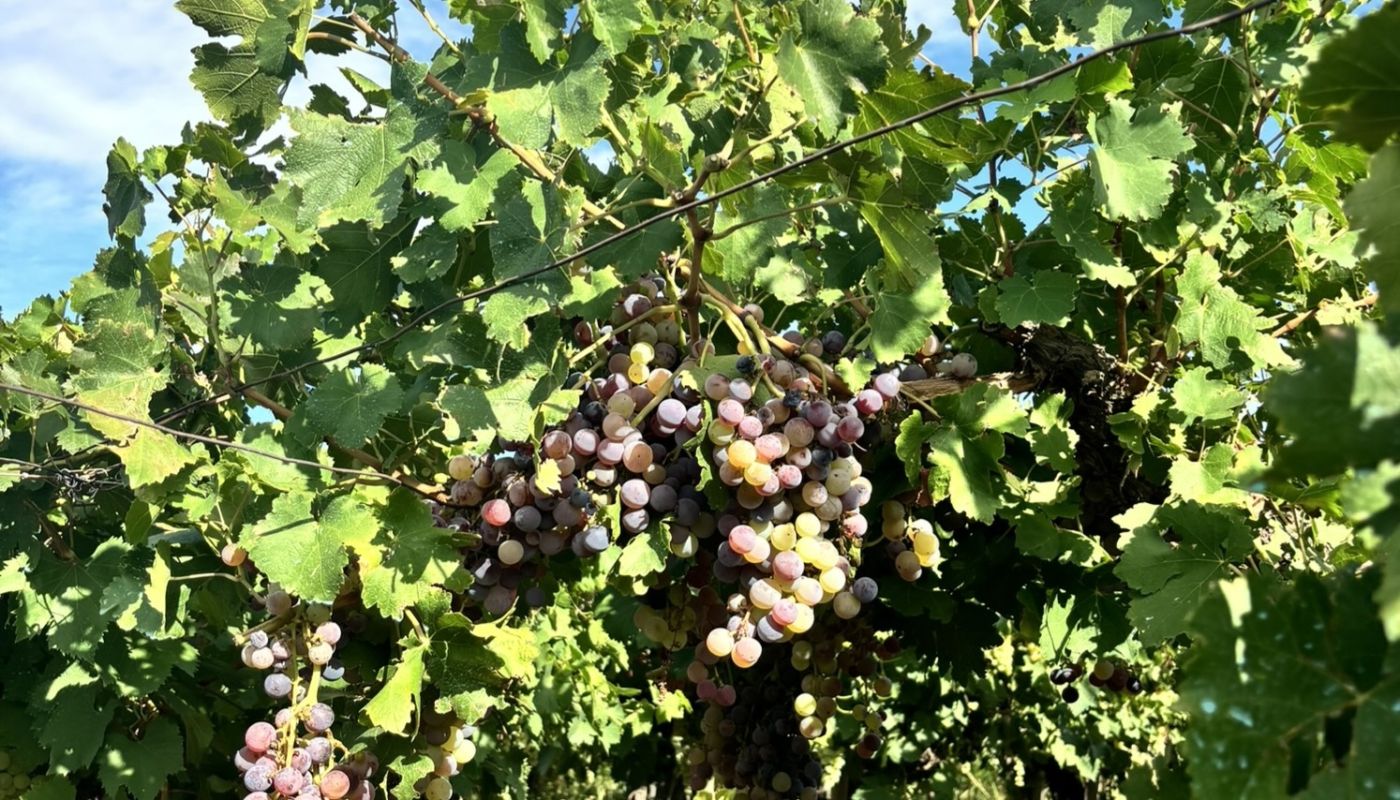
My ancestors were said to be pure. People thought they knew what they were, their lineage, and where they had come from. But purebreds rarely stay pure when forced to grow and work alongside each other. That is why when I look around me today, we are many different shades and forms. Some of us are yellow-green, some of us are pink, some of us are darker skinned. Some of us are tightly bunched, some of us let it hang loose. Some of us are exuberant and exotic and smell of Turkish delight. Some of us are serious and stern and smell like a forest after the rain, when all the herbs and grasses perfume the air. We pride ourselves in our understated elegance, driven by our acidity and lack of sweetness. In your glass we sing, we do not scream.
We did not get a fancy name. In fact, we hardly have a name. They simply call us Criollas. An umbrella term that means little more than a mix, unworthy of identification. As if our mixed genetics do not hold promise. As if we did not evolve for the better as soon as we were faced with a new climate, new soils and a new ecosystem of plants and insects we had never encountered before. As if we are the only grape varieties borne out of different parents.
Despite our hardiness and high yields, our land and our roots remained mostly in the hands of families, descendants of those first overseas visitors. They worked us out of tradition or habit, mainly for their own consumption and we showed up at their tables in volumes to quench thirst, to alleviate a hard day, or to loosen tongues. Sometimes they would sell us to make some extra money – just like any other crop. We were not a subject to be studied and analysed, nor a badge of honor for a winemaker or sommelier. And so we stayed humble for generations, relegated to the realms of cheap table wine.
I still remember when not too long ago, others were brought to this land much in the same way my ancestors were brought over. But those newcomers were welcomed with open arms and were treated like royalty. They had fancy names – often French or Spanish. Everyone seemed to want them and the best plots were reserved for them. I always wondered if they were happy to be here, in this arid land, or if they themselves had wanted to flee their homeland now that many of their homes suffered from extreme rains and droughts, and their soils had died because their masters foolishly chose convenience over nurturing. Winemakers and investors certainly seemed happy to have them here and worked hard to show that these newcomers could produce wines as fine as their family members who had stayed behind in the old world – at a much lower cost.
It did not take long before the uprooting of us Criollas began. Growers who had tended to their Criolla vines often more than 80 years old, no longer got their work’s worth when they tried to sell us. A man has got to eat, they would say. So many of us disappeared, that foreigners forgot our name and winemakers forgot our potential.
You must think I am bitter. But the bitter note you pick up in your glass is not because I wish for things to be different. It is probably because my stems were added to my flesh and skins in the tank. And how could I be bitter, when I have the luck to still grow here, trained up high in my pergola, or as we call our training system, parral. As I hang in the shade of a luscious canopy, everything around me is alive: there are birds flying over my parral, insects feeding off the many flowers growing at my feet, little worms crawling through the soil, my roots reaching deep into the earth exchanging nutrients with bacteria and enzymes, and streams of melt water straight from the Andes running through the ancient channels dug between us. This old vineyard is my home and it is bigger than me, it is an entire ecosystem, self-regulating and thriving with life, big or small.
I know one day people will realize that us Criollas are a multitude of grape varieties, each with their own identity worth preserving. After all, among us are grapes truly native to our land, Mendoza. I can feel the changing winds already and it is very likely I too will end up being crushed by a visionary winemaker’s feet to be turned into a refreshing light red wine, that will find its way to the hippest restaurants in the big city. I hope one day you too will get to taste me. You will smell my past, taste my present and let my future linger on your palate. I promise I will not be bitter.