Volcanic Wine Awards | The Jancis Robinson Story | 🎁 25% off annual & gift memberships

WWC25 – Odessa Black: the grape that waited, by Maryna Revkova

Friday 22 August 2025 • 1 min read
Maryna Revkova WWC25 photo

In this entry to our 2025 wine writing competition, sommelier Maryna Revkova writes a moving ode to a Ukrainian grape variety – Odessa Black. For more great wine writing see this guide to our competition.

Maryna Revkova writes Maryna Revkova is the Best Sommelier of Ukraine 2021, an ASI Diploma holder, and a current DipWSET candidate at the Austrian Wine Academy. She has worked as a sommelier in Portugal, completed a harvest as a cellar hand at Château Latour, and is now the director of a winery in the Odesa region. Passionate about storytelling, local grapes and Eastern European wine identity, she advocates for Ukraine’s native varieties.

Odessa Black: the grape that waited

In the summer of 2021, I was judging the annual Ukrainian wine competition in Lviv, along with several of my colleagues. We were nearly finished with the tastings and waiting for the final red variety, the one always saved for last — Odessa Black. It had the intense taste of a young, unruly wine, packed with tannins that scraped the palate, an aroma somehow reminiscent of borscht with strawberries, and a deep violet-ruby color that stained absolutely everything it touched.

It always saddened me — and moved me a little — to realise that our own native grape was still performing worse than something like Zweigelt or Cabernet Sauvignon.

As usual, after scoring the last sample, I went back to my hotel to brush my teeth (after the final few glasses, we all looked like Gollums from The Lord of the Rings) and drink a cold beer. I didn’t think about Odessa Black again for nearly a year.

Then, in 2022, everything changed. And somehow, fate brought me back to that same wine — same producer, same vintage — at ProWein in Düsseldorf. Maybe it was the crisis of emigration, or grief for home, or a sudden emotional hunger for something truly mine, in a time of injustice and loss. But the wine had changed.

In the bottle for just a year, it had softened. The tannins were no longer so abrasive. The aroma, once vaguely vegetal, now spoke of ripe, warm black berries. I took a few bottles back to Portugal and poured them proudly for my colleagues.

It turned out Odessa Black simply needed more time.

The problem was — time is what Ukrainian wine often doesn’t get.

The grape was created in postwar Soviet Ukraine, in 1948, at the Tairov Institute in the Odesa region, by crossing Alicante Bouschet and Cabernet Sauvignon. If those original vines had been planted widely and taken seriously, they’d be over 50 years old by now. We could already be drinking truly great wines in the 21st century. But Odessa Black was never treated as a serious variety. It was seen as a colouring grape — an “ink” to darken blends — not as a standalone variety with potential and voice.

In the USSR, wine wasn’t about expression. It was mass production — “people’s alcohol” made in giant factories whose only goal was to hit targets measured in hectolitres. Everything was regulated by the state: alcohol levels, sugar content, acidity, colour.

Grapes were divided into categories: “technical” (for colour, sugar or acid correction), “aromatic” (like Muscat and Riesling), or base blending grapes (like Cabernet or Saperavi). Odessa Black was filed under “technical.” Its role was to intensify, not to speak.

There was no room for individuality. It didn’t fit the standard profile, and as a new variety, it wasn’t trusted. Most Soviet wines were fortified or sweetened to hide flaws. Odessa Black was too wild for that world.

Until 1985, private winemaking — in the European sense — didn’t exist. Even if someone wanted to make a high-quality, expressive Odessa Black, it would have been illegal. Then came the anti-alcohol campaign, and vineyards were ripped out across the USSR. Many of the early Odessa Black plantings were lost.

After Ukraine gained independence in 1991, privatisation of wineries began, and craft winemaking slowly emerged in the mid-2000s. Only after 2010 did a new generation of producers appear — focused on terroir, quality, and native grapes.

The first Odessa Black vines were planted by these new producers around 2012. The first mono-varietal wine appeared with the 2017 vintage. Just a couple of years later, two different producers won gold medals at Mundus Vini for their 2020 wines. It was only the beginning.

Odessa Black is a resilient grape. It survives winters, heat, drought, disease — and still gives quality fruit. It’s a Ukrainian grape in every sense.

All it needs is time. And patience.

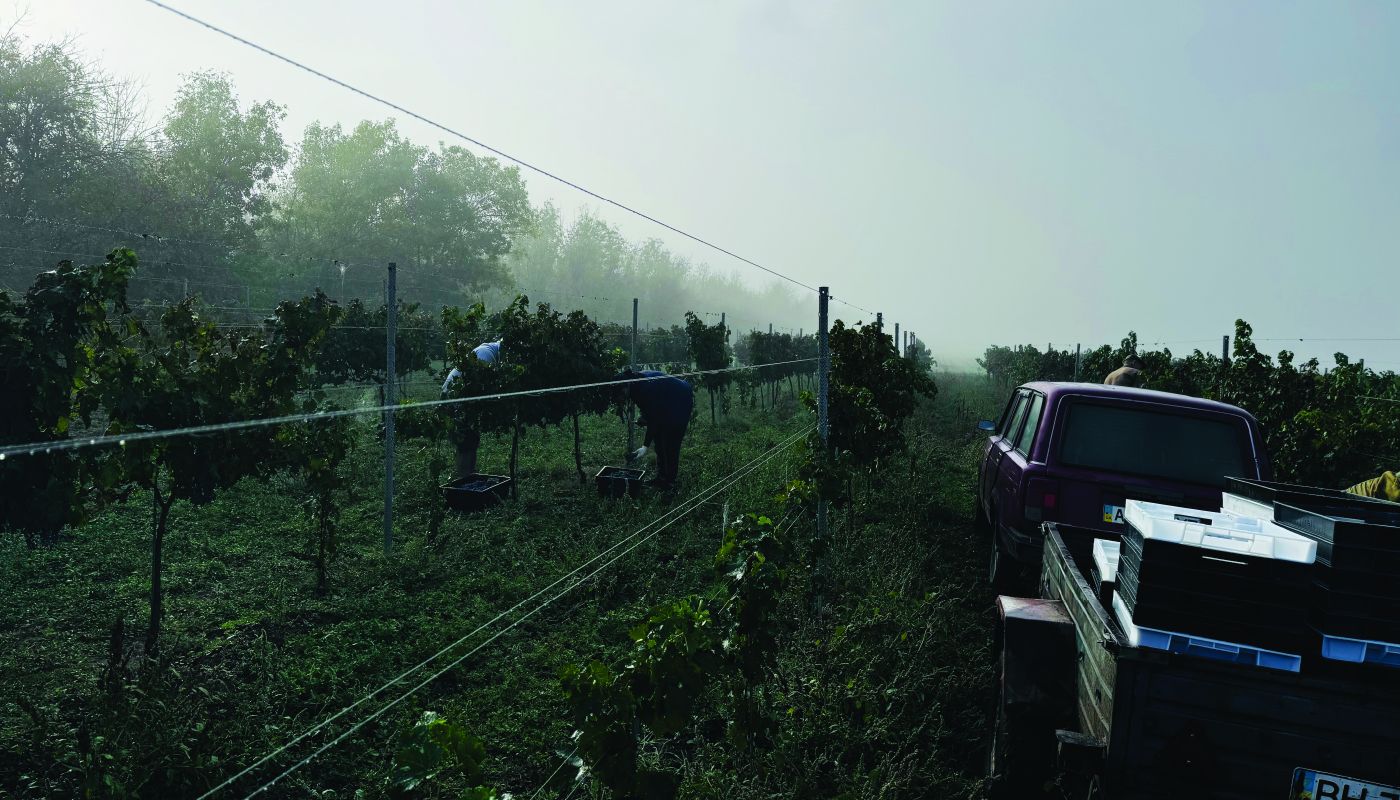
The image, of harvesting Odessa Black in Bessarabia, is the author's own. 

Become a member to continue reading

Celebrating 25 years of building the world’s most trusted wine community

In honour of our anniversary, enjoy 25% off all annual and gift memberships for a limited time.

Use code HOLIDAY25 to join our community of wine experts and enthusiasts. Valid through 1 January.

Member
$135
/year
Save over 15% annually
Ideal for wine enthusiasts
  • Access 285,307 wine reviews & 15,802 articles
  • Access The Oxford Companion to Wine & The World Atlas of Wine
Inner Circle
$249
/year
 
Ideal for collectors
  • Access 285,307 wine reviews & 15,802 articles
  • Access The Oxford Companion to Wine & The World Atlas of Wine
  • Early access to the latest wine reviews & articles, 48 hours in advance
Professional
$299
/year
For individual wine professionals
  • Access 285,307 wine reviews & 15,802 articles
  • Access The Oxford Companion to Wine & The World Atlas of Wine
  • Early access to the latest wine reviews & articles, 48 hours in advance
  • Commercial use of up to 25 wine reviews & scores for marketing
Business
$399
/year
For companies in the wine trade
  • Access 285,307 wine reviews & 15,802 articles
  • Access The Oxford Companion to Wine & The World Atlas of Wine
  • Early access to the latest wine reviews & articles, 48 hours in advance
  • Commercial use of up to 250 wine reviews & scores for marketing
Pay with
Visa logo Mastercard logo American Express logo Logo for more payment options
Join our newsletter

Get the latest from Jancis and her team of leading wine experts.

By subscribing you agree with our Privacy Policy and provide consent to receive updates from our company.

More Free for all

RBJR01_Richard Brendon_Jancis Robinson Collection_glassware with cheese
Free for all What do you get the wine lover who already has everything? Membership of JancisRobinson.com of course! (And especially now, when...
Red wines at The Morris by Cat Fennell
Free for all A wide range of delicious reds for drinking and sharing over the holidays. A very much shorter version of this...
JancisRobinson.com team 15 Nov 2025 in London
Free for all Instead of my usual monthly diary, here’s a look back over the last quarter- (and half-) century. Jancis’s diary will...
Skye Gyngell
Free for all Nick pays tribute to two notable forces in British food, curtailed far too early. Skye Gyngell is pictured above. To...

More from JancisRobinson.com

Karl and Alex Fritsch in winery; photo by Julius_Hirtzberger.jpg
Wines of the week A rare Austrian variety revived and worthy of a place at the table. From €13.15, £20.10, $24.19. It was pouring...
Windfall vineyard Oregon
Tasting articles The fine sparkling-wine producers of Oregon are getting organised. Above, Lytle-Barnett’s Windfall vineyard in the Eola-Amity Hills, Oregon (credit: Lester...
Mercouri peacock
Tasting articles More than 120 Greek wines tasted in the Peloponnese and in London. This peacock in the grounds of Mercouri estate...
Wine Snobbery book cover
Book reviews A scathing take on the wine industry that reminds us to keep asking questions – about wine, and about everything...
bidding during the 2025 Hospices de Beaune wine auction
Inside information A look back – and forward – at the world’s oldest wine charity auction, from a former bidder. On Sunday...
hen among ripe grapes in the Helichrysum vineyard
Tasting articles The wines Brunello producers are most proud of from the 2021 vintage, assessed. See also Walter’s overview of the vintage...
Haliotide - foggy landscape
Tasting articles Wines for the festive season, pulled from our last month of tastings. Above, fog over the California vineyards of Haliotide...
Leonardo Berti of Poggio di Sotto
Tasting articles Following Walter’s overview of the vintage last Friday, here’s the first instalment of his wine reviews. Above, Leonardo Berti, winemaker...
Wine inspiration delivered directly to your inbox, weekly
Our weekly newsletter is free for all
By subscribing you're confirming that you agree with our Terms and Conditions.












