As I rather guiltily smeared my toast with dulce de leche (approx 5000 calories per caramel ounce) during my first breakfast in Argentina, the talk round the table was pessimistic. That day, for the first time for more than a decade the peso was to be allowed to find its own level against the dollar.
We were high in the Andean foothills many miles from the nearest paved road, but the exchange rate hung heavy in the mountain air. Figures of three, four, even a gloomy five were forecast – so vulnerable was the Argentine economy thought to be. At the end of the day the peso settled at just over two per dollar, much to the relief of all Argentines – not least those in the wine business.
With its ability to earn even more valuable foreign currency, the huge domestic wine industry is one of Argentina's brighter spots, but many of the more than 700 bodegas are expected to fold this year. Argentina, despite being the world's fifth biggest wine producer, has been slow to export a product for which its own nationals, until recently, have had such an insatiable thirst.
Hardly 60 of these bodegas have even begun to export, and of the wine sold in Britain, shop window of the world's wine market, Argentina represents only just over one per cent. (Chile, meanwhile, with bigger, slicker, thirstier producers, has nearly eight per cent.)
Argentina, for example, has effectively only one serious branded wine, Argento, dreamt up by the substantial company founded by Dr Nicolas Catena (based on an idea by Robert Mondavi of California) and his British importers Bibendum Wine. The only other companies to have exported Argentine wine in any quantity are the dominant firm Trapiche (associated with, among others, Peñaflor, Las Moras of San Juan and Michel Torino of Salta) which sends large volumes to the US; Norton; La Agricola/Santa Julia; and La Riojana, the co-op in La Rioja province which has supplied mainly own-label wines to the UK, including one brand curiously named after the 1970s Montonero guerrillas.
While the peso was pegged to the dollar, Argentine wine slightly higher up the scale always looked rather expensive relative to its counterparts from the other side of the Andes. The devaluation has provided an opportunity to realign price points without loss of face, with many producers deciding to reduce prices while insisting on shorter credit terms.
Not that many Argentine wine producers yet play the game of price points and promotions required by the supermarkets that dominate British wine retailing. Most are still locked in a wine culture that values French brand names (such as Fond de Cave and even Pont l'Evêque) and many years spent in large old oak barrels (Lopez's top current wine is a 1991 and Weinert, still a barrique-free zone, is offering a 1977 Malbec Estrella aged for an almost incredible 19 years in oak).
Life is particularly tough for the great majority of bodegas which have no links whatsoever with the outside world, neither exporting nor having attracted any foreign investment. Like everyone else they now have to pay twice as much for their imported corks, bottles and barrels – even in the unlikely event of their being able to find the cash upfront now demanded by suppliers.
Both government and the unions were already proposing respective price increases for grapes and labour for the 2002 harvest just under way. The wine industry's 12 per cent export rebates have been rescinded, export taxes are in the air and they have little alternative but to comply with government demands that 100 per cent of the foreign funds earned be repatriated within 120 days.
On my recent visit to wine capital Mendoza (whose new Hyatt must be the world's most sophisticated wine region hotel) there was even a little ferment of trouble over tartaric acid, the market for which is dominated by ICI's large winery by-product treatment plant there. Bodegas were even short of cash to pay for this common additive, generally vital in a climate as hot as most Argentine wine regions.
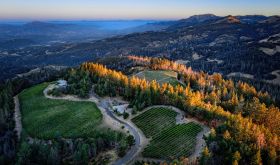
The single most obvious change in Argentine wine since my only other visit, in 1994, was the extraordinarily rapid move upwards in altitude in search of cooler climes whose grapes are naturally better-balanced in sugars and acidity. Indeed the country is now producing the odd creditable Pinot Noir, the notoriously finicky red burgundy grape, and crisply aromatic Sauvignon Blanc.
Winemaking techniques had also improved almost unrecognisably, with temperature control now the norm and the full winemaking batterie de cuisine in place (though presumably in these straitened times new, imported oak barrels will be regarded as a luxury). In the finest bodegas which control all their own fruit there is increasing concentration on smaller berries with the greater flavour they can impart, but only a few are yet truly dedicated to reducing yields and improving quality. Flood irrigation and overhead rather than vertical vine trellising, albeit sometimes ingeniously adapted, are still the norm.
Argentina has a host of advantages. The Australians would kill for such unlimited good-quality irrigation water. The Chileans, too dependent on a handful of Bordeaux red grapes, are deeply envious of Argentina's host of interesting varieties. The French (many of whom such as LVMH, Pernod Ricard, the ubiquitous consultant Michel Rolland and several others from Bordeaux including the Lafite Rothschilds now have interests here) must envy the industry's freedom from controls and restrictions.
All Argentina needs now is a helping hand or three.
Foreign investment in Argentine wine
San Telmo and Valentin Bianchi were owned by Seagram.
2 March 2002
| Country | Foreign investor | Argentine bodega |
| Austria | Swarovski | Norton |
| Britain | Allied Domecq | Balbi Graffigna |
| Chile | Concha y Toro | Viña Patagonia Trivento |
| San Pedro | Finca La Celia | |
| Santa Carolina | Sant'Ana (till 2000) | |
| Santa Rita | Doña Paula | |
| France | J & F Lurton | Lurton |
| LVMH | Chandon (fizz) Terrazas de los Andes (still) | |
| Pernod Ricard | Bodega Etchart | |
| Michel Rolland | Yacochuya (with Etchart family) Vast new project in Vistaflores (with others) | |
| Holland | Private | Salentein |
| Portugal | Sogrape | Flichman |
| Spain | Marqués de Griñon | Bodegas Hispano Argentinas |
| Switzerland | Donald Hess | Colomé |
 |