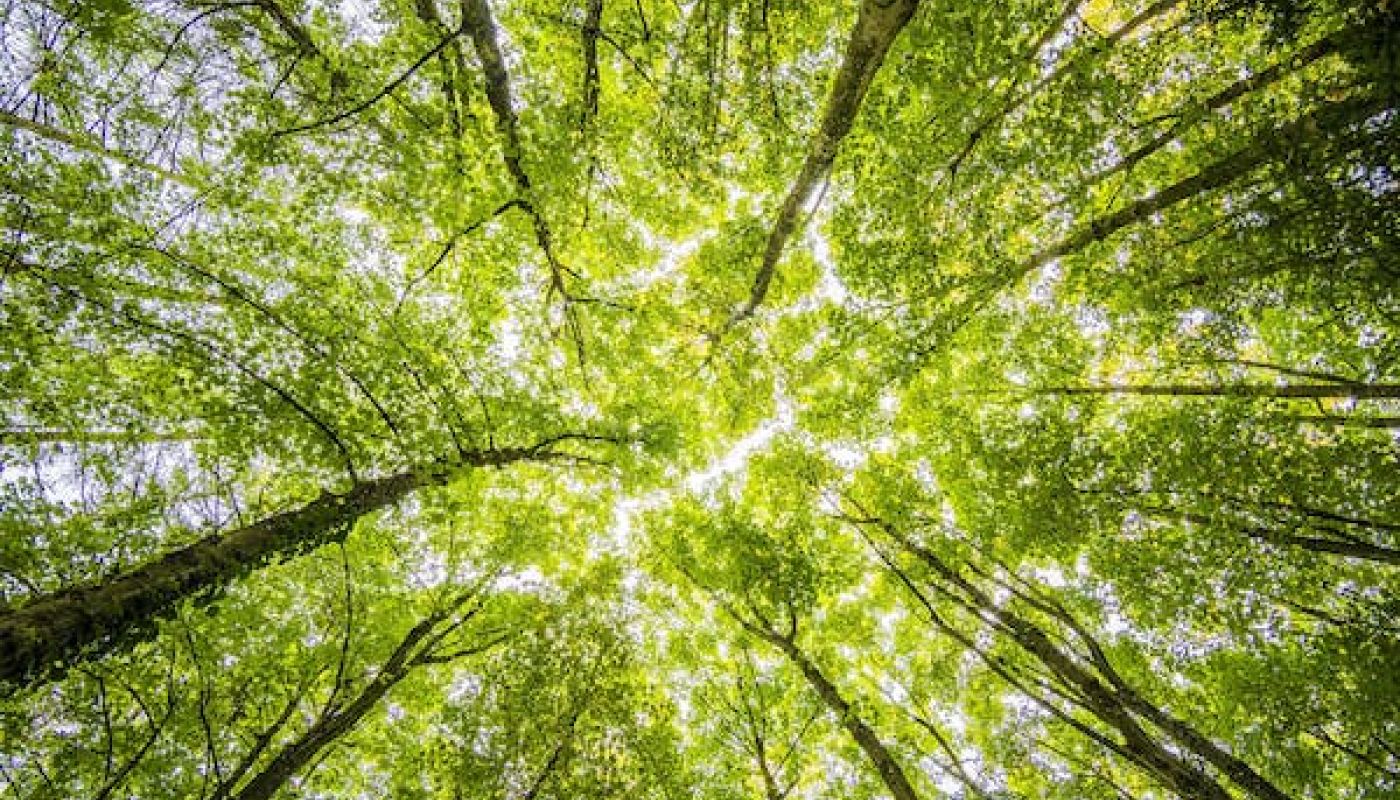
The thoughts of Katia Nussbaum are ones that have been reverberating around many biodynamic producers for some time. As the acceptance of biodynamic farming and viticulture has grown, more and more farmers are convinced evangelists for the 'dynamic ecosystem' approach: the idea that we can understand and form sympathetic alliances with the underlying ecosystems of our land and this lies at the heart of successful biodynamic farming.
While I am absolutely convinced that this is the right path, it would be naive to imagine that this is a generally held view in the biodynamic community. There is a substantial body of those who are equally convinced that the whole thing runs on cosmic energies that cannot be understood by science and anything that breaks the holy trinity of cow horns, stag’s bladders and astrology is tantamount to heresy.
I don’t want to create cabals of Sunnis and Shiites among the biodynamic community, nor the wider wine world, so I am not going to challenge or claim that there is some sort of 'true path'. But it would be sensible to extend this debate.
Katia discusses the concepts of consciousness among plants and ecosystems, about the ways they can communicate and co-operate. If this sounds flakey to some, that is probably because they are applying human prejudice to terms such as consciousness and co-operation.
If we can start with Darwin. The sheer brilliance of evolution is that it causes incredible mimicry of design (an intellectual process), both in physical form and behaviour, without any actual design taking place. Dawkins has so beautifully expressed this in The Blind Watchmaker (Norton & Co, 1986). He shows us how it is that an unthinking process creates things that we find (in our prejudice) almost impossible to imagine as not being part of some intelligent plan. I still have regularly to remind myself that this all happens by evolution without any thought taking place. The co-operation of species and between species happens with communication, but often without language or thought (we might argue about language, depending on how we might try to define the word).
Consciousness has often been generally regarded as a function of higher brain activity, needing language, logic and awareness. But some of the leading philosophers and neuroscientists today are challenging this view. Guilio Tononi is a neuroscientist working in this field and his ideas gel with those of philosopher David Chalmers. They see consciousness as something that does not have an intellectual threshold and consciousness is something that stretches through all communication. Their work in integrated information theory is stupefyingly hard to get one's head around (good wine is definitely handy here), but they would see the sorts of communication networks that plants enjoy along with the consequential co-operation and actions they stimulate as an example of consciousness. There is no suggestion of intellectual thought being involved, nor sentience. Trees don’t have brains, but nevertheless there is communication and co-operation between them and Chalmers would say that there is a level of consciousness.
The idea of co-operation without thought or intellect is an exact parallel of evolution without design. It isn’t weird, flaky or 'out there'. It is simply a process evolved among communities of living things: plants, animals, bacteria and so on. It is wonderful, and is definitely a key to understanding plant behaviour. (A great example of this, though animal not plant, is coral spawning. Corals don’t have iPhones or secretaries, but all of them need to spawn in a synchronous fashion for the eggs to be fertilised. They all synchronise to the moon, a great example of celestial influence that is demonstrated to be real, and they use this external Filofax to simultaneously mate. No intellectual process is involved, just an evolved scheduling using a generally available external clock. Communication and co-operation exist without intellect but still form a swarm consciousness).
Katia’s thoughts on mycorrhizal fungi closely match ours. For some time now we have run a programme where we harvest these fungi from our vineyards and send them to the nursery that grafts and grows our young vines. When they grow the rootstock, and then the young vines, for our vineyards, they start their life growing in the fungal ecosystem of the precise vineyard in which they will later be planted. (Below are Felton Road's goats, raised for manure, and roasting.)

Equally her thoughts on fitness are profound. While there is no doubt that nature can be ruthless, it is definitely true that ecosystems thrive more on co-operation and balance than they do on conflict.
The question, I suppose, is this: yes, this is a brilliant way to farm, yes, it produces good results. But is it biodynamics?
I think it is, despite the lack of reliance on cosmic energies, potions and astrological calendars. I was wondering what Steiner might think but, really, that doesn’t matter. He’s been dead a long time and ideas are not responsible for, or to, the people who thought them up.
Ideas that are not challenged become dogma. Ultimately a manual for better farming (for that is surely what biodynamics is?) can become a quasi religion. It may enrage some, or many, but everything should be open to reasoned enquiry. The idea that some principles are sacred is deeply unhealthy. Science is about curiosity, about not knowing, but wanting to know. It always worries me the number of biodynamic farmers who seem to be almost gleefully anti-science. Being anti-science is about being anti-knowledge. We have to embrace enquiry, new knowledge, and change to be better farmers. And that means being wary of dogma. Yuval Harari has put it brilliantly: 'A question you can’t answer is better for you than an answer you can’t question.'