
The Canadian wine industry is in turmoil, but with any luck will emerge from its current state infinitely stronger than it was before. A recent showcase of Ontario's finest Chardonnays in London provided what should prove to be an emollient for the rifts that have emerged.
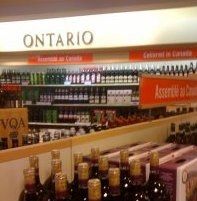
The fortunes of the big Canadian wine producers are based on selling a strange product known as Cellared in Canada wine. These brands are made up substantially of inexpensive bulk wine imported into Canada to be blended with some of the most basic domestic wine and, often, water. They were always packaged as though they were 100% Canadian (sometimes even with the same brand names as sister wines grown in Canada) and, until recently, were cynically merchandised as though they were domestic products, not least by the provincial liquor monopolies, whose retail stores have provided useful revenue for the government via taxation (see Not so United Canada). The impressive sales volumes of Cellared in Canada (CIC) wines were the result of their low price and the fact that famously patriotic Canadians thought they were buying Canadian.
Because these CIC blends are not Canadian, and not especially interesting, the Canadian wine media largely ignored them. They knew they were ersatz products only pretending to be Canadian, but very few consumers did. In the age of Twitter, however, word travels so much faster and more effectively than it used to. Last year the misleading nature of CIC wines and their marketing was at last aired in the Canadian media. The results have been mixed. The rules concerning merchandising CIC wines have been tightened up and the monopolies no longer display them on shelves marked Ontario and British Columbia but have to distinguish them carefully in their stores from all-Canadian wines, mostly labelled with the letters VQA for Vintners Quality Alliance, a sort of Canadian Appellation Contrôlée.
The whole issue also brought into stark relief the very different objectives of the big wine bottlers and the smaller family wineries. It caused the seven big Canadian wine companies, including the dominant one Vincor that is now part of the US-based giant Constellation, to leave the old generic Wine Council of Ontario to form their own association. Their Winery and Grower Alliance of Ontario proved to have considerable political muscle. Arguing that they needed to compete with cheap imported wines such as Zuccardi's hugely successful Fuzion from Argentina, the big producers managed to push through a reduction in the minimum amount of Ontario wine required in CIC blends from 30 to 25%. This proportion (which was as high as 85% in 1973) will be reduced to zero from 2014, when it is hoped that local, all-Canadian VQA wines will be in a much stronger position than now.
The government is implementing a scheme to encourage well-sited vinifera (European) vines and discourage the hybrids and other vines that were planted, sometimes opportunistically, in Ontario. (Hybrids are relatively uncommon in Canada's other important wine-producing province, British Columbia – although BC had its own little scandal when it emerged that the wine that Winter Olympics sponsor Vincor intended to adorn with the five rings was not Canadian but CIC.) Currently there is a glut of Ontario-grown grapes, and the recently reduced minimum domestic component required for the high-volume CIC wines is exacerbating this. The Ontario growers' association is up in arms.
But at the top end of the quality scale, Canadian wine is doing just fine. Some of the few beneficiaries of global warming, Canadian vintners can now ripen even red wine grapes fully, yet summers are not so fierce that the vines shut down and the all-important phenolic ripening lags behind sugar accumulation, as happens in so many warmer wine regions. The quality of Canadian wine has increased quite markedly this century and yet, with the exception of highly priced sweet Icewine, a particular favourite for the gift market in parts of Asia, very little Canadian wine is seen outside Canada.
This is not too surprising for Canada makes less than half as much wine as New Zealand, for example, but, as well-travelled winemaker Norm Hardie observes, 'it's very important to get Canadians to believe Canadian wine can be great. And they need to hear it from outside. We don't believe in ourselves – except for [ice] hockey.'
One of his fellow vintners, Bill Redelmeier of Southbrook, has taken the initiative in this respect. Inspired by the starring performance of some Ontario Chardonnay slipped in to a top California v France Chardonnay tasting in Montreal last year, he decided to show off a selection of Ontario's best Chardonnays in London last week. Mindful that a similar London tasting of New Zealand Sauvignon Blancs years ago set them off on their global voyage, he fixed on Canada House overlooking Trafalgar Square for the location and the UK fine-wine media for the guest list.
The selection of the wines was as fraught as one might expect. To this day, only one person, Sadie Darby, who organised the nuts and bolts of the comparative blind tasting of the submissions from the 108 wineries invited to participate, knows the final scores and ranking in the blind tasting to decide which wines should be shown. In the end, 22 wineries were represented (of which four were owned by the big companies involved in CIC production) and they showed that Ontario alone can produce a vivid array of styles of Chardonnay, some of which can hold their own with the world's finest.
The most distinctive were those called by locals simply 'County', meaning that they come from the relatively new Prince Edward County wine region that is even cooler than the benchland just west of the Niagara Falls where the Ontario wine industry has historically been concentrated. The best of these wines have real delicacy as well as density of flavour. In general they were long on flavour and short on alcohol. Norman Hardie's delicious Unfiltered 2008 was less than 12% alcohol. And to judge from the library stock that some of the wineries showed in London, they can age well too. Burgundian influence is strong, but the wines in my list here are fine wines with their own personality and great charm, with 2007 a particularly successful vintage.
FAVOURITE ONTARIO CHARDONNAYS
(listed in the order they were shown, from east to west)
Huff Estates, South Bay Vineyard 2007 Prince Edward County
Closson Chase, South Clos 2007 Prince Edward County
Normanan Hardie, Unfiltered 2008 Niagara
Southbrook, Triomphe 2008 Niagara on the Lake & Poetica 1998 Niagara Peninsula
Henry of Pelham, Barrel Fermented 2007 Niagara Escarpment
Le Clos Jordanne 2006 Twenty Mile Bench & Talon Ridge 2007 Vinemount Ridge
Tawse Winery, Quarry Road Vineyard 2007 Vinemount Ridge
Malivoire Wine Company, Moira Vineyard 2004 Beamsville Bench
Mottiar Vineyard 2007 Niagara Peninsula
See my tasting notes on all 40 wines on Purple pages.
From bottom to top – Canada's wines
• 4 分で読めます
This is a longer version of an article also published in the Financial Times.


購読プラン
スタンダード会員
$135
/年間
ワイン愛好家向け
- 296,561件のワインレビュー および 16,125本の記事 読み放題
- The Oxford Companion to Wine および 世界のワイン図鑑 (The World Atlas of Wine)
- askJancisへのアクセス(AIワインアシスタント)


プロフェッショナル
$299
/年間
ワイン業界関係者(個人)向け
- 296,561件のワインレビュー および 16,125本の記事 読み放題
- The Oxford Companion to Wine および 世界のワイン図鑑 (The World Atlas of Wine)
- askJancisへのアクセス(AIワインアシスタント)
- 最新のワイン・レビュー と記事に先行アクセス(一般公開の48時間前より)
- 最大25件のワインレビューおよびスコアを商業利用可能(マーケティング用)
ビジネスプラン
$399
/年間
法人購読
「プロフェッショナル」プランの内容に加えて
- 最大250件のワインレビューおよびスコアを商業利用可能(マーケティング用)
- レビュー依頼用のワインを提出可能
- 従業員向けにメンバーシップを提供し、一元的に管理可能
- APIアクセス(※別途料金)
More 無料で読める記事

無料で読める記事
この記事はAIによる翻訳を日本語話者によって検証・編集したものです。(監修:チャーリー・ギーガン、写真:ジェイソン・ロウ)...
無料で読める記事
20世紀のワイン界のアイコンたちが関わった初の大西洋横断ジョイント・ベンチャー、オーパス・ワン。この記事の別バージョンは『フィナンシャル...

無料で読める記事
速報!オールド・ヴァイン・レジストリが記録を更新し、障壁を打ち破り、新たな地平を切り開いている。そして今、オールド・ヴァイン...

無料で読める記事
この記事はAIによる翻訳を日本語話者によって検証・編集したものです。(監修:小原陽子) 世界中から27本のシャルドネの「アイコン」を集め...
More from JancisRobinson.com
テイスティング記事
南アフリカがワインにとって最もやりがいのある国のひとつであり続けていることの証明。写真上はウェザー・リポートのクリス・キート(左...
テイスティング記事
歴史あるブドウ畑、高い標高、火山性土壌、そしてオーガニック栽培の組み合わせが、この知名度の低いAVAを際立たせている。写真上は、 ムーン...
テイスティング記事
熱波に見舞われた年に生まれた、魅惑的にフレッシュで親しみやすいワイン。ソッティマーノは、写真上のコッタ・クリュから...
テイスティング記事
この記事はAIによる翻訳を日本語話者によって検証・編集したものです。(監修:Yuri Shiraishi)...
テイスティング記事
暑さの中でもリフレッシュできる25の方法。 先週、ヨーロッパは6月としては記録的な熱波に見舞われた。今週は...
今週のワイン
元化学者の正確さとブドウの樹の囁きを聞く者の魂で造られたヴィーニョ・ヴェルデの白ワイン。23ドル~、22ポンド~。写真上はラモスと...
テイスティング記事
ヴァーティカル・テイスティングで、ジャンシスがカリフォルニアを象徴する赤ワインの画期的な始まりを振り返る。ロンドンの67パル...

Don't quote me
ブドウの樹に日陰を提供し、ワイン樽の材料となる森のテロワールは、ブドウ畑やワインと相互につながっている。写真上は...