As winemakers worldwide have been reducing sulphur levels in wines, my guess is that we are all becoming less tolerant of sulphur nowadays. Sulphur levels were generally quite high in the 1970s when I began drinking wine and I don't remember experiencing any adverse reactions. Nowadays, I really notice the elevated sulphur levels in young German wines with residual sugar. And the sulphur is there not because of sloppy winemaking but because it is seen as a necessary preservative for these long-lived, slowly evolving wines, even by such venerated and cosmopolitan winemakers as Erni Loosen of the Mosel and Washington state. But this runs counter to the general trend today to want everything we eat and drink to be as 'natural' as possible.
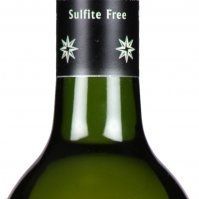
I'm sure therefore that there is a market for wines such as this No Added  Sulphur Chenin Blanc/Sauvignon Blanc 2008 Western Cape from Stellar Winery of Olifantsriver, well north of Cape Town on the way to Namibia. This is an outfit that ticks all the boxes, having received accreditation for both organic viticulture and Fairtrade labour practices whereby the workers receive a share of profits and decide collectively how to spend it.
I tasted this wine thanks to its UK importers, the organic wine specialists Vintage Roots, who are selling this online at the very fair price of £6.65 a bottle. The sample I tasted had a lovely wild flowers and honey nose and really tangy freshness on the finish. It also had a much deeper colour than one would expect in such a young wine (sulphur has a bleaching effect – hence the number of traditional red burgundies that seemed to deepen in colour in bottle). And it should be said that a sulphur-free wine is much more fragile than one with some sulphur added to it, so special care should be taken not to expose this wine to heat – and I would not expect it to last for months and months (let alone years and years).
Stellar's winemaker Dudley Wilson is a proponent of No Sulphur Added (NSA) techniques and here's what he has to say on sulphur-free red wines (this white version is a relatively recent addition to Stellar's range):
We have had many queries regarding our sulphur dioxide free wines and this short collection of notes is to address them.
To make a sulphur dioxide-free wine, it is important to understand why sulphur dioxide is used in wine in the first place. There are two main areas of application. The first is its role as an antiseptic. It is used to kill yeast, moulds and bacteria. It is in this role that sulphur dioxide is used on harvested grapes and in juice before and just after fermentation.
The second is as an antioxidant. It can inhibit enzymes responsible for oxidation. There is a misconception that sulphur dioxide binds oxygen; it binds the products of wine oxidation.
Modern production techniques and equipment make the use of sulphur dioxide less critical than in the past. Standards of hygiene in cellars are much improved and the widespread use of stainless steel makes cleaning much easier. With the selection of healthy, good quality fruit at optimum ripeness in the vineyard, there is little need to use large amounts of sulphur dioxide at the start of the winemaking process.
Oxygen meters can be used with inert gas to make sure that the wines are not at risk from oxidation. Most winemakers rely on the presence of sulphur dioxide to protect the wine when a lot more could be done by looking at dissolved oxygen in wine and understanding where it came from.
A wine should be readied for bottling with the aid of a dissolved-oxygen meter and inert gas. The bottling machine and all pipes to it should be set up with no risk of air leaking in.
Our bottling machine pulls a vacuum on the empty bottle before filling it with nitrogen. The bottle is then filled with wine. Wine is sterile filtered just before entering the bottling machine. The aim is to have almost no dissolved oxygen in the wine before bottling, have no oxygen pick-up during the filling processs and to have the wine sterile (no micro-organisms ) at bottling. It should be possible to then have a sulphur free wine.
So much for the technical aspects.
Not all [red] wines are sulphur dioxide-free candidates. There is much that we are still learning. Generally wines that have a special tannin and colour profile are the best candidates. This is something that one must discover by tasting and experience. Generally they are wines with deep colour and rich tannins. Not harsh or astringent tannins. Obviously the tannin structure makes the wine more robust when challenged by oxygen, but it must not be so full of tannins that it becomes undrinkable. The introduction of wood to these wines is a bit of a two-edged sword. On the one hand it would be nice to get the wine safely into the bottle as soon as possible but to get the richness and complexity that wood brings requires some time for the integration of the wood and wine. This time makes the wine vulnerable to oxidation and microbial spoilage. The introduction of wood can also stabilise the colour and act as an antioxidant. The extent to which this happens is not predictable but must be evaluated in each wine.
The amount of oxygen that one allows the wine access to in order to stabilise the colour is also tricky to judge as one does not have the luxury of using sulphur dioxide to 'reel it back in'.
On the question of shelf life, it is my opinion that if the wine has not oxidised within the first three weeks post bottling, then it will age according to the style in which it was made. This is often dictated by the tannin profile, pH, volatile acid content and wood influence. Thus it will be subject to much the same ageing factors as a normal wine. This is assuming that there is no ingress of oxygen or microbes through or from the closure.
One sometimes errs on the side of reductiveness when bottling some of these wines and they may, just after opening, exhibit some atypical bouquets. A bit of airing will invariably remedy this. Another feature to look for is the colour intensity. Even though these wines are chosen with a dense structure, the lack of bleaching sulphur dioxide results in wines with exceptional richness of colour.
You can find other importers around the world, including Oregon, where the importer publishes a list of retailers, on Stellar's own website at http://www.stellarorganics.com/products.htm#where