
Without cultural context, wine is meaningless. When divorced from the human references that define the origin, style and quality of wine – the elements that underwrite its fundamental appeal – wine becomes entirely functional, a mere intoxicant, just as it was when spontaneously fermented grapes were first discovered by our ancient ancestors.
For centuries, the culture of wine evolved within Europe. All the relevant trappings – nomenclature, service, food matching, even functional details such as pricing structure and distribution – have come from European ideals. So what happens when wine suddenly spreads into a culture where it was previously utterly unknown?
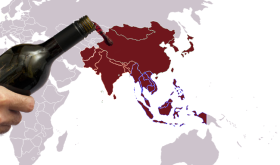
Look east
Asia provides the answer. Wine has previously infiltrated uncharted territories, but always within a cultural context established (indeed, enforced) by the Europeans who took it there. Across Australasia, the Americas and South Africa, the production and consumption of wine followed the precedents and customs of its home turf, even adopting the same regional names. The most radical change was writing grape varieties on labels.
Whereas in Asia, wine is a much more recent import, welcomed willingly rather than by conquest. As such, the culture of wine is being adapted to fit very different standards and expectations.

Most notoriously, Chinese drinkers were rumoured to mix red wine with coke – although to be fair, the Spanish have done the same with their kalimotxo since the 1970s, although they probably didn't use Lafite. Anyway, if that was ever true in China, it is a thing of the past now. Today, red wine is appreciated in its own right, although that doesn’t mean it adheres to traditional European values. In fact, the initial popularity of red wine can be attributed to a combination of auspicious colour, brand desirability and gifting habits – any concept of terroir or vintage (unless there is a lucky eight involved) was secondary at best, if not entirely irrelevant.
But after anti-corruption measures were introduced and gifting became outlawed in China, red wine established itself as a more mainstream drink. The growth of wine education (see East meets WSET: how Asia learns about wine) means that consumers are learning about wine from a traditional European perspective. White wine and rosé are growing in popularity too, although they still represent only one third of wine sales in China (for imported wine).
Furthermore, consumption patterns of wine in Asia often bear little resemblance to those of Europe. At traditional Chinese banquets, a panoply of foods is served simultaneously, with scant regard for old-fashioned food-matching philosophies. Ganbei toasting might mean that wine is repeatedly downed rather than sipped. Meals often climax with the most prestigious dish served with the most expensive wine – I’ve heard that premium Australia Shiraz and abalone is not unheard of. My point, however, is not to debate whether this violates arbitrary western rules, but to accept the fact that different cultures can and should appropriate wine however they wish.
Such original thinking might encourage Europeans to reappraise their own ingrained beliefs. How many wine lovers were taught that Riesling and Gewürztraminer are excellent matches for Asian cuisine? Not in Asia they’re not. (Besides, the European takeaway version of Chinese food sometimes bears little resemblance to the real thing.) Meanwhile in India, alcohol is usually drunk before a meal, not during, which is not so dissimilar to how huge volumes of wine are casually consumed in pubs across Britain, disregarding the received wisdom about wine’s gastronomic suitability.

Price is another big difference. Where wine is not native, its taxation is punitive. As a result, wine is much more expensive than it is in Europe, but is frequently much more expensive than other alcohols too.
In my adopted home of Singapore, the rock-bottom price for wine is SG$20 (£11.18, €13.24, $14.70), with household brands such as Jacob’s Creek costing almost double that. Wine is consequently viewed as an expensive and prestigious product, and there is far less resistance to trading up to better bottles compared with bargain-centric Britain.
Whereas in China a 750 ml bottle of a similar brand can cost roughly the same as a litre of vodka, or a dozen 500 ml beers. These economics inevitably make wine a very different cultural proposition to that in its mainland European heartland, where wine is negligibly cheap by comparison.
Furthermore, in cultures where drinking strong spirits is the norm – China’s prized baiju is routinely more than 50% alcohol – wine looks like the lower-alcohol option. The current European preoccupation with reducing alcohol consumption, and the consequent quest for lower-alcohol wines, is far less relevant in that context.
What's the takeaway?
Witnessing wine culture in Asia from a European perspective is intriguingly contradictory. On one hand, the value and prestige of wine initially comes from its historical origins and the association with a desirable western lifestyle, especially in the luxury sector. But at the same time, wine is readily co-opted by native cultural conventions, disregarding the customs that give it value in its homeland.
Perhaps even more intriguing is the idea that if wine culture continues to wane in Europe, an Asian approach to wine could redefine how wine is perceived around the world. Ganbei!