I always knew that my late father had been a brave man during the Second World War. He had volunteered at barely 18; he had served as a navigator in the RAF; and he had been awarded the Croix de Guerre by the Free French Government. What for?, my sister, my brother and I used to constantly ask him. ‘For calling De Gaulle a taxi', came his equally constant, modest reply.
This modesty he shared with his father-in-law, my grandfather, who was too old for active service during the war, having been born in Vitebsk, Byelorussia, in 1895. By the time I came to appreciate Willy Shalyt, or Uncle Willy as he seemed to be known around Manchester, he was a tall, well-dressed gentleman who had gone bald at an early age.
That did not preclude him from special war duties. My grandfather had been a Special Constable during the war and he was very proud of the fact that he never arrested anyone. ‘If I caught anyone, I just used to give him a good telling off', was his rather unorthodox modus operandi.
That was the extent of my family’s contribution to the war that we, as children, appreciated, until the early 1960s when thin blue airmail letters postmarked New York began to arrive.
I remember my mother’s excitement every time one landed on our doorstep. She would read them avidly, phone her sister Celia and read the contents to her and then phone my grandfather, who never really learnt to read English. Gradually, the identities of the senders of these letters became clearer and within several years we had met them.
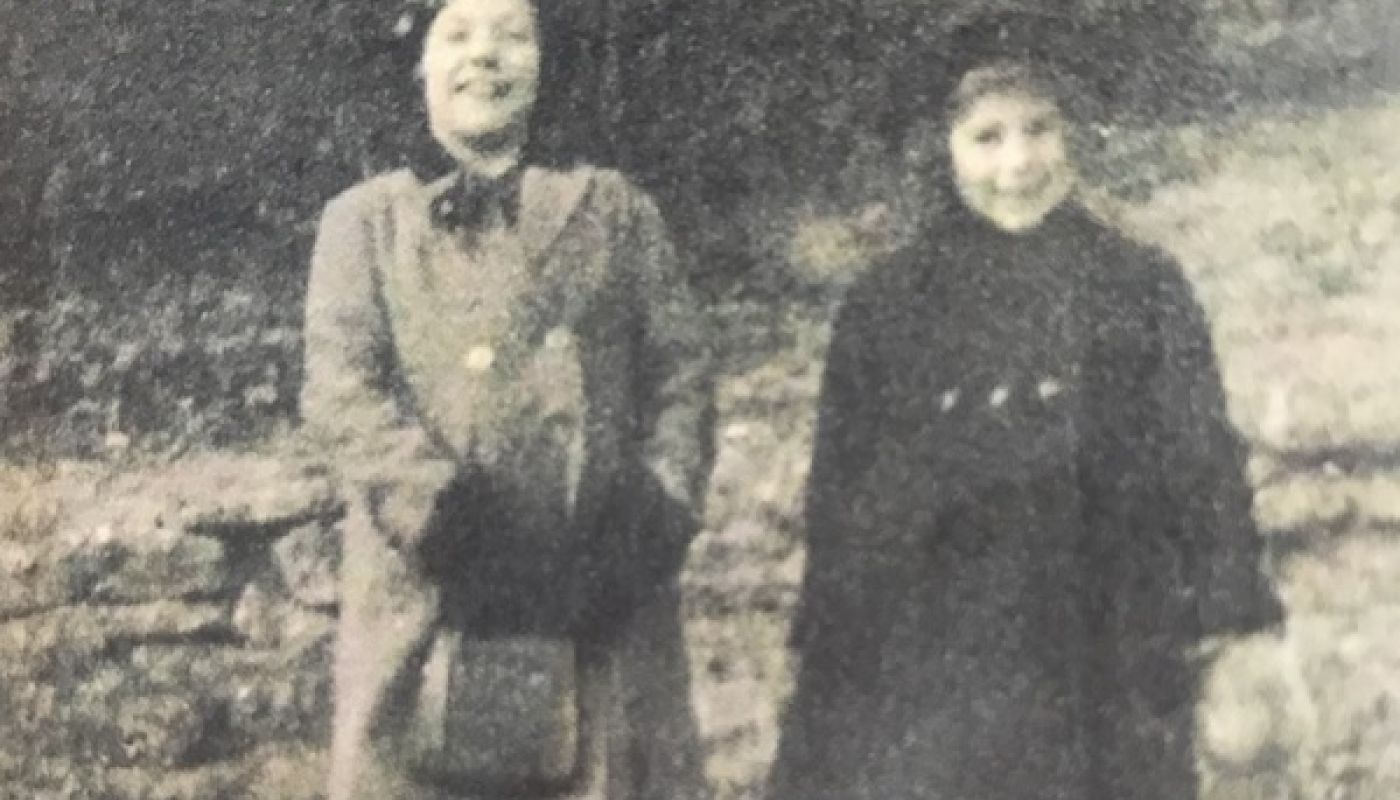
The letters came from two sisters, Inge (left in the ancient photograph here, taken in England in the early 1940s) and Ellen, who had entered our family life in 1939 when they had arrived as part of the Kindertransport programme. Born in 1930 and 1933 respectively to Jacob and Meta Levi, in the town of Rexingen, southern Germany, Ellen recollects being bundled on a warm day in July 1939 into many layers of warm clothing, including a winter coat, by her mother before boarding a train for the Hook of Holland. ‘I just recalled saying goodbye', said Ellen. ‘At that age I just went with the flow and followed my elder sister.’
They then took the boat train to London, where they were met by their aunt Lisa, then working as a maid, before taking another train for Manchester, where, according to a document written by Ellen in 1996, they were to begin a new chapter in their lives as two young English girls.
Their new home was to be Easthome in Prestwich, north Manchester, the home of my grandparents, Willy and Rachel Shalyt, and their two daughters, Celia and my late mother, Pauline. Novelties included central heating and an Irish setter called Rufus. In September 1939, the month war was declared, Inge and Ellen started school, despite neither speaking nor understanding a word of English. In fact, I can still recall my mother speaking the phrase that Ellen used to constantly repeat in German: ‘When will my suitcase arrive?’ was her question. Of course, it never did.
Ellen never forgot her loneliness as a child. ‘Nobody ever hugged me until I was married and nobody ever made me a birthday cake until Joe, my late husband, organised one', she recalled almost 75 years later.
What propelled my grandparents to take in Inge and Ellen was a question that was neither asked nor answered at the time. That they were both refugees was obviously an important consideration. My grandfather was from Russia while my grandmother had been born in Romania. He, I knew later, had fled the pogroms. Both were Jewish and, although not ultra-orthodox by today’s standards, the synagogue stood for both of them as a very strong focal point in their respective lives. And the synagogue also represented a source of social glue that was the equivalent those days of today’s Facebook.
But looking back today I believe that there were three primary reasons that prompted my grandparents to take in these two young girls, a move that must have caused some friction in their household.
The first was that they were two sisters, like my aunt and my mother, whom my grandfather adored. Later in life, I heard from my mother that my grandfather, who used to leave home to go to work when they were asleep and return home after they had gone to bed, used to make a practice of going up the stairs very noisily when he got home in the hope of waking one of them.
The second was that this happened six months after Kristallnacht, the burning of Jewish businesses by Nazi soldiers, at the time when the late Sir Nicholas Winton was rescuing 669 young Jewish children from Czechoslovakia.
The third reason, much less related to today’s refugee crisis, is that back in 1939 there was one common enemy, Nazi Germany. And it was this that focused the minds, hearts and wallets of so many brave individuals who in the summer of 1939 welcomed the Kindertransport children.
Inge and Ellen spent the war years in England, having been evacuated to Fleetwood when the heavy bombing started, but spent all the school holidays with my grandparents. In February 1945 they returned to Manchester so that my grandfather could take them to Liverpool, where they joined a Danish cargo ship, the MS Eria, part of a large convoy that took them to New York to rejoin their parents.
This was, regrettably, not a happy reunion as the six years’ separation had changed Inge and Ellen’s aspirations but not their parents’ view of the world. ‘My parents were expecting two little German girls but by 1945 we had grown up and we were two almost-grown-up British teenagers', Ellen recalled poignantly. Alienation between the parents and the two daughters followed, a state of affairs that was never rectified, to the daughters’ ultimate regret.
Inge and Ellen married and had three daughters and two sons respectively. And in 1976 they returned to England and came to Manchester to visit my grandfather and to stay in our family house. It was a very happy occasion. Their friendship lasted as my parents visited Inge and Ellen in New York and this link has been passed down another generation with Inge’s daughter Barbara and Ellen’s son Douglas accompanying Ellen to London for the eightieth anniversary celebration of the Kindertransport movement that was held on 15 November at the Friends Meeting House. When she accepted the invitation, Ellen, now 85, wrote, ‘this will probably be my last trip to England'.
Like Lord Dubs, the Labour politician, and Leslie Brent, the renowned immunologist, who both spoke at this event, Ellen feels a great tenderness towards the country that adopted her. ‘I have such a love for this country that saved my and Inge’s lives. I will not have a word said against it. I am so lucky to have been accepted here, to have been made welcome and to have felt loved here, not just by the country but by your family whom I consider as my own.’
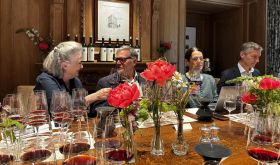
And with that, Ellen looked across the table at which her son, her niece, my brother, my sister and myself were sitting, and held her arms out as if to embrace us all. My grandfather would have relished it.