
See our tasting notes on the delights of 2010 Crus Bourgeois and 2009 Crus Bourgeois.
It is fashionable in certain circles, among trend-conscious sommeliers, for example, to deride the wines of Bordeaux. The fact that the top wines now sell at such unrealistic prices unfairly taints the reputation of the entire region, when in fact at the other end of the scale Bordeaux can offer some of the best wine value of all.
This is particularly true at the moment because the vintages currently on offer commercially – 2010, 2009 and, to a lesser extent, 2008 – were generally so successful, in stark contrast to the upcoming 2012 and 2011 vintages. I would urge those who like their red bordeaux plump and rich rather than lean and willowy to take particular advantage of the 2009s, which are chock full of ripe fruit and easy appeal. The serious ones should be left for six or seven years more but there are many that are already gorgeous, even at this early stage in their development.
The Wine Society, canny buyers of bordeaux over many decades, are currently offering some particular bargains among 2009 red bordeaux. The most obvious is the straightforward Christian Moueix 2009 Bordeaux that is bought, blended and bottled in considerable quantity every year by the famous Libourne merchant J P Moueix. All luscious and fleshy, this wine is stunning value. I honestly find it very difficult to believe that all that pleasure, with a firm Bordeaux accent so with good structure too, is available at under £8 a bottle – although the Wine Society is admittedly a special case. Being a wine-buying co-operative, the outfit specifically avoids profiteering.
Some of the best value in Bordeaux is to be found in wines a little more expensive than this but with a more clear-cut pedigree, wines known quaintly as Crus Bourgeois, which in the UK tend to retail at between £12 and £20 a bottle and are all grown on a single wine farm, or château, rather than being commercial blends.
It may seem strange to us anglophones that anyone would actively seek out the attribute of being bourgeois, but in Bordeaux wine, bourgeois status has a value. In 1932, 444 Médoc wine properties were classified as Crus Bourgeois. They were deemed to be producing wines just below classed-growth quality and could hang on to this status for years and years. But in 2008 the system was revised to be more in keeping with the demands of today's discriminating consumers. Only individual wines, not whole properties, are now accorded Cru Bourgeois status, on the basis of detailed tastings of each year's output every year during the second spring after the vintage. The wines are judged blind by impartial wine professionals and the results are announced each September, with accompanying tastings in Bordeaux, Paris and London.
Accordingly, in September 2010 I was able to taste the 2008 Crus Bourgeois (which looked a bit dry and uncharming then). Last year I had the great pleasure of tasting my way through the alluring 2009 Crus Bourgeois. And a couple of weeks ago I tasted many of the 260 wines deemed worthy of Cru Bourgeois status from Bordeaux's excitingly classical 2010 vintage. I use the word 'classical' not to suggest any lack of stuffing; just very classical balance with rather less obvious sweetness than the 2009s.
It takes time for these wines to filter through the distribution system, so few of the 2010 Crus Bourgeois will find their way on to lists and shelves before next year – but I recommend that discerning claret lovers look out for the 2009s and have listed my favourites below.
One welcome new feature for the 2010 Crus Bourgeois is the addition of a QR code to their back labels. In theory at least, scanning these little black and white squares will reveal the full background of all the wines – more information in fact than is available for many of the (much more expensive) wines produced by the classed growths.
We professionals at the 2010 tasting were treated to full details of the precise assemblage of grape varieties in our tasting booklets. Although we tend to assume that the Médoc is dominated by Cabernet Sauvignon rather than Merlot grapes, and this is certainly the case with most classed growths, in fact Merlot was the dominant grape variety in a good half of all the 191 Crus Bourgeois 2010s shown recently in London. This just shows that many of these Crus Bourgeois are on less favoured sites than the classed growths, and so have to depend on the much earlier-ripening Merlot grape to be sure of producing wines with enough fruit. To be sure of making a fine wine from the late-ripening Cabernet Sauvignon, you need a well-drained vineyard that is ideally, according to local Médocain tradition, within sight of the Gironde estuary.
Like all fine red bordeaux, wines at Cru Bourgeois level tend to be worth cellaring with an ideal drinking period of very roughly five to 10 years old, although the Cabernet Sauvignon-dominated wines can often last much longer than this. What distinguishes them from the best classed growths is that they rarely improve much beyond 15 years and some of the more facile of them, especially the least successful ones carrying the simple Médoc appellation that come from the far north of the Médoc, may start to lose their fruit only five or six years after the harvest. But the fact that you don't need to wait for decades to enjoy these wines can be an advantage.
Most of the most successful Crus Bourgeois carry the appellation Haut-Médoc, meaning that they were grown in the higher, more gravelly, generally better-drained soils of the southern half of the Médoc. Some Crus Bourgeois carry the more specific appellation of one of the famous communes St-Estèphe, Pauillac, St-Julien, Margaux, Listrac and Moulis but they are by no means routinely superior to the Haut-Médocs.
These are wines that cost almost as much to make as first, second, third, fourth and fifth growths selling for many times as much per bottle. They deserve the attention of wine drinkers who value complex, digestible, dry reds for drinking rather than trading.
See our tasting notes on 2010 Crus Bourgeois and see also crus-bourgeois.com.
FAVOURITE CRUS BOURGEOIS
2009s
Ch Le Boscq
Ch Cambon La Pelouse
Ch Labat
Ch Larose Perganson
Ch Peyrat-Fourthon
Ch Sérilhan
2010s
Ch Belle-Vue
Ch Caronne Ste-Gemme
Ch Charmail
Ch Labat
Ch Lestage Simon
Ch Sénéjac
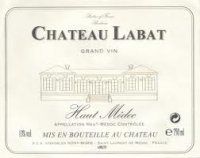
Ch Labat impressed me with both its 2009 and 2010. It's run by the Nony family, who also own Ch Caronne Ste-Gemme next door in St-Laurent. The 2009 is £14.99 from Laithwaites.
When bourgeois is good
• 1 分で読めます
This is a longer version of an article also published in the Financial Times.


購読プラン
スタンダード会員
$135
/年間
ワイン愛好家向け
- 297,159件のワインレビュー および 16,153本の記事 読み放題
- The Oxford Companion to Wine および 世界のワイン図鑑 (The World Atlas of Wine)
- askJancisへのアクセス(AIワインアシスタント)


プロフェッショナル
$299
/年間
ワイン業界関係者(個人)向け
- 297,159件のワインレビュー および 16,153本の記事 読み放題
- The Oxford Companion to Wine および 世界のワイン図鑑 (The World Atlas of Wine)
- askJancisへのアクセス(AIワインアシスタント)
- 最新のワイン・レビュー と記事に先行アクセス(一般公開の48時間前より)
- 最大25件のワインレビューおよびスコアを商業利用可能(マーケティング用)
ビジネスプラン
$399
/年間
法人購読
「プロフェッショナル」プランの内容に加えて
- 最大250件のワインレビューおよびスコアを商業利用可能(マーケティング用)
- レビュー依頼用のワインを提出可能
- 従業員向けにメンバーシップを提供し、一元的に管理可能
- APIアクセス(※別途料金)
More 無料で読める記事




More from JancisRobinson.com

テイスティング記事
このアクセスしやすいヴィンテージに関するウォルターのレポートの後編。今回は、カスティリオーネ・ファッレット、モンフォルテ・ダルバ...

テイスティング記事
困難なヴィンテージに関する最終報告。驚くほどフレッシュでアクセスしやすいワインに仕上がっている。本日は、複数の村のワインと、ケラスコ...

現地詳報
メキシコのワイン産業は気候変動への対処法について教訓を与えてくれる、とメキシコを拠点とするジャーナリスト兼ソムリエのカルロス・ボルボア...

Vinomakase
リチャードの新連載「Vinomakase」では、専門家たちがワインと日本料理をどのようにマッチングさせているかを探る。第1回は...

Bite-sized
セント・オールバンズの大聖堂地区にある15世紀のパブで、最新の料理を堪能できる。 フロント・バーは今も安心できるほどパブらしさを保っている...

今週のワイン
フランス中部の赤ワインに見る、渇きを癒すフレッシュさ。 £15.50、$26.95から 。...

書籍レビュー
クラシック・ワイン・ライブラリーへの3つの新刊と、ポルトガル・ワインに関する自費出版ガイド。 以下のレビューのうち3冊は、アカデミー・デュ...

テイスティング記事
南アフリカで最も人気の高い白ワインの進化をたどる、示唆に富んだヴァーティカル・テイスティング。このワインは...