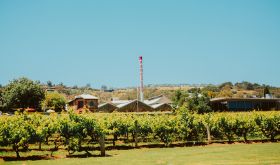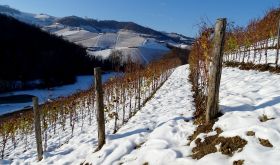
The oldest, and somehow at the same time, the youngest wine region in France. First planted by the Romans, it’s only been taking itself seriously for a generation. This is red wine country, and competing with the big guns of France - Rhone, Burgundy, Bordeaux - is no mean feat. But everyone’s eyes are on Languedoc, so it must be doing something right.
Historically known for producing cheap table wine, and lots of it, Languedoc is now stepping up to be considered as a serious contender. Carignan reigns supreme here. But there are over 30 other grapes permitted in the AoP. This, along with the region’s enduring vigneron culture, has resulted in many, many small parcels of vines.
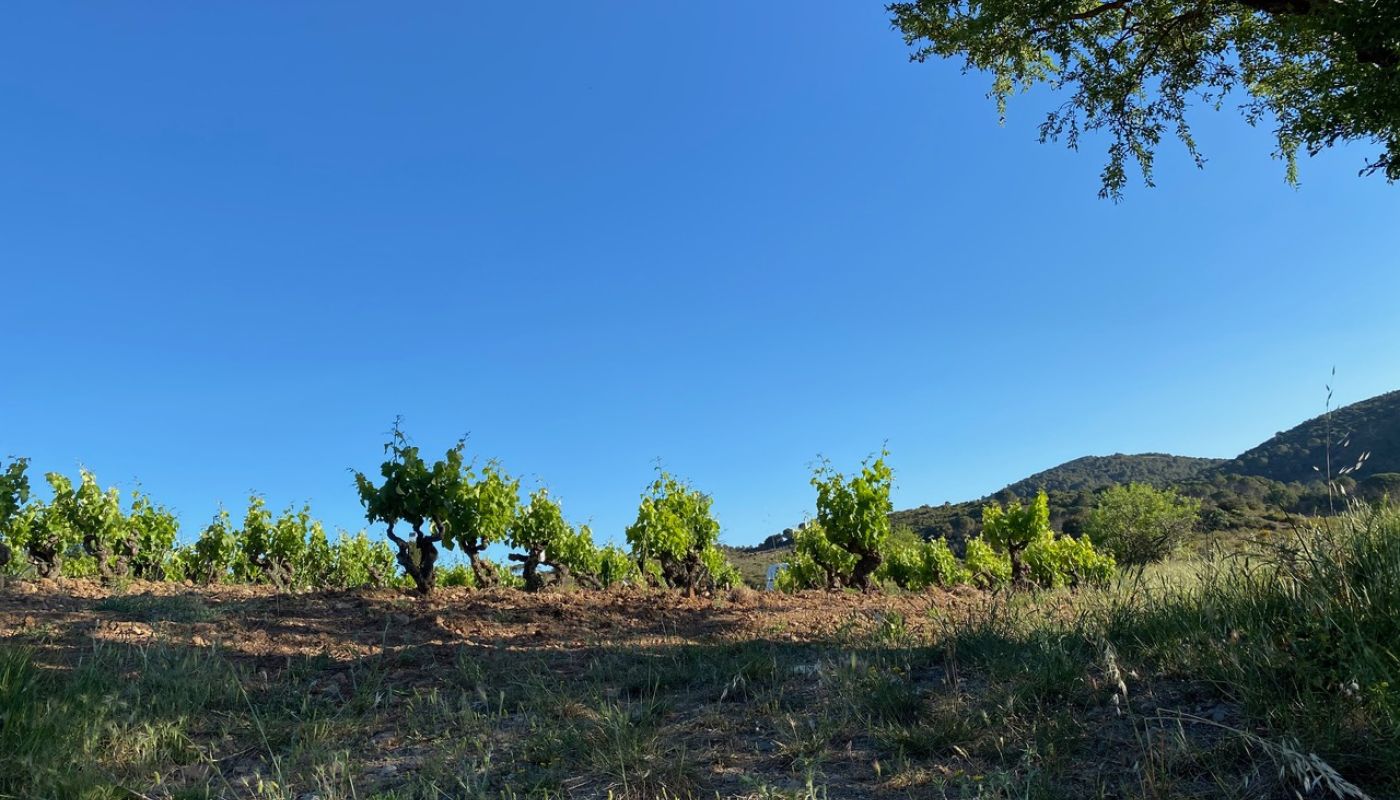
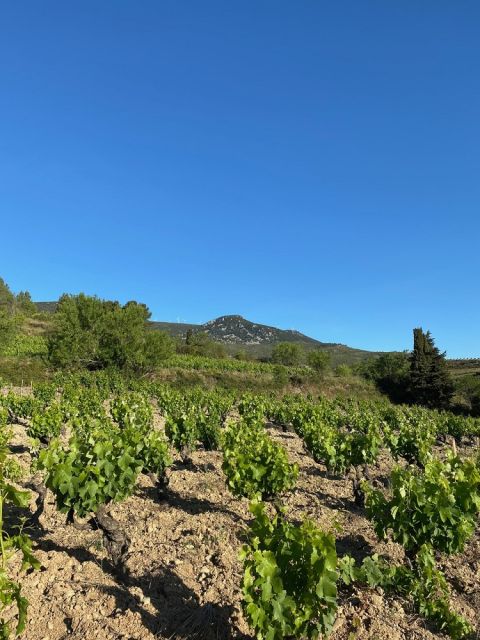
One of these small parcels can be found just outside the village of Tuchan, in a picture-perfect spot. Home to just 800 people, Tuchan sits in the shadow of Mont Tauch. The vines here cling to the sides of sloping hillsides, and offer spectacular views. You would be most likely to find Carignan and Grenache here. But hidden amongst them, if you look closely, is a small parcel of around 2,000 Lledoner Pelut vines.
You really do need to look closely though, because on first glance, these vines look like Grenache. The leaves are the same size, same shape, almost the same colour. But if you turn the leaf over, you’ll find Lledoner Pelut’s hairy little secret, and the one that earned it its nickname - Hairy Grenache. A cousin of Grenache, the two share many characteristics. But unlike its ubiquitous cousin, Lledoner Pelut is rare, unloved and largely unknown.
So, what is it doing here, in the heart of Fitou, the oldest appellation of Languedoc?
Fitou was granted appellation status in 1948, the first place in the whole of Languedoc to do so. There are nine villages permitted to produce Fitou - five coastal and four mountainous, of which Tuchan is one. An all-red appellation, the wines have to be a blend. Carignan is the primary grape, and Grenache, Syrah and Mourvèdre are also permitted. Cinsault and Lledoner Pelut could also be included at one point, but have fallen out of favour. The former is no longer permitted at all, and the latter is restricted. Whilst it can be used in small quantities, Lledoner Pelut can no longer be planted.
As well as their red wines, under the Fitou label, the nine villages of the appellation were permitted to produce Rivesaltes - a vin doux naturels, or natural sweet wine, from neighbouring Roussillon. Rivesaltes is a fortified wine, made in a similar way to Port but produced from Grenache grapes. It may not be very well known today, but at the height of its popularity, 70 million bottles were sold each year.
Fast forward to the 1970s and Rivesaltes had fallen foul of the most basic rule of business - supply and demand. With an oversupply of the wine available, prices were crumbling. To resolve this, France’s INAO limited the planting of Grenache. In its place, growers were encouraged to plant Lledoner Pelut. Because, whilst Lledoner Pelut was permitted to be used in Fitou wines, it couldn’t be used in Rivesaltes.
The new rule resulted in Grenache vines being pulled up across the appellation, and its hairy cousin being planted in its place. But as its 450,000 acres, spread across pretty much any wine country you could name, will testify - you can’t keep Grenache down.
The restrictions lasted just a couple of years. Most growers, as soon as they were able, ripped out the Lledoner Pelut. It was more prone to both infection and rot. It took longer to ripen. And crucially, it just couldn’t reach the alcohol levels that we know Grenache can. In Fitou’s co-operative system, vignerons were paid according to the alcohol level. Lledoner Pelut was higher risk, with lower reward. Not a great combination.
This forlorn grape could never claim to have found wide-ranging success, and by the end of the 1980s its cultivation had peaked. From 1979 to 1988, acres of plantings in France rocketed from 500 to over 1,500. But today, they are back down to just 700.
Luckily, for lovers of rare grapes, old vines or just underdog stories, a couple of these precious acres were stumbled upon by Katie Jones.
Katie Jones, the Leicestershire-born, Languedoc-dwelling, rising star of the wine world is a defender of old vines. After more than 20 years living and working in the wine industry in France, Jones took the plunge in 2009 and bought her first plot of old vines. Starting with one small 6-acre plot in Maury, a commune 20 miles north-west of Perpignan, Domaine Jones was born. With no experience of winemaking, it was the kind of bold move that would come to define her winemaking style.
Since then, Jones has continued to acquire small plots that nobody else would want. She looks for old vines - 40 to 100+ years old - with low yields and high quality. She grows traditional varieties - Macabeu, Carignan, Grenache Gris. She farms them by hand, and all the grapes are vinified separately. Now in its 12th year, Domaine Jones has 30 acres spread across Maury, Tuchan and Paziols.
Committed though she may be to “daringly different” wines, making a Hairy Grenache was not part of the plan. The tiny, hillside vineyard at 300m altitude was never going to be anyone’s first choice. Difficult to farm. Remote. Too small. And that’s before mentioning that there are different varieties - a common find in this area. Traditionally, growers would make wines at home for their own consumption so they would plant everything that the blend needed in one place. But today, having different varietals with different farming needs means it's a harder and ultimately more expensive plot to manage.
Perhaps unsurprisingly, Jones wasn’t put off. And with this plot which, for all its flaws, was available at a knocked down price, she could almost taste the opportunity.
Expecting to find Carignan and perhaps some Grenache too, the 45-year-old Lledoner Pelut vines came as quite a surprise. And justifiably so. There was no reason to believe that this rare grape had made it through the exodus of the 80s - nevermind the EU vine pull scheme that was to follow.
It’s not clear why these vines managed to stand their ground. Back then, Lledoner Pelut was unpopular with growers in Tuchan, even looked down upon, and it still is today. Almost all vines in the area were pulled up in the 80s, to make way for the much-preferred Grenache. It’s likely that this small plot only survived because the owner simply didn’t have the cash to replant, or couldn’t justify the expense for such an awkward vineyard.
It’s even more surprising then that, sandwiched in between 100-year-old Carignan as they are, the vines survived the EU’s vine pull scheme. Beginning in 1988, and running for several years, the scheme offered financial incentives to pull up vines throughout Languedoc. It was aimed squarely at Carignan, which had become synonymous with mass production, high yields, and low quality. But many other varieties, young and old, high and low yielding, were also ripped from the ground over the period.
A lot of winemakers would have written Lledoner Pelut off from the start. The remainder would have likely used it as a minor blending grape. But not Jones. She knew instinctively that this grape had the potential to produce an amazing single varietal wine. She knew she could prove its worth to the sceptical locals.
But it wasn’t going to be easy. The first harvest came with disappointing results. The wine was unbalanced, with harsh tannins that overpowered its light body. Deflated, Jones blended it into that year's Fitou. Probably time to concede defeat. Probably best to cut your losses and admit that Lledoner Pelut is destined to sit in the background after all.
Jones though was undeterred. This is a winemaker who loves a challenge, and she was determined that she could put this underappreciated grape in the spotlight. Determined to finally give it the story that it deserved.
Armed with a bit of blind faith and a lot of winemaking skill, Domaine Jones tried again. They limited the amount of time that the grapes had contact with the skins, with the hope of this time achieving soft tannins. It worked, and the resultant wine - very aptly named Along Came Jones - is lighter than Grenache, in colour and in body. It’s jammy, fruit forward and so well balanced. That first year, 2017, only around 900 bottles were produced. But it was a roaring success. And all of a sudden, the grape was being talked about again.
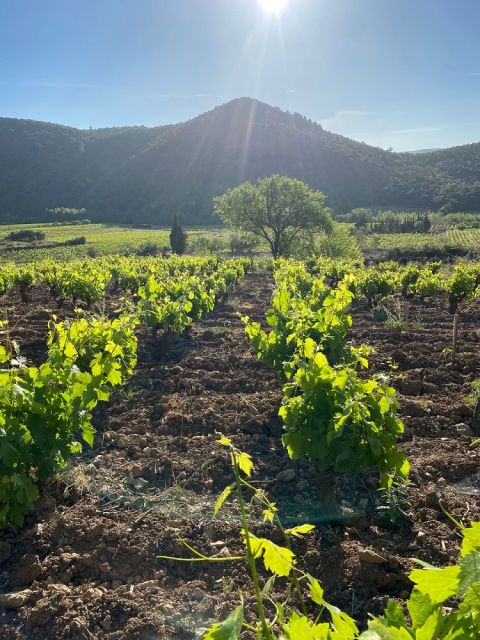
This tiny plot holds so much wine history, centuries of it. History which we could never now hope to discover. Before Lledoner Pelut was planted here in the 1970s, it’s likely Grenache that stood in its place. Vines may have shared this spot with food crops and livestock, long before Languedoc became focused on wine as a commodity. It wasn’t until after Phylloxera had been and gone, in the latter half of the 19th century, that growers in Tuchan - encouraged by demand from the growing industrial North - started planting vines with the intention to sell wine. Before that, it’s probable that a mixture of vines - based on what the landowner wanted to drink at home - grew here.
But now, for the first time in their history, Lledoner Pelut can stand proudly in this postcard-perfect spot. In Jones, the vines have finally found a winemaker who wants to nurture and develop them. After all this time and all this history, could Hairy Grenache really be the last vine standing?
The photos were provided by Katie Jones to Charlotte Fenwick to use with this entry.