31 August ‘The normally phlegmatic British were roused to a state of frenzied apathy.’
Some might apply this line, a favourite from 1960s radio comedy Round The Horne, equally, if cruelly, to the wine trade. With our slow agricultural cycle, our veneration for old hierarchies, and the time it takes for our best products to ‘come round’, it is not surprising that we sit at the sedate end of the drinks business. We look at our counterparts with their craft beer and their organic gin and get in a terrible state about our collective failure to innovate, then return, exhausted, to our cosy routine.
Except – it isn’t true. Not really, not anymore. While the pace of change in wine production will always be constrained by the time it takes to plant vines and harvest enough crops to know what you’re doing, wine culture has for the last few years been anything but lethargic.
Looking back, I get the sense that since the start of the decade wine appreciation has broadened in numerous directions. Producers, trade, press and consumers alike are propelling wine thought forward with particular vigour. These changes are not confined to any one country either; the ease of intercontinental communication has facilitated all sorts of parallel trends in the anglophone wine-drinking world.
Perhaps the most important – certainly the one that I find the most cheering – is the relaxation of the rule requiring red wines to be dark-coloured, full-bodied and tannic if they are to attract acclaim. I am all in favour of powerful wines, provided they possess other merits, but have never felt that those three attributes are either necessary or sufficient for quality. They were seldom considered so until the mid-1990s, and if their importance continues to wane, perhaps we will come to see the era of super-extraction as a blip, a bit like recordable DVDs and alcopops.
No longer am I daunted by the prospect of tasting a large number of Riojas, Ribera del Dueros, Mendoza Malbecs, even Australian Shirazes or Napa Cabs. Whatever other virtues and vices might be on show, mouth-desiccating tannin is now rare, and baked fruit is in merciful, if more leisurely, retreat.
Pinot Noir has arguably been both the driving force and the chief beneficiary of this volte face. Not all that long ago, winemakers were finding all sorts of ways to make it dark and beefy, like proper manly wine, ie Cabernet. Extensive pre-fermentation maceration and/or a good slug of Syrah normally did the trick. Nowadays, Pinot can be comfortable in its own (thin) skin, undisguised, the Bowie-esque outlier that is now the object of so much admiration.
Nebbiolo presents its own, more tannic take on the pale-and-perfumed paradigm, and in the form of Barolo and Barbaresco is enjoying a new lease of life as a fully fledged member of the fine wine class. Its compatriot Nerello Mascalese offers an edgier alternative from its volcanic vantage point in Sicily. Supple, bright, raspberry-scented Grenache is something I rarely encountered before 2010 but whose ranks are now swelling year on year. Other examples abound. Concepts like freshness, elegance and drinkability are firmly back on the agenda.
The conversation around production methods has changed tack accordingly. Bragging rights go to whoever manages to pick earliest, instead of the producer with the longest hang time. Some winemakers are eschewing physical extraction techniques altogether. One hundred per cent new oak has given way to 100% whole-cluster as the sign of ambitious, boundary-pushing winemaking. No doubt ultra-modern Pinot, in particular, will see some incursions into excessive austerity, just like Australian Chardonnay before it. While the pendulum gathers speed, a ‘much less is much more’ approach will offer grave temptation, applying this logic of Calvin and Hobbes: ‘You know how Einstein got bad grades as a kid? Well, mine are even worse!’ I wonder who will be the first person to take a neighbour’s stems and make a 200% whole-cluster wine.
We can hope, should this happen, for a swift recovery to such over-correction, as with the Chardonnay example . It is arguably necessary to go too far in order to recalibrate ‘normal’. Just as the natural wine movement, for all its faults both philosophical and technical, may prompt more moderate producers to re-examine their own manipulations. For we need high-class Pinot and Chardonnay, with poise and a sense of place, to replace the now chronic loss of volume bad weather visits upon Burgundy. Each year we now have to ask, not whether devastating hailstorms will strike, but where. Parts of Chablis saw 70% of their potential crop wiped out this May (see Julia’s article published today on this very topic); some vineyards will not yield a single bunch. The previous month, the worst frost in 30 years dashed the Côte d’Or’s hopes for a bumper harvest that could replenish stocks after a run of miserably small vintages.
This scarcity, in the face of unprecedented global demand, has led inevitably to enormous price increases. It is well known that prices at the top end have gone loopy this decade, so here is a slightly humbler example: what I paid the utterly non-rapacious UK retailer The Wine Society per bottle for Domaine Roumier’s village Chambolle en primeur – with, for the sake of fairness, the euro equivalent based on the average exchange rate in the year of purchase.
| 2005 | £23 | €34 |
| 2009 | £29 | €33 |
| 2010 | £31 | €38 |
| 2011 | £33 | €39 |
| 2012 | £42 | €52 |
| 2014 | £42 | €53 |
The increase in Burgundy’s premier cru prices has been even greater (Clos de la Bussière doubled between 2009 and 2014), and yet demand outstrips the meagre supply. Where top village wines like this used to come in cases of six, now they Society allocates in cases of three. Some people will have the clout to obtain chunky allocations from multiple merchants, and the cash to pay for it. For the rest of us, it is clear we must broaden our horizons beyond the classics, in order to supplement what we are able to source. The first rule of Winning At Burgundy has become: don’t rely solely on burgundy.
Good news, then, that producers elsewhere, especially Australia and the US, have embraced the Burgundian ethos without blindly copying the recipe or aping the style. These most communicative of grapes have been granted a richer library of narratives than ever with which to enthral us. Equally fortunate is the flourishing acceptance of lesser-known grape varieties and regions off the beaten track.
Research both in the UK and the US indicates that the millennial generation of wine drinkers are spending more on wine and adopting a far more adventurous approach than their elders. This then makes it viable for importers to back more obscure wines, for producers to reinvest in quality, and for the vicious cycle that historically kept the vinous elite well separated from plonk to turn virtuous. As long as typicity (or typicality) is respected, then both the diversity and the quality of the set of all wine will increase.
This not only makes life much more interesting for all of us who delight in exploring wine for its own sake, but also increases the odds of a given drinker finding a style they really like. The research into sensitivity levels by the likes of Tim Hanni MW provides a physiological rationale for rejecting a single stylistic orthodoxy, and the broader the stylistic range occupied by unadulterated wines, the less space remains for fruit-flavoured wine-based confections that, by crossing the triangle/frond divide, relinquish wine’s essential capacity to evoke and allude.
Acknowledging this variation in taste does not open the door to subjectivism. It is still compatible with the idea of objective standards of quality. It does, though, lessen the normative impact of those standards. In other words, what we should be drinking can take a back seat to what we feel like drinking. Moreover, the appeal of a wine to the putative millennial drinker lies as much in whether it is interesting, unusual, has an engaging back story, as it does in the liquid’s inherent quality.
This carries a significant risk of Emperor’s New Clothes, though I suspect that the information exchange enabled by social media and an inherent suspicion of brands may mitigate that risk to a worthwhile degree. Wine, being so abstract and amorphous, has always been aided by stories, acting as accelerants for the imagination. These may end up growing in influence relative to the scores of professional critics. When I was researching my MW dissertation into increasing grape ripeness in California, one well-known winemaker observed, ‘I think there has to be a swing to slightly more moderate ripeness and alcohol. But the question is: who legitimates these wines?’
An answer is emerging: wines are now legitimated in the eyes of the drinker less by a handful of critics and more by a complex array of sources, maybe including those critics but adding friends, social media, sommeliers and – as wine by the glass and Enomatic sampling programmes develop – the drinkers themselves into the mix). Perhaps as a consequence, I feel that some of the deference surrounding wine is diminishing: deference to ceremony, allowing for example wine on tap to head upmarket; deference to bordeaux, as trade and collectors reduce their reliance on this one region and start to see it as an option among many; deference to critics, whose writing will need to be more interesting and more evocative than ever to carry above the noise (as outlined in What future for expertise? ).
I think this is positive. Awe is not a prerequisite for the appreciation of great wine; on the contrary, it should be the outcome. Likewise, fear clearly inhibits pleasure, and with this peculiar, fragmented drink there is plenty of scope for it beyond the well-informed realm of Purple Pagers and their ilk. Unless I’m much mistaken, that fear is being gently eroded, revealing wine’s strata of wonder, enjoyment and adventure to greater numbers of people.
Wine culture may not change at the rate of technology, and it cannot possibly emulate the sheer novelty value and playfulness of, say, the craft beer explosion. But despite the inevitable constraints of millennia of tradition, it seems to be acquiring ever more modern appeal. If the adjustments to how it tastes and the way we think about it that I have outlined above are real, then this magical old substance looks set for a delicious and fascinating future.
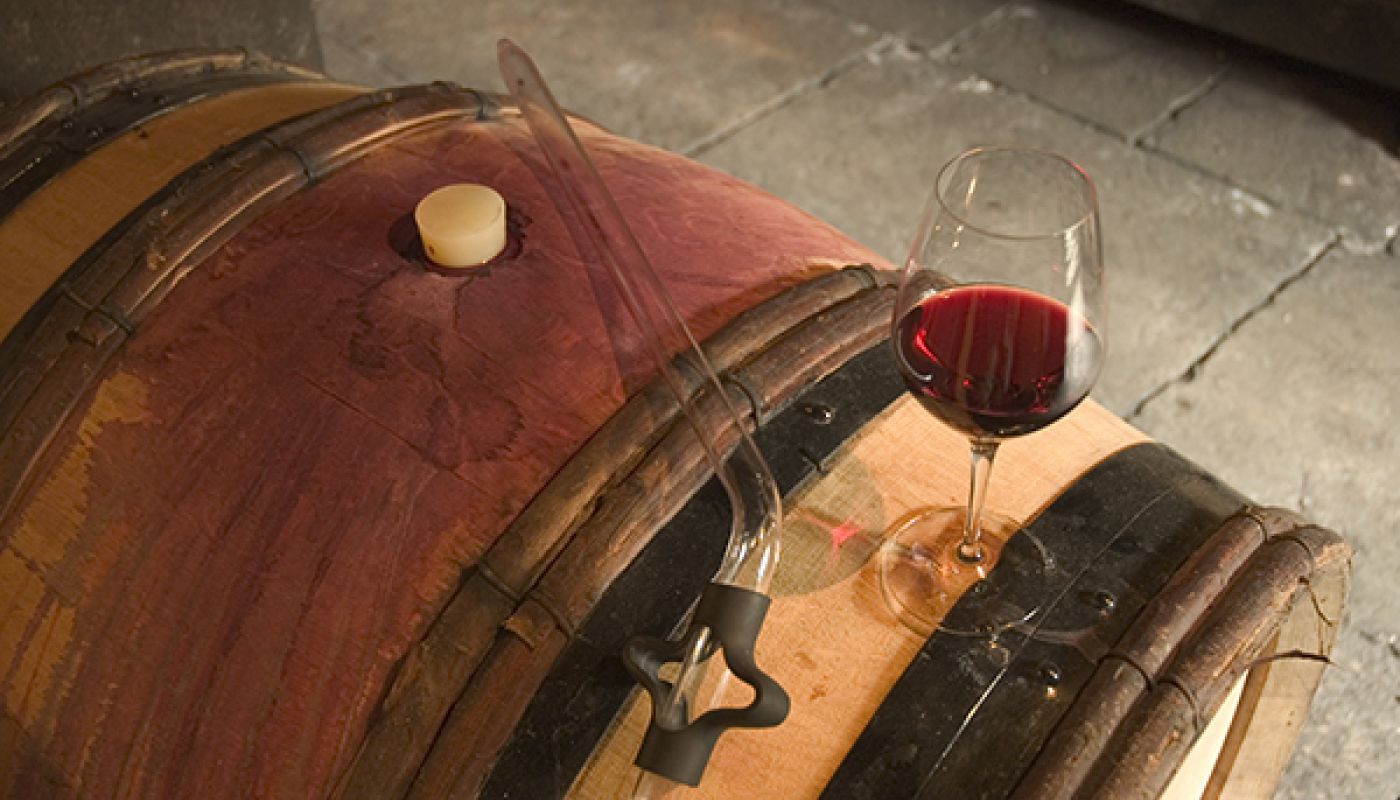
Picture taken in Muzard's cellar by Jon Wyand.