
The other day I met the splendidly named Brice de la Morandière, who has taken over at the helm of the world-famous Domaine Leflaive in Puligny-Montrachet, replacing his much-missed relative Anne-Claude Leflaive.
We discussed China, where he ran a multinational hydraulics company for a few years, the London wine merchant where his son is currently working, and the problems of premature oxidation that have dogged Leflaive’s white burgundies. The only time he looked remotely shocked, however, was when I suggested that he would be well advised to keep an eye on top-quality Australian Chardonnay.
Admittedly he probably didn’t encounter many of the finest examples in China, Turkey or the US, where he has also lived and worked, and doesn’t necessarily come across them in either London or Puligny, between which he now commutes. But such progress towards finesse has been made by Australia’s best Chardonnay practitioners recently that I am now looking for serious alternatives to fine white burgundy in the cooler reaches of Australia (as I am on the Sonoma Coast and in Santa Barbara).
If you are familiar with the finest Meursaults, Montrachets and Chablis, you may think I have taken leave of my senses. But as a wild generalisation, at the moment I am finding more life, interest and certainly value in the best of the new generation of Australian Chardonnays than I am in the great bulk of white burgundies (which tend to cost at least as much). Nor am I alone. Mark Davidson, Wine Australia’s global education manager, has had great fun listening to top American sommeliers confusing these wines with some of Burgundy’s finest.
Vintage is important when experimenting with Australian Chardonnay. As a reaction to the big, fat, oaky Chardonnays of old, many Australian winemakers went too far in the other direction a few years ago, picking so early that the wines ended up with high natural acidity but a distinct lack of flavour and body. Then there was the unusually wet 2011 vintage Down Under, which yielded some (but not all) naturally insipid wines of all colours.
But from about 2012 Australia has been producing a raft of truly world-class Chardonnay, very much in the savoury, steely, super-crisp style of refined white burgundy, but often with more apparent potential for future development than a typical white burgundy. Pioneers of the style and lauded arch-exponents include Steve Webber of De Bortoli in Yarra Valley and Tom Carson of Yabby Lake in Mornington Peninsula.

It may seem strange that a phenomenon is observable throughout a country as vast as Australia but I have a theory as to why Australian winemakers move en masse more homogeneously than most of their counterparts in other countries. It is blindingly obvious that most European countries are home to an undisciplined mass of winemaking humanity among whom there is a wide range of aspiration and technique. Winemaking fashions seem to sweep through North and South America and South Africa a little more effectively. If the Australian wine supertanker can sometimes seem to have just one hand on the tiller, so to speak, I suspect this may be because the powerful wine shows, judged by the leading winemakers, provide the ideal forum for an exchange of ideas and the latest trends.
But Chardonnay is not the only variety that has been transformed. Just as Australian Chardonnays became dangerously slimline, so Australian Rieslings went through an excessively austere phase, and the latest variety to be subjected to restyling seems to be Shiraz. In a sharp turn away from big and bold, many more Shiraz grapes are being picked before they have reached the stage that was once regarded as full ripeness.
Steve Pannell, one of the most accomplished practitioners of the new art of injecting life into Shiraz, recently voted Winemaker of the Year by Australian Gourmet Traveller Wine magazine, describes the ideal ripeness thus: ‘if you pick when you think it’s ripe, you’ve missed it’. (He learnt this from the late Gérard Potel of Volnay, he says.) So he’s picking earlier, and ‘shutting the wine down rather than building it’, leaving the young wine on its lees in large old oak rather than exposing it to oxygen by transferring it from one new barrel to another, and then bottling it earlier when it is still full of verve. ‘Australian Shiraz needs to go through the same evolution as Australian Chardonnay has. We need to remove the artifice to get to the sense of place – the truly unique thing that wine has.’
Another big current trend among Australian winemakers is away from de-stemming so that whole bunches are fermented and stems included in the fermentation vats for Shiraz, Grenache and Pinot Noir in particular. If the stems are fully ripe – brown and lignified – this can add a useful note of freshness to the wine. But at the moment we are at the evolutionary stage of this trend that sees too many pale reds dominated by the tart toughness associated with underripe green bunchstems.
It is noticeable that some producers of Barossa Valley Shiraz, whose wines used to be powerhouses built of fruit grown on the valley floor, have started to blend in wines from grapes grown in the higher, cooler Eden Valley next door. Such blends may be labelled Barossa (no ‘Valley’), which reduces consumer confusion.
The other red Rhône grape Grenache is also enjoying a new lease of life as trend-conscious producers increasingly treat it like Pinot Noir to coax super-fruity, round, perfumed wines from it that are nothing whatever like the French archetype Châteauneuf-du-Pape. Meanwhile, as elsewhere in the wine world, many a wine producer continues to invest multiple man-hours in trying to make ever more delicate and geographically expressive Pinot Noir.
It may be some time before Australian winemakers move en masse to take their Cabernet Sauvignon in hand, however. I asked sommelier-turned-wine writer Sophie Otton about the state of Australian Cabernet recently. She took a sharp intake of breath and shook her head. ‘There’s just no love there – except for WA which hangs its hat on it.’ (Margaret River in Western Australia makes some of the world’s most delightful Cabernet, but is too isolated to be regarded as in the Australian wine mainstream.)
All in all, Australian wine is unrecognisable compared with how it was a decade ago. I do hope some of those exciting new Chardonnays make it to the home of Chardonnay, Puligny-Montrachet.
SOME OZ CHARDONNAYS TO LOOK OUT FOR
Bellwether
Bindi
Coldstream Hills
Cullen, Kevin John
Curly Flat
De Bortoli, Yarra Valley
Domaine Tournon, Landsborough
Giaconda
Kooyong
Leeuwin Estate, Art Series
Moss Wood
Oakridge, 864
Ocean Eight, Verve
Penfolds, Yattarna
Shaw + Smith, M3
Tapanappa, Tiers
Ten Minutes by Tractor
Tolpuddle
Vasse Felix
Yabby Lake
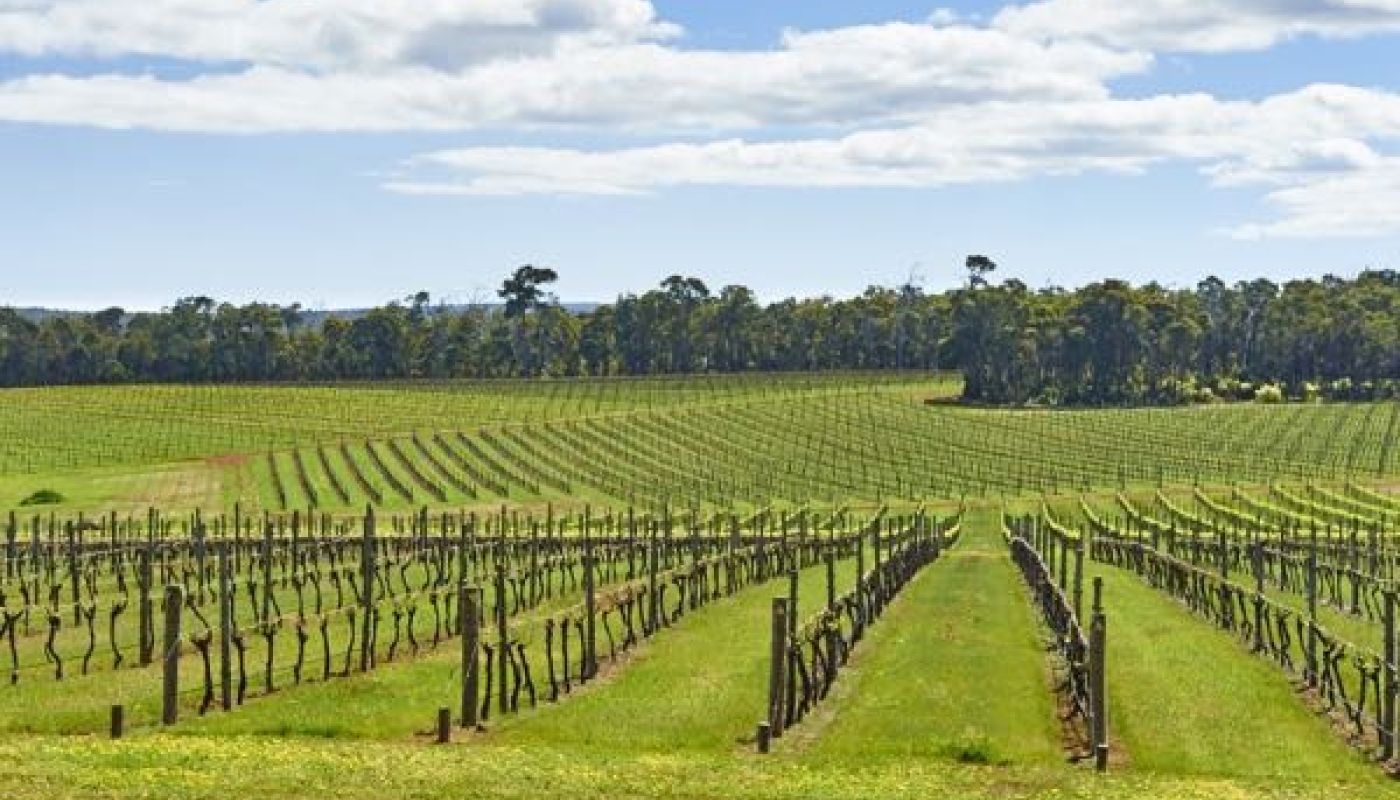
The photos above were kindly supplied by Vasse Felix.













