Reds, Whites & Varsity Blues – 60 Years of the Oxford and Cambridge Blind Wine-Tasting Competition
Edited by Jennifer Segal
Pavilion
£35/$57
To mark this year's 60th anniversary of the Oxford and Cambridge blind- tasting competition, former member of the Oxford University Wine Circle Jennifer Segal, sponsored by the event's sponsor Pol Roger, has put together a cobbled history that will be of particular interest to anyone who knows someone who has represented either university over that period. It begins with a short synopsis of the history and mottos of the two universities, followed by a generous appreciation from Robert Parker Jr of Harry Waugh who instigated the competition in 1953 (after being approached by an undergraduate David P d'Ambrumenil, a young wine enthusiast and president of the newly formed Oxford University Wine and Food Society) and who is still synonymous with the event today, 12 years after his death. Waugh's story is told in the following pages along with an interview with his wife Prue who outlines his career with London wine merchants Block, Grey & Block and, after the second World War, with Harveys of Bristol, the original sponsor, whose history is also included.
After that, the book is devoted to each of the decades in the last 60 years with pieces on the teams who represented their college, the various societies and clubs such as The Wine and Food Society, The Saintsbury Club and 'beefsteak clubs' and The Cambridge University Wine and Food Society whose members had associations with the competition. Famous luminaries from the world of wine who cut their 'nose and palate', so to speak, on their university teams and who get a mention include Julian Jeffs, David Peppercorn MW, Robin Don MW, John Avery MW, Oz Clarke and Jasper Morris MW. There is also a contribution from Jancis Robinson outlining her time at St Anne's College, Oxford and acknowledging that her career as an author was kick-started by a chance meeting at the 1976 event.
For the most part, it is glossy and published to a very high standard and, particularly in the early chapters from 1950s until the 1980s, has all the glorious hallmarks of a conscientious scrapbook-keeper with its old black-and-white photographs, perfectly trimmed newspaper cuttings and trapped memories from old menus.
Overall, this is jam-packed with anecdotes and stories from the last 60 years and will be of particular interest to anyone associated with the alumni who've passed through the ranks of the tasting teams or those who are keen to view the hundreds of photographs from the various teams since 1953 to see to what extent they made their mark.
The Wine Trade in Medieval Europe 1000-1500
Susan Rose
Bloomsbury
£24/$40 paperback
 In this tight, well-written study of the wine trade from the high to late middle ages, Rose has put together a fascinating history that runs parallel to Beowulf in or around the end of the first millennium to Erasmus' In Praise of Folly 500 years later. Rose outlines how and why wine became one of the most widely-traded commodities in medieval Europe and how it quickly came to infiltrate the fabric of society. In a sense, it was the oil of its day, filling government coffers from taxes, its trade influenced enormously by the success or failure of a particular regime. Rose charts the period in Europe when viticulture had already taken root around the rim of the Mediterranean basin, meaning that there was no need to transport wine within that particular oblong, to the epicentre of battle and the awaiting thirsty legions, as might have been the case during the glory days of the Roman empire.
In the opening chapters there is detailed consideration of the viticulture and vines of the period. By 1000 AD wine was a reluctant tourist or traveller, again around the Mediterranean, only ever taking to the road to alleviate a temporary shortage somewhere else or if a wealthy kind general or landowner had a particular penchant for something exotic and requested the same. The order of the day was generally for sweet wines throughout Europe, and not just from Greece and the islands of the Levant where they originated. Somewhat surprisingly, sweet wines carried a premium then. The situation of course was different as you moved north where wine was not embedded in the fabric of society. Wine did have its ritual necessity for church purposes, but this did not have a significant influence on trade. Even then, as Rose points out, Bordeaux still transporting wine all over northern Europe, with wine enjoying a heyday like no other commodity until trade peaked in the early 14th century in the years prior to the major wars in Europe and the subsequent 'disease-tourism' as conflict, armies, trade, ships, rats, fleas and the poor understanding of hygiene spread diseases and pests of wine and vine throughout the continent.
Rose also examines regulation, the fixing of prices and how wine was enjoyed, up to the causes of the decline in the dominance of the wine trade in the early modern period outlining the how poorly the prominent white wines of the period performed when compared with good quality ales that could satisfy thirst much more cheaply. Among those outside the chattering classes in northern Europe wine was seen as a drink for the toffs. Coffee and tea, both of them deemed satisfying and relaxing, just added to the competition. Having said all that, much of the focus in Rose's examination is on the trade between England and France. This, she acknowledges, is purely down to the keeping of better records and memoirs by those associated with what one might call an early template of the entente cordiale. This is an intriguing, well-written page-turner that offers lots of vinous nuggets from the wine trade from a previous age.
The Politics of Wine in Britain – A New Cultural History
Charles Ludington
Palgrave Macmillan
£70/$115
In another anglo-centric wine history book, this is essentially about what drove major shifts in the taste for wine within the broader significance of political and power systems. Charles Ludington, assistant professor of history at North Carolina State University, investigates the politicisation of wine looking extensively at claret and port, while also examining drunkenness, sobriety and civilisation in the period from 1649 to 1862. Ludington also looks at how the taste for wine was used to order society.
The narrative begins at the court of Charles I, albeit the last morning of that court when he took a glass of claret hours before he lost his head. It goes on to describe the period 20 years after the Restoration when those surrounding Charles II, keen to be as cool as the French court of Louis XIV, got drunk regularly on claret to show their loyalty to the king, his politics and the Church of England. It was also the drink of the wealthy and those perceived as sophisticated, and helped to give the Tories some of their political power, while the Whigs, who also enjoyed wine, were mindful that it meant trade with France and were suspicious that the loyal drunkenness that went with it was immoral, effeminate and puerile. The subsequent chapters analyse the various embargos that interrupted English and French trade during the late 17th century and how wine fraud was rampant during this time; how, as stronger links were forged between the Tories and claret, the Whigs-led love of Spanish wine won public approval; how the Scots, who enjoyed claret, imported it to defy the English and their laws; and how port, improving considerably in quality, became the wine of the emerging middle ranks of society.
During this time, Ludington captures the metamorphic change in how the average English gentleman wished to be observed. As has been alluded to earlier, the drinking culture of the day, synonymous with the how elite wished to be viewed, took an about-turn. Out went the wine-drinking effeminacy of claret and solidarity with France and in came the masculinity and manliness of the bolder, deeper, more alcoholic reds from Portugal. England had gone all macho and port was at its centre. So strong was the influence of port that this push for red-bloodedness united the country. It also played a part in drawing Scotland under the union flag.
In the final chapters, Ludington explores the effects of long-term heavy drinking. Drinking the extra degrees of alcohol, whether fashionable or manly, does have an impact, and the heavy drinking did take its toll in the extraordinary levels of drunkenness from 1780 to 1820, as Ludington points out. How strange it is to look today at heavy- or binge-drinking and its effect on society and point an accusatory finger at the legislators for not doing enough to curb underage drinking and below-cost selling when in the early 19th century heavy drinking was seen as a political imperative and a sign of governmental legitimacy. While much of the action in Ludington's narrative chases the masculinity of power, he also traces how sherry became popular and fashionable among women. Ludington makes the point that Queen Victoria, while a modest drinker, seems to have been partial to a glass of sherry.
Overall, this is a very different book on wine that's wholly entertaining and excellently researched, particularly if you're a student of the era or are fascinated by how wine was perceived and manipulated politically in previous centuries. It also offers a serious corrective to those who maintain that binge- or heavy-drinking is a recent phenomenon.
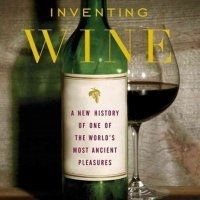
Inventing Wine – A New History of One of the World's Most Ancient Pleasures
Paul Lukacs
WN Norton
£11.99/$20
 This is another big history from the world of wine that succeeds in encompassing the entire history of the ferment from the time before the Bible to the age of globalisation and specialisation. Beginning with a look at the discovery of vines in or around the margins of possibility in Eastern Europe's Transcaucasia, Lukacs takes cognisance of the special place wine has when we come to eat or drink, while also looking at the possibility of where near Mount Ararat the Biblical figure Noah planted his vineyard; how the ancients added boiled tree resin, herbs, honey, pepper and salt to some of the first blends; and how Tutankhamen was entombed with a virtual wine cellar just in case he needed wine in the next world. Taking in Rome and Greece, Lukacs illustrates how the elite in the major cities around the Mediterranean were the first to appreciate good wine; how the poets, one could say, were in some ways the first wine reviewers writing well about the wines they liked and disparaging those they hated.
The narrative is soon into the Middle Ages and engrossed in the two-track production of wine: first for the Church and the other for the populace. Either way, the wine was dreadful although, it must be said, it was fairly safe to drink it – safer than water usually. One wasn't going to get the Black Death or the bubonic plague from drinking dodgy wine. Lukacs also covers the rise of La Rochelle and Bordeaux as the premier commercial wine centres on the Atlantic wine route; the rise of typicality and the sense that a particular place was known for the specific style, type and quality of wine it produces; the emergence of Burgundy; the delight Napoleon took in Constantia; the invention of champagne; the challenges to the wine trade with emergence of competitors in the form or brandy, port, sherry and coffee; and the scientific approach of Louis Pasteur. It's all here and more besides. When Lukacs says in his introduction that it has taken him six years to write, it's easy to see where his research and endeavour has led for he shares numerous anecdotes and reportage from across the centuries. By the end, Lukacs has gone around the world, giving us a sense of the châteaux being built in Bordeaux to look older; 1855 classification; the hunt for the remedy to phylloxera vastatrix; American Prohibition; the recovery of the wine trade after the Second World War; the emphasis on terroir; the emergence of Australia as a major producer; the importance of Chardonnay to the New World revolution; the rise and influence of technology in modern winemaking; how New Zealand and Argentina 'bet the house' on Sauvignon Blanc and Malbec respectively; and the fundamental practices of biodynamic viticulture, among other segments from history.
This is another great thundering read that's well-written and a joy to follow – undoubtedly the paperback of the year.