
When comparing the 2008 vintage with the previous one, many similarities can be found. The flowering periods were alike, as were weather patterns at different points throughout both years. However, there were distinct differences, thanks to the mischievous weather, which also influenced the harvest times in the different wine-growing areas. In general, the harvest was completed during the last week of October. For Prädikat wines, however, it continues into December.
Good, quality-oriented work in the vineyards more than paid off this year, because the grapes remained healthy despite the pressure of rot. So the nice October weather brought ripe and healthy grapes into the cellar. Characteristic varietal fruitiness harmonised well with a firm acid structure and pleasant -- and not too high -- alcohol content. The quantity will be notably higher than last year, even though last year's quantity was already higher than average.
The weather The year began with little snow and a mild winter -- even Steiermark (Styria) registered the third warmest January on record. In February, temperatures were nearly 3 °C higher than average – in Burgenland, more than 3.5 °C higher. At the end of the month in Steiermark, over 20 °C was registered. March began and ended warm, although at around Easter time, during the second half of the month, a winter relapse occurred. Rainfall was average to slightly higher than average. April temperatures were not out of the ordinary, but rainfall varied in the different wine-growing areas; a particularly bad storm in the Krems area on 22 April brought more than double the amount of water to the soil; otherwise, it was rather too dry.
In Austria's west, May was unusually warm, in the wine-growing areas temperatures were 0.5 °C to 1.5 °C above the norm. Moreover, a cold weather period on around 20 May quickly changed into early summer heat – in Graz, 34.9 °C was registered at the end of the month. Rainfall was generally lacking, while there was more sunshine than usual. June, however, was characterised not only by a drop in temperatures followed by heat, but also by rainfall that underscored the vintage: up to 300% higher than average in the area south of Vienna; and in the Südsteiermark (South Styria), double the average amount. Sunshine was fairly minimal. July was very wet due to many thunderstorms: Eisenstadt registered rainfall totalling three times above average. Unfortunately, hailstorms occurred in all regions.
August was not spared rainfall, though temperatures were about average. There were frequent alternations between warm days and cool days.
September was rather cool with a strong cold air wave on 13 September, which sent temperatures down by 10–15 °C. Moreover, there were plentiful amounts of rain, even though recorded totals showed only average amounts.
October was relatively pleasant to cool with some rainfall; certain regions registered bouts of long-lasting fog.
Vegetation and the vintage The mild weather conditions led to an early budbreak and, in mid-April, quick, continuous vine development began. The flowering in June was supported by good weather, and so expectations were high – at first. Soon after, hailstorms resulted in the first natural yield limitation, which put the first stamp on the vintage.
Hail and plenty of humidity These words capture the character of this vintage. Hailstorms in the early as well as late growing and ripening phases led to some damage; fortunately, the vines compensated for this as growth continued.
While a good supply of humidity was beneficial to the vines, it also increased susceptibility to downy mildew and powdery mildew. This became the focal point of the intensive quality work carried out in the vineyards – and revealed who really did their homework! With careful attention and response, problems could be solved or even avoided – thus allowing for the appropriate ripening of the grapes to take place. Some biodynamic wineries could not withstand the extreme pressure and were left with no choice but to accept yield decreases.
Over and over again, hailstorms throughout the summer had to be faced. Depending on the temperatures, this resulted in either a higher level of infection or the shrivelling of the damaged.
Ripening and harvest The grapes began to soften and ripen at around mid August. Because of the humidity, the vines were well supplied and, moreover, the grapes provided enough juice content for fermentation. Because of the rather cool weather in September and October, the increase in ripeness was very slow. This also influenced the harvest times in the different regions.
There were big problems with rot only in vineyards which were not attended to properly. With careful pruning and plant protection measures, decisions on when to harvest were made because of ripeness, not rottenness.
In Burgenland, especially in the Seewinkel area, the harvest was already finished at the beginning of October, and in the Weinviertel, the last of the grapes were cut on Austria's National Day, 26 October. But in the Wachau, harvesting grapes for the higher quality level wines had barely begun.
In general, those who had strong nerves and waited for ripening to proceed further had, after a cool September, a relatively beautiful October to complete the harvest.
In some regions, however, there was the danger of botrytis setting in because of long-lasting fog together with the warm weather. Additional work – such as the meticulous sorting of damaged grapes – was often necessary.
Careful selection in the vineyard or immediately after delivery to the winery was very important this year. Speical care was also needed during the processing, for example to correct the higher phenolic content. The acidity levels of this vintage will need some correction in the winery as well.
REGIONAL ROUND-UP
Steiermark
This year, Steiermark got off lightly in relation to the weather. But the hailstorms during the flowering period as well as at the end of the summer brought a kind of balance so that overall the harvest quantity this year will be similar to last year's.
Despite prolonged rainfall in regions such as Niederösterreich (Lower Austria), the Steiermark had only one major downpour in the middle of September. Therefore, the ideal was to wait for good ripeness to develop. A good expression of fruitiness, beautiful acidity and well balanced sugar levels – and not really lower alcohol – will define the vintage character. "Perfect ripeness, perfect acidity, beautiful fruitiness" is how a Styrian winemaker has described the vintage.
Wien
A lot of work was required in order to get good grapes this year! But in return, the winemakers are very happy about the good varietal characteristics coming through in the wines: fruitiness and a firm acidity structure, together with alcohol that is not too high.
Niederösterreich
If one could have known how beautiful October was going to be, then it would have been possible to wait for the harvest. But many growers wanted either to be on the safe side or harvest early because of the health of the grapes. The humidity brought larger harvest quantities despite any damage that was incurred.
Extensive parts of Niederösterreich had to battle a special problem in September: fog, which often lasted until noon and even later, together with temperatures of around 20 °C. This caused botrytis to break out, often overnight, making quick reactions necessary. Otherwise the cool September and October brought no significant increases in sugar levels because the leaves could no longer function photosynthetically.
Ultimately, good fruitiness, reasonable alcohol and a marked acidity structure are prominent (and will be watched further in the cellars). Those who did their homework in the vineyards could choose the right harvest time to gather healthy and well-ripened grapes.
Burgenland
Rainfall at the end of May resulted in extensive pruning in order to avoid rot. The huge hailstorm on 7 July may still stand out in many producers' memories. But all of the work undertaken this year has been repaid with beautiful fresh fruit and pleasant acidity. For the reds, Blaufränkisch is showing marked fruit and spiciness, Zweigelt and Pinot Noir have fine fruit tones. The moderate alcohol content will make this vintage a light, drinkable one, and the high harvest quantities will provide an ample supply of wines.
Quantity
The most recent estimate for the size of the harvest, made by Statistik Austria at the end of October, put the total at a little more than 2.8 million hectolitres. The average of each of the last five vintages (2003–07) was approximately 2.5 million hectolitres.
Austria 2008 vintage report
• 6 min read
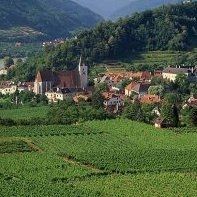
This very thorough report was sent to us by Susanne Staggl of the Austrian Wine Marketing Board. If you are less interested in the weather and more interested in the wines, skip to the regional round-up towards the end.


选择方案
会员
$135
/year
适合葡萄酒爱好者
- 存取 297,286 条葡萄酒点评 & 16,159 篇文章
- 存取《牛津葡萄酒指南》及《世界葡萄酒地图集》
- Access askJancis, our AI wine assistant


核心会员
$249
/year
适合收藏家
Everything in “Member”, plus:
- Early access to the latest wine reviews, 48 hours in advance
- Early access to the latest articles, 48 hours in advance
专业版
$299
/year
供个人葡萄酒专业人士使用
- 存取 297,286 条葡萄酒点评 & 16,159 篇文章
- 存取《牛津葡萄酒指南》及《世界葡萄酒地图集》
- Access askJancis, our AI wine assistant
- 提前 48 小时获取最新葡萄酒点评与文章
- 可将最多 25 条葡萄酒点评与评分 用于市场宣传(商业用途)
商务版
$399
/year
供葡萄酒行业企业使用
Everything in “Professional”, plus:
- 可将最多 250 条葡萄酒点评与评分 用于市场宣传(商业用途)
- Access to submit wines for review
- Offer memberships to your employees and manage them from a single place
- API access available for an additional fee
More Free for all
Free for all
格鲁吉亚的葡萄酒继续令人惊喜。本文的略短版本发表于Financial Times (金融时报)。另请参阅品鉴文章 格鲁吉亚白葡萄酒...

Free for all
这家领先的新浪潮南非葡萄酒生产商正在展望未来。本文的一个版本由金融时报 发表。另请参阅这篇 帕拉迪乌斯垂直品鉴,他杰出的白葡萄酒混酿。...

Free for all
杰西斯 (Jancis) 回忆她遇到过的最迷人的葡萄酒生产者。上图为尼尔 (Neill) 在他的双桨园 (Two Paddocks)...

Free for all
在第一轮评审之后,我们很高兴开始发布今年写作比赛参赛作品中的最佳作品。所有入选作品均未经编辑发布...
More from JancisRobinson.com
Wines of the week
拉法热酒庄 (Domaine Lafage) 来自加泰罗尼亚丘 (Côtes Catalanes) 的穆图 (Moutou) 不仅美味...

Tasting articles
詹西斯深入探索这些独特的葡萄酒,尽管并未亲临这个独特的国度。上图来自生产商 杜格拉泽 (Dugladze) 的网站...

Tasting articles
大红葡萄酒继续在奔富王国占据主导地位,但变革即将到来。上图为奔富的玛吉尔庄园 (Magill Estate)。 澳大利亚葡萄酒管理局...

Tasting articles
沃尔特 (Walter) 关于这个显著易饮年份报告的总结部分。今天,评论来自南部和东部村庄卡斯蒂廖内法莱托 (Castiglione...

Tasting articles
关于这个棘手年份的最终报告,如今展现出非凡的清新和易饮性。今天,我们将评鉴来自多个村庄以及北部和西部村庄凯拉斯科 (Cherasco)、罗迪...

Inside information
墨西哥的葡萄酒产业为应对气候挑战提供了经验教训,常驻墨西哥的记者兼侍酒师卡洛斯·博尔博亚 (Carlos Borboa) 如是说...

Vinomakase
理查德 (Richard) 的新专栏 Vinomakase 探讨专家如何将葡萄酒与日本料理搭配...

Bite-sized
位于圣奥尔本斯 (St Albans) 大教堂区的一家 15 世纪酒吧,提供最新潮的美食盛宴。 前厅酒吧仍然令人安心地保持着酒吧风格...