Last week I looked at Bordeaux's much-hyped 2003s through that most Bordelais of lenses, the economic one. But what of the wines themselves? Did the long, hot summer produce long, hot wines?
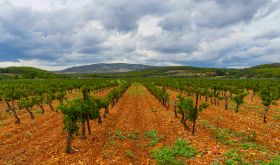
Because quality is so exceptionally varied from appellation to appellation, I shall report on each separately. But first of all it is worth pointing out that sugar levels in the grapes, as one might expect after such a hot summer, reached record levels. Bordeaux University's important oenology faculty calculated that on average Merlot grapes in 2003 were ripe enough to produce wines of 13.2 per cent alcohol without any recourse to chaptalisation, adding sugar to boost eventual alcohol, which has been standard practice in Bordeaux for centuries. Even in the comparably hot, ripe vintages of 1989 and 1990, the equivalent potential alcohol averages for Merlot were just 12.8 and 12.2 per cent respectively – and most old hands believe that on the left bank anyway, 2003s have more freshness and definition than either of these earlier vintages.
Cabernet Sauvignon never reaches such high potential alcohol levels but it also achieved record average ripeness in 2003 at 12.3 per cent, although Paul Pontallier at Château Margaux reports that so little was he worried about overripeness that he even chaptalised one or two vats of Cabernet slightly.
As for actual alcohol levels in the finished wines, there were many with a hot, alcoholic finish, especially on the right bank. The strongest wine I knowingly encountered was Château de Valandraud which is apparently 15 per cent alcohol, but such is the vivacity of its unusually dominant Cabernet Franc component that you would never know it.
As sugars rose, acids fell, to record low levels, leading some consultant oenologists to advise their clients to add extra acidity to the fermentation vat. Special permission was sought. In a few cases this was disastrous since acid levels rose once both alcoholic and malolactic fermentations had been completed.
Thanks to the extreme heat and consequent dryness, the grapes were unusually small and the ratio of skin and pips to juice was unusually high. This resulted in exceptionally high readings for one of Bordeaux's current favourite measurements, the IPT or Indice des Polyphénols Totaux (which really should stand for Index of Purple on the Tongue for it indicates how much colouring matter and tannin the wine contains). The highest I came across was 95 milligrams per litre for Cos d'Estournel.
Sensible winemakers, faced with these extremely tough, dark grapes, employed cooler fermentations and shorter macerations than usual, as they had done for the tough, barely ripe grapes of 2002, since the last thing they wanted was to accentuate the chewy tannins, and in 2003 they had no need to extract extra colour.
The harvest was earlier than had ever been known by today's wine producers. For dry whites and Merlots there was a sacrifice of flavour and intensity but this precociousness was a boon for the slower-ripening Cabernets which had time in September to ripen phenolics without any pressure of advancing autumnal weather forcing the pace.
The best wines, mostly based on Cabernet Sauvignon or Cabernet Franc, have deep colours, ripe tannins, and very ripe fruit flavours counterbalanced by a natural freshness that seems to have surprised winemakers as much as tasters as a product of this torrid summer. But this is a year in which for many wines the vintage character of superripeness completely swamps any local character and it is my guess that these heady wines will be particularly difficult to identify indisputably as coming from Bordeaux rather than, say, California.
St Estèphe
This is the star appellation of the vintage, as it was in that other hot year 1990, thanks to its damp clay soils. But the Charmoloues of Ch Montrose, who also produced the wine of the vintage in 1990, reckon 2003 is much less exotic and more classic than this opulent vintage.
Pauillac
Ch Lafite, just across a little stream from St Estèphe, also made great wine in 2003, and there was generally a very high success rate here, notably in the Latour and Pichons area to the south of the town. Ch Haut Bages Libéral may well be one of the bargains of the vintage.
St Julien
As usual this appellation is relatively consistent in terms of quality although it was clearly a challenge to incorporate the sheer excess of the vintage into the appellation's usually restrained, classical form. Ch Léoville- Poyferré was a particular success, and the fruit of Las Cases, for once, managed to triumph over its usually rigid tannins.
Margaux
This much more southern and Merlot-dependent appellation shone less obviously than the villages to the north. Ch Margaux itself did a good job, as did Malescot, but real successes were otherwise few and far between. There was too often sweetness but a dearth of freshness and structure. Many tasted more like fruit juice than wine.
Pessac-Léognan and Graves
Only a few wines managed to express the lively minerality that is characteristic of this large area south of the city and there were too many that were over-extracted. The Michel Rolland magic seems to have worked on Ch de France, and Carbonnieux showed well but reds from Haut-Brion and La Mission Haut-Brion (picked notably early) were less impressive than usual.
Rest of the left bank
There are undoubtedly some excellent reds to be found in such unglamorous appellations as Listrac (Ch Clarke), Médoc (Ch Potensac) and Haut-Médoc (Ch La Tour Carnet) where vines were much les stressed by lack of water than elsewhere. Some delicious bargains carrying the humble Bordeaux and Bordeaux Côtes appellations will also doubtless emerge at excellent prices, even if they are not necessarily offered en primeur. I was particularly impressed by Chx Thébot and Marjosse.
Pomerol
This was far from the most favoured appellation in 2003 and there were some real disasters, particularly young vines on soils that were too light. The problem with too many finished wines is that they have a hole in the middle where the fruit should be, and often very dry tannins on the finish. But there are some brilliant exceptions, including Chx L'Eglise Clinet, Lafleur and Pétrus.
St-Emilion
Even more varied than its neighbour Pomerol, with wines typically a bit jammy on the nose, lacking fresh acidity and hardly enlivened by the greenness of unripe tannins on the finish. Some wines were like Zinfandel, others more like port. Limestone-based vineyards were capable of producing very powerful wines. Some properties (generally guided by high profile consultants on this side of the Gironde) managed to fashion unforced wines that will be a real pleasure to drink however, probably quite early. New regimes at Clos Fourtet and Larcis Ducasse were notable successful as well as Alain Vauthier at Ch Ausone.
Rest of the right bank
Fronsac does well in hot, dry years and only the over- extracted examples provided exceptions to this rule. There are also some exciting bargains from Blaye and Côtes de Castillon and Francs.
Dry whites
Acid levels plummeted so that the Sauvignon Blanc and Semillon grapes tended to be picked in early August, before much real flavour and depth had developed. The only exceptions to this among the admittedly limited number of dry white bordeaux I tasted, about 20, were Chx Laville Haut-Brion and Haut-Brion Blanc which, as usual, have a density and subtlety which puts them way above the rest.
Sweet whites
These truly will be monster wines, so much sweetness built up in the grapes. (One barrel at Ch Climens was 27 per cent potential alcohol.) Light rains in early September encouraged the development of some botrytis, or noble rot, on extremely ripe grapes so that this was one of the easiest, fastest, earliest harvests ever. The 2001s may be finer and longer-lived but the bumptious 2003s, in which the botrytis is generally hidden by sugar at this early stage, certainly should not be overlooked. Many wines worth buying.
For detailed tasting notes and ratings of hundreds of 2003s, see purple pages.