‘Which wine region excites you most at the moment?’ I’m always being asked this and I never have an answer. The truth is that in my experience, barring disastrous weather, every wine producer on the planet is making better wine every year.
The quality of contemporary wine may be beyond question but its provenance and character have changed out of all recognition, even since the last, seventh edition of The World Atlas of Wine was published in 2013. Having recently come to the end of two very solid years’ work updating this classic reference work for its eighth edition to be published officially on 3 October, I am particularly conscious of the changing substance and shape of the world of wine.
The vineyards of the far north of Europe are not (yet?) so numerous that Sweden, Denmark, Belgium and the Netherlands have each been given their own map in the new edition, but wine drinkers in all of those countries are increasingly proud of wine grown in their own vineyards, once considered too cool to ripen grapes. Just as we Brits are now, also partly thanks to climate change, justified in boasting about the quality of English wine.
Extending the world of wine towards the South Pole is trickier. The ocean tends to get in the way, although in the Atlas we have had to include Chilean vineyards and the odd Argentine one much further south than any in the seventh edition. The southern hemisphere vine-grower’s response to climate change has more often been either to plant vine varieties better suited to hot summers than, say, Cabernet Sauvignon, or to move uphill where at least the nights are cooler. (Answering this phenomenon to a certain extent, this new edition, incidentally, has more 3-D maps than ever before.)
The Atlas is a particularly complex publishing challenge. Indeed its publisher Denise Bates, who has had her work cut out to produce a handsome digital version, observes that ‘very few book publishing projects on this scale are still alive'. It began life in 1971, the responsibility of my esteemed co-author Hugh Johnson, who had literally to create many of the maps from scratch. He produced four editions single-handedly, and then brought me on board in 1998 to do the heavy lifting on the fifth edition that came out the day after 9/11. The Atlas has been an amazing success, selling 4.7 million copies so far, the last edition being published in 13 foreign versions, including Russian and Turkish.
Wine, in its capacity to express a particular spot on the globe, is geography in a bottle, which makes the exceptionally detailed maps, 230 of them in this eighth edition, so useful and intriguing. Twenty of them are new and all of the original ones have had to be minutely updated to take account of worthwhile new (and sometimes under-performing old) producers, the variation in vineyard areas since the seventh edition, new and changed appellations, new roads and so on. Julia worked with a great team of professional cartographers to make these as accurate and up to date as possible. Then there are the charts (including a new one this time comparing, for the period since the first edition was published, how long you have to work to earn enough to buy a bottle of first-growth Bordeaux), the carefully chosen photographs, the little introductory summaries added this time for the benefit of our shortened attention spans, and the small matter of the text.
Ah, the text. The irony is that while bringing the more than 380 pages of triple-column text about the great wide, and expanding, world of wine up to date, I was more or less tied to my desk in London, collating and analysing the advice of our 68 local specialist consultants around the globe and in daily, sometimes hourly, contact with the super-efficient managing editor Gill Pitts, a veteran of three previous Atlases, at the publishers. The consultants' input was vital as it is a sheer impossibility for me and Hugh to be intimately au fait with what is going on in vineyards and cellars everywhere. Their contributions vary in tone enormously, from the ones who argue that their small wine-producing country deserves three times the amount of space allotted to it, to those who rip the input of a previous consultant (or even what they themselves provided for the seventh edition) to shreds.
For the sake of the foreign rights department, and eventual translators, some poor person had to work out the precise extent of new text. I was gratified to learn that at least half of the words on 45% of the pages about wine regions are completely new in this eighth edition. And there are six entirely new introductory pages that reflect the shifting landscape of wine: on the parts played by temperature, sunlight, water (and not just rainfall), climate change – and money. But there is also our increasing, and justified, preoccupation with sustainability so that organically and biodynamically grown vines are no longer exceptional and they need to be acknowledged specifically.
And no one surveying the world of wine production and consumption can ignore the huge groundswell of enthusiasm, particularly among younger wine drinkers, for wines called ‘natural’ for want of a better word, wines made with minimal additions in the winery as well as in the vineyard. Then there are whole new techniques such as making white wines in contact with the grape skins, as red wines are made, which result in what tend to be called orange wines because of their particularly deep amber colour.
Pretty much all of the consultants reported that harvests in their region are starting earlier and earlier – sometimes four weeks earlier on average than 10 years or so ago – thanks to warmer summers. The magic rule used to be that grapes would be picked 100 days after the vines flowered, but this ripening and flavour-building period is being increasingly squeezed. You might think this would result in simpler wines but winemaking skill seems, so far, to be increasing at sufficient speed to compensate.
Another global trend has been what one might call the flight from oak. Winemakers everywhere are busy experimenting with concrete eggs (to encourage flavour-inducing lees to circulate rather than sink), terracotta pots, and wooden containers generally bigger and older than the small French barrels that were so popular for wine maturation in the 1990s. ‘Oaky’ has become an insult.
Then there are regions which seemed to deserve their own page for the first time. It was always tactless to squeeze Israel and Lebanon onto the same page; the wrong has been righted. Brazil and Uruguay are no longer cramped under the heading South America. British Columbia, Cyprus and St Helena similarly now have their own pages.
I look forward to presenting liquid evidence of some of these fascinating trends at this weekend’s FT Weekend Festival at Kenwood in London.
Regions on the up
A summary of extra coverage in the eighth edition of The World Atlas of Wine.
These feature on their own page for the first time:
Cyprus
Lebanon
Israel
British Columbia
St Helena
Brazil
Uruguay
Some other new maps:
Fixin and Marsannay, Burgundy
Soils of the Beaujolais Crus
Jura, Savoie and Bugey
Alto Piemonte, North West Italy
Taurasi, Fiano and Greco di Tufo, Southern Italy
The Petaluma Gap, California
These are given an additional page:
Alentejo, Portugal
Central Coast, California
Chile
Yarra Valley, Australia
Marlborough, New Zealand
China
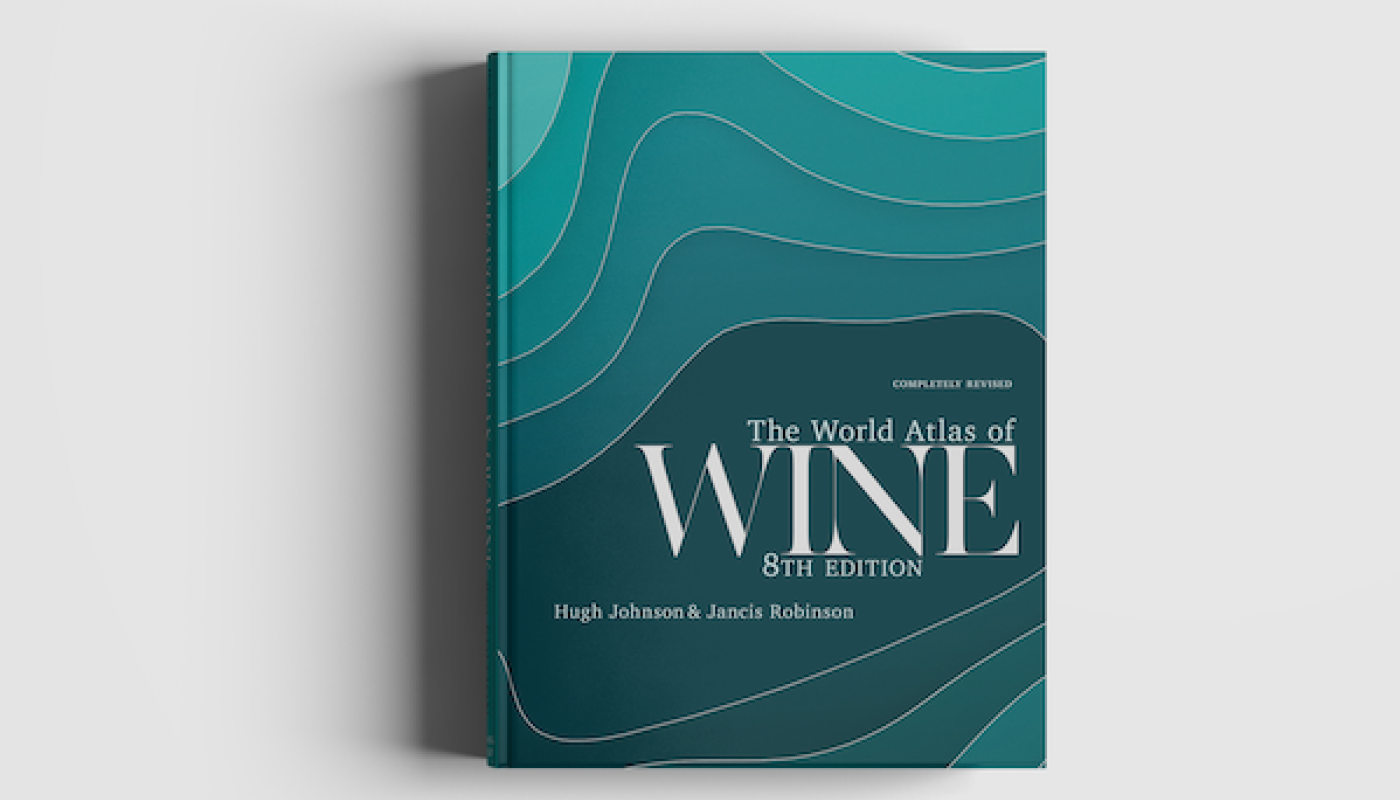
Hugh and I are particularly keen on the sea green jacket that designer Yasia Williams came up with this time. But the US publishers have chosen the more conventional colour for a wine book below.
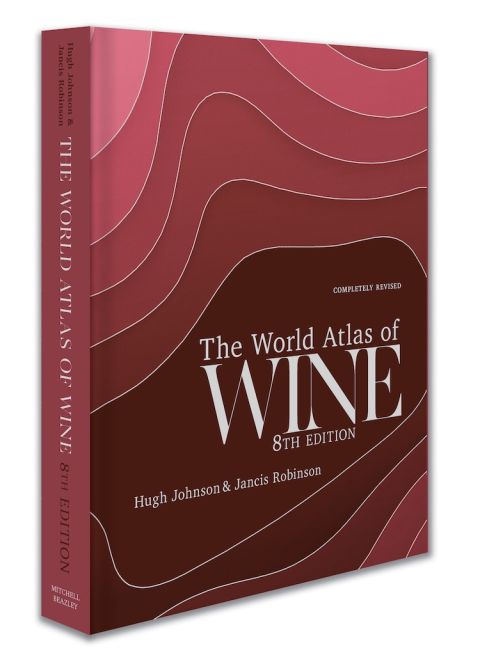
The World Atlas of Wine, 8th edition is published by Mitchell Beazley on 3 October £50/$65 RRP. Full details of the book, and how to order, at worldatlasofwine.com See also this summation of what's new with links to Amazon.co.uk and Amazon.com.
See also this interview about it on Wine-searcher.com, and Victoria Moore's review in the Daily Telegraph.