
Which wine region is greenest? Virtually all wine regions now realise they have to flaunt their green credentials, but you have to read the fine print to work out the real worth of what is being touted. We have in the past relied on cold-blooded audits by Monty Waldin, author of Biodynamic Wine. His most recent was Monty’s organic/BD audit last year in which he praised Alsace particularly for its 15.1% of organic vineyards.
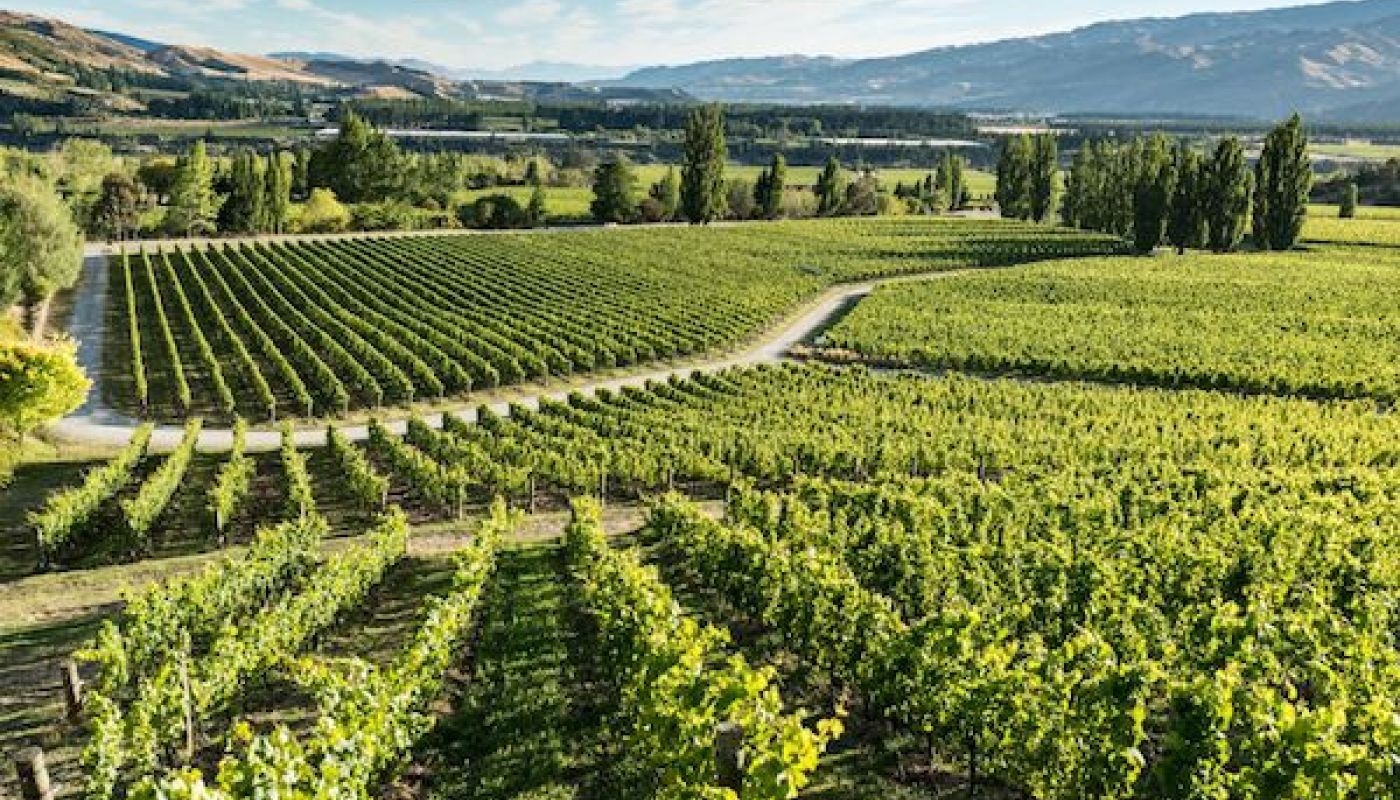
The tight-knit wine community of Central Otago can be reasonably relied upon to do more or less the right thing. Well known Felton Road (owners of the Cornish Point vineyard shown right) and the Mills family of Rippon in Wanaka were banging the organic and then biodynamic drum many years ago.
The Central Otagan wine community has just released the following press release, revealing that 23% of their vineyards are being farmed organically or biodynamically. Below are Monty’s comments on it.
Central Otago leads the way in organic viticulture
Central Otago Winegrowers Association (COWA) is proud to reveal exciting new numbers which show that the region is leading New Zealand in organic vineyard production – and indeed has become a leader in organic vineyards on the world stage.
COWA completed a survey of members following the 2019 harvest to assess the level of certified organic and biodynamic vineyard production in Central Otago. This detailed survey revealed that 17% (320 ha [790 acres]) of vineyard land in the region is now fully certified in organic/biodynamic production, and 6% (115 ha) of the region is in the official three-year organic conversion process. (Land must be managed to a certified organic standard for three years before full organic status is granted by an organic certifying body.) This means that an impressive grand total of 23% of the region’s vineyard land area is now being farmed under certified organic or biodynamic practices.
‘We believe this is a world-leading statistic and worth celebrating,’ said Aotearoa New Zealand Fine Wine Estates Estate Manager and COWA Chairperson Nick Paulin. ‘This is a credit to the hard-working growers, winemakers and owners whose passion and commitment has generated this result.
‘Central Otago is a natural fit for organic viticulture. We are passionate here about taking great care of our land, and also driven to create the absolute highest-quality wines. Time and again, organic and biodynamic production has been shown to create premium wines that truly express the spirit of our land, while regenerating and preserving the landscape for future generations.’
Organics has been a long-term focus for the Central Otago wine industry. In 2007, Central Otago Winegrowers Association members gave a clear directive to move towards a collective approach to adopting organic practices. Moving towards achieving this goal was accelerated by funding received from Organics Aotearoa New Zealand (OANZ) to design and implement a pilot programme for Central Otago to support winegrowers to transition towards becoming organic.
Organic Winegrowers New Zealand (OWNZ) has been instrumental in helping to achieve this high proportion of organic winegrowing, through projects such as the Organic Focus Vineyard project and other industry-led workshops.
Monty puts this into context thus:
'Re certified organics: bear in mind any monopole AOC which is certified organic or biodynamic is de facto a 100% organic denomination. So monopoles owned by Domaine de la Romanée-Conti, Lafon, Leflaive, Leroy (for example) will fall into this category, as will monopoles in, say, the Loire (Clos de la Coulée de Serrant).
'At a wider regional level, a more even playing field for the doughty Otagans would be Italy, where, for example, Calabria (51% of the vineyard area was organic in 2017), Basilicata (50%), Marche (35%), Sicily (34%) and Tuscany (24%) are the high flyers.
'The New World is generally weak on organics and BD. California is lamentable, as is the ‘vine paradise’ Chile, while Australia can’t be bothered to count its bio vine surface area etc.
'So I think that even if globally Otago is not a world-beater, in the wider New World context the numbers are significant, especially since organics in New Zealand has been an uphill battle (20 by 2020 floundered), hence the OWNZ initiative is the biggest tent in town (some good work re water, energy use, but very little progress, it seems, on NPK or Round Up and systemics).'
And this is the response of Felton Road's Blair Walter:
'I agree that Sustainable Winegrowing New Zealand can be seen to have some failings. But one of the interesting things about the New Zealand Winegrowers SWNZ programme that it rarely gets credit for is that it’s really helped the transition to CERTIFIED organics. With 98% of the NZ vineyard area certified by SWNZ (includes Organic and BD Certs), when a grower transitions to organics, they drop SWNZ and pick-up an organic certifier (eg BioGro, or Demeter for BD properties). As the growers have been well used to being SWNZ certified (record keeping, external audits, time, cost….), the thought of an organic certifier is not intimidating at all, like you hear as an excuse in many places.
'There’s talk within Central Otago that the 23% we have achieved to date will continue to rise quite rapidly.
'This week we are hosting 17 wine professionals from around the world in Central Otago and of the 20 wineries involved in the programme, 11 are certified vineyards, eg Burn Cottage, Felton Road, Rippon, Quartz Reef, Amisfield, Prophets Rock, Two Paddocks, Surveyor Thomson…'
Many congratulations, therefore, to the Central Otagans for getting their green act together.
Monty, subsequently, clarified thus:
'I agree that the discipline of writing down what inputs you use and in what volumes is useful, not least because you quickly see where you may be wasting money, as well as help make the transition to certified organic / BD status less of a shock in terms of time and potential cock-ups with documentation.
'What I was driving at during my speech to the NZ Bio wine conference in 2015 was SWNZ alone will not directly help you make that jump into organics or BD. It can end up as a copy half-way house.
'The fact that growers in Hawke's Bay were facing issues with herbicide resistance, and wanted Paraquat to be re-listed as an allowable input, was a demonstration that, in the words of my late mentor, Bobby Fetzer, you can cut down to five cigarettes a day from 20, but the best option is to throw away the packet, your ashtrays and cigarette lighters and move on.
'I am told it was no coincidence the request for Paraquat was denied soon afterwards by WINZ because of what I had said during my keynote.
'For my generation, Paraquat was synonymous with the US aerial bombardment of Mexican marijuana plantations.
'Aligning such a product with SWNZ would have been (yet another) open goal and an easy win for sceptics in the media.'













