
19 March 2018 As I attended Napa’s glitzy and convivial annual trade tasting and Première auction a few weeks ago, I noticed a camera crew snaking its way through the crowd of retailers, winemakers and wine buyers tasting the (very promising) 2016 vintage.
‘Who are they?’ I asked the winemaker whose barrel sample I had just spit out.
‘That crew?’ she replied, ‘They’re making SOMM 3.’
Apparently there will be another sequel in the series of documentary films that, with its first instalment in 2012, put the spotlight on America’s growing fascination with wine professionals.
While the first movie was a fairly entertaining look at the trials and tribulations of a group of friends working to pass their Court of Master Sommelier exams, the follow-up proved to be a slightly incoherent paean to the world of fine wine that might have seemed entirely unrelated to the original, had not some of the characters from the first film appeared in the second.
Does the world really need another SOMM movie?* In the six years since the first film, much has changed. If the film spoke to the rising wave of interest in the profession, that wave has crested and rolled into a somewhat chaotic and uncertain future.
‘The old line floor somm jobs? They don’t exist anymore', says veteran sommelier Mark Slater, who won a James Beard Award for wine service at Citronelle restaurant in Washington, DC. ‘Twelve years ago, you couldn’t get a job in Vegas unless you had an MS credential. But now all those jobs have gone away. If you see sommelier jobs posted, it’s always “Sommelier/Assistant Manager”, or something like that.’
In the industry, it’s become known as ‘Somm Plus’ or ‘Slash Somm'. Dedicated sommelier positions continue to exist in the upper echelons of fine dining, but such venues are becoming less common, and are especially rare outside New York, Chicago and San Francisco. Most restaurant growth across the country exists within the ‘fast casual’ and mid-market categories, where both white tablecloths and thick wine lists are rarely seen.
‘There was this huge fine-dining restaurant boom in the late ‘90s when the Food Network made Mario [Batali] a household name', says Master Sommelier Sabato Sagaria, who recently became president of the Bartaco chain of restaurants focused on tacos and tequila. ‘These people signed 20-year leases, and guess what? It’s 2017 and they’re all expiring and their business models are antiquated now. With rising rents and skyrocketing costs of labour we’re not talking remotely about the same economics now. If you’re a restaurant owner, now you’re looking for a GM that can run a wine program.’
For Vinny Eng, who serves as both the general manager as well as the wine director for Tartine Manufactory in San Francisco, that makes perfect sense.
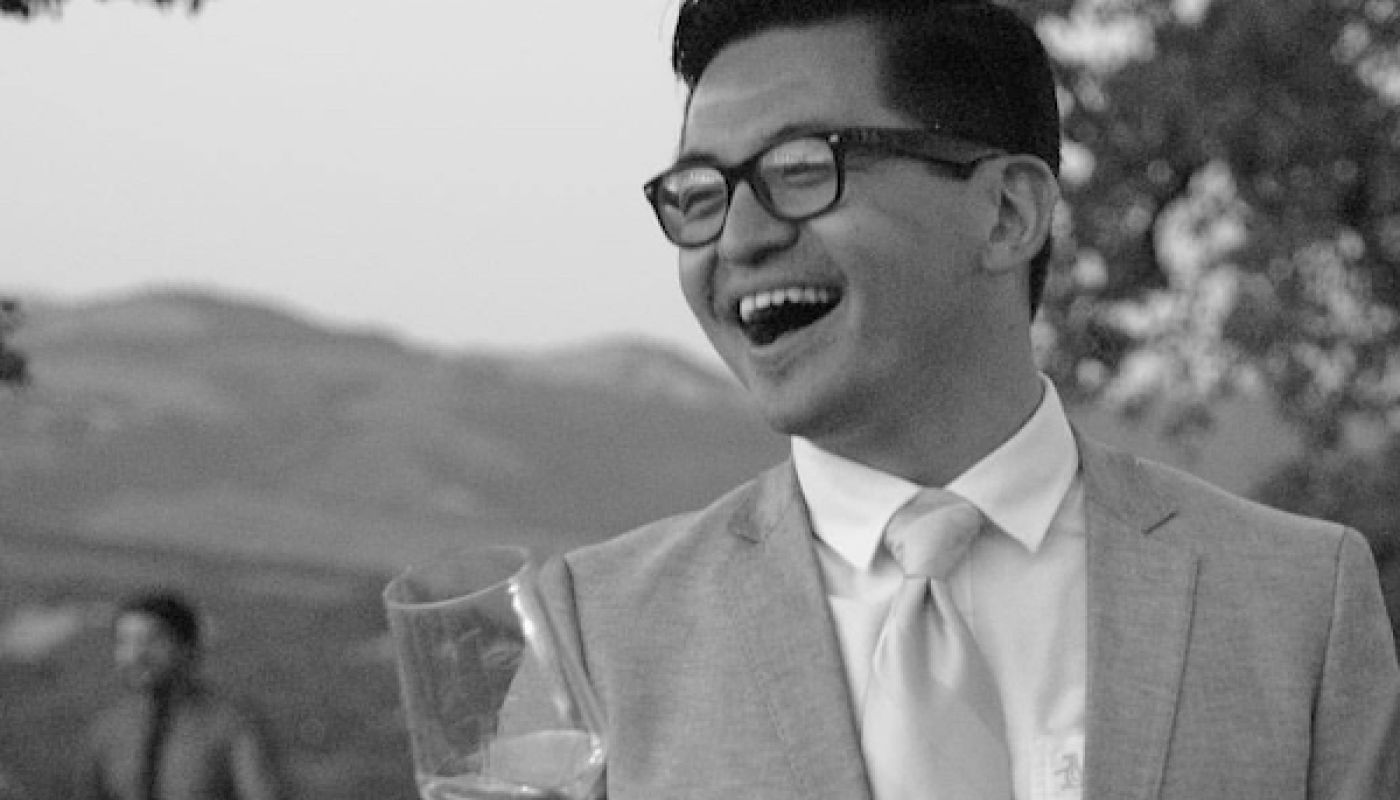
‘To be blunt, if you’re managing a revenue centre for a restaurant, you should have management responsibilities – you should be management', says Eng, pictured above. ‘It’s imperative to take the mantle of leadership so that standards are raised and kept high. That’s how you end up with a great guest experience.’
But do the young people flocking to the profession understand this? There are now, according to the many industry insiders I spoke with, far more people studying for their sommelier credentials in America than there are traditional sommelier positions available in the industry.
‘The profession is getting more competitive', affirms Jeremy White, wine director at the Triple Creek Ranch resort in Montana. ‘Some young people are thinking that just because they have a certification, they are almost entitled to a certain position and that maybe they shouldn't have to put in the grunt work. This is a dangerous road to go down.’
‘People see the SOMM universe as their end goal', says Sagaria. ‘They think they want to be the next celebrity sommelier, but they don’t realise those people are unicorns. Not everyone can be a Richard Betts or a Raj Parr. If we get backlogged with floor somms standing around saying “now what?” that’s when we’ll have more supply than we have demand. We’re approaching that in the next two to three years.’
The few coveted floor positions that are still available for sommeliers at top restaurants have become increasingly difficult to secure and, according to some, that isn’t merely a function of competition.
‘In major markets, the power structures and pecking orders and channels for advancement among sommeliers have become very entrenched and established and, to some degree, you're either in or you're out', says a well-tenured wine director for a New York Michelin-starred restaurant who prefers to remain anonymous. ‘There are definite Prince-makers, and the highest-profile jobs are all decided by very particular cabals of insiders.’
We’re also at an interesting inflection point in the careers of those who rode the rising wave of sommelier popularity. Few still hold positions working the floor, and instead have graduated to other wine-related endeavours. While these individuals have fluidly evolved their careers, somm culture does not seem to be evolving quite as quickly.
‘A sommelier’s status will forever be linked to what restaurants they worked at when they were on the floor', says my anonymous New York wine director. ‘Richard Betts will forever be the former beverage director at the Little Nell, even though he makes mescal, wine in two countries, and writes books. Bobby Stuckey will forever be the former head sommelier at The French Laundry [in Napa Valley] even though he owns three restaurants in Colorado and is working on a book. Raj Parr will forever be the former wine director for the Michael Mina Group even though he now makes wine all over the place. Dustin Wilson will forever be the former beverage director for Eleven Madison Park even though he now owns Verve [a NY wine retailer].’
This kind of reputation coinage in the sommelier world continues to be perpetuated by the community as a whole, perhaps in part because of how it is also amplified by the media’s continued fascination with the culture of food and wine celebrity. But as the most prestigious jobs continue to dwindle in number, a tension has arisen in the sommelier community between traditional notions of what it means to be a good and successful sommelier and the realities of the employment landscape for those who are experts in wine and service.
In many ways, this has also become a tension between mid- and late-career sommeliers and the starry-eyed aspirants beginning their certification journeys.
‘People are hung up on the old definition of what a sommelier is and can do', says Master Sommelier Chris Tanghe. ‘Get over it! We can and will do more than just work the floor, so please stop criticising those who want to keep evolving and doing different things due to demands of life, market, climate, et cetera.’
Tanghe’s own path has taken him from culinary school to working in kitchens around the US; then into wine service at several well-known restaurants before passing his MS exam; designing and opening an award-winning Spanish restaurant; working as a portfolio manager in an import company; and now into a career as the chief instructor at GuildSomm, a non-profit membership and educational organisation for the global sommelier community.
‘The truth is that most Master Sommeliers don’t work the floor these days because there are so few restaurant groups that can afford them', says my anonymous New York wine director. ‘When people are asking for $120k to $150k a year, there are few businesses that can fit that salary into the labour portion of their P&L. The later you are in your career, the harder it is to stay in restaurants from purely a compensation-based standpoint. Never mind the lifestyle. Sommeliers will be forever moving off the floor because they age out. When you’re 35 or 40 and have a family, you don’t want to deal with toxic restaurant culture, lousy health insurance and going to the gym at 1 am after a 12-hour shift.’
‘I lost my previous job because they found someone 35 years younger than me who would work for half of what they were paying me', says Slater. ‘Young and cute seems to be what restaurateurs want these days. I laugh when I watch these kids telling people what wines they “need to like.”
‘The line I kept getting', continues Slater, who recently secured a new wine director position after a few nail-biting weeks of looking, ‘was that I was overqualified. That’s a code word for “we can’t pay you what you’re used to.”’
‘People see somms as costs that are easy to cut', says Sagaria. ‘Anyone can sell wine. Now it’s uncomfortable to be a somm – you can’t find a job. We haven’t yet seen the revolution beyond the culture of a floor somm. But there are other paths. We need to see new opportunities and be broader.
'We call it a somm community, but that’s shortsighted', he continues. ‘It’s a wine community that’s much larger than that. Now it’s somms and winemakers and retailers and entrepreneurs. There are now a lot of ways to advocate for wine. You just need to look past the floor of a restaurant. At one point as a sommelier you could be an artist. Now we need to see if you can be a businessperson as well. The mindset needs to evolve towards that. We’ll be stronger as a community if we can do that, and we’ll be graduating people off the floor into many other industries. We have to help forge that path.’
‘A lot of the sommeliers I talk to, most aren’t in restaurants', says Eng, who ticks his sommelier friends off on his fingers as he speaks. One is working at a wine shop. Another is running the wine list for a champagne bar. Another has become a partner in a new restaurant concept in San Francisco, while two more have opened their own restaurants, one in San Francisco, another in Texas.
‘We all share a desire to return to a place where we can feel focused', continues Eng. ‘What we love doing most is supporting the wine producers we love, engaging guests and learning about the things that excite us. We’re hoping that as the industry continues to shift into new models, they come to see the value of committing to professionals who can create and grow and sustain programmes that are a part of a great consumer wine experience.’
I’ve spoken with dozens of sommeliers around the country over the past two months, trying to gauge their sense of where the profession is heading. Most expressed some level of concern or discomfort at the combination of the changing landscape and the changing demographics of the profession, not to mention what some considered to be a very real threat posed by wine apps and automation. But very few failed to voice some optimism about the future.
‘If we all continue to share our love of wine with others and continue to make our employers happy by running profitable programmes, or continue to develop others getting into the industry, the upside is endless', says John Johnson, the manager and wine director of the Paragon Supper Club in Dayton, Ohio.
‘I for one am very optimistic about the future of the sommelier as long as we stay open to change', agrees Ron Plunkett, the in-house sommelier at Signorello Estate in Napa, which burned to the ground in the recent fires, forcing Plunkett to transition to training, trade outreach and developing new programmes to reach consumers while the winery is rebuilt.
‘Sommeliers are like gymnasts, professional athletes and boy bands', says Sagaria. ‘You can't do it forever but you can use those skills to open doors, share your gifts with a broader or new audience, while continuing to contribute to the sommelier community. Hopefully along your journey you can inspire other sommeliers to dream even bigger, ultimately taking our industry to new heights and using wine and hospitality as a vehicle to create amazing opportunities that we can't even fathom today.’
The Zalto is apparently half-full.
*Jancis adds Actually, as someone involved with this third film from Jason Wise, who made SOMM, I can confirm that it is not about sommeliers but, as I understand it, is focused on charting how the role of wine in society has evolved over the last 40 years. This is where I, unfortunately, come in, along with Steven Spurrier and Fred Dame MS, who is, admittedly, a senior somm, but it’s the senior not the somm bit that earns him his place in this movie. We have all been filmed separately and will be together in Paris later this week for another scene. I don’t think the film has a title yet but apparently it is likely to be released towards the end of 2018.