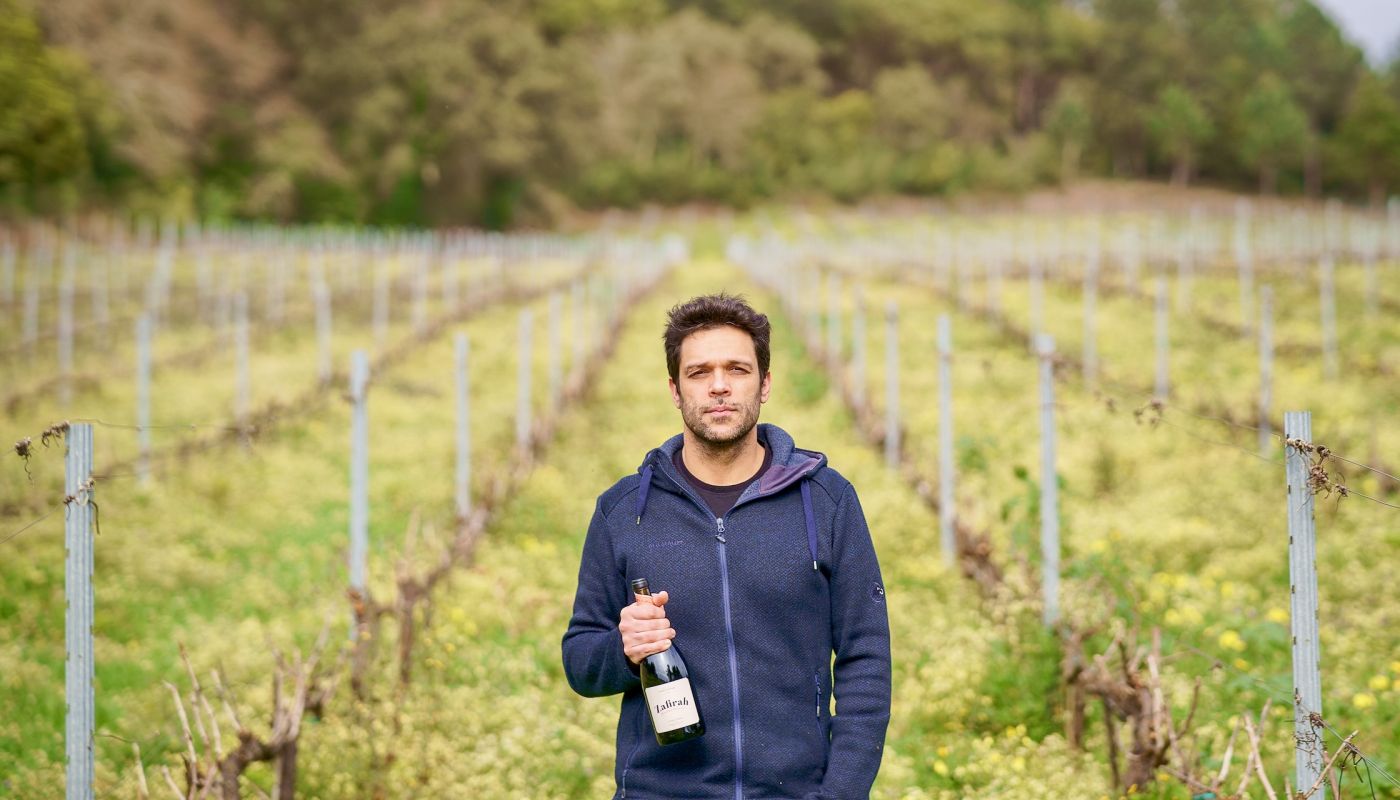
Constantino Ramos was in London last week for a tasting with nine other Vinho Verde winegrowers. His wines are so distinctive and delicious, and tell such a good story, that I could have chosen any of them, white or red, as my wine of the week.
However, I’ve chosen to focus on the Juca Loureiro because the 2024 is available in the UK and the 2025 will land in the US later this month. (There are likely bottles of the 2024 with retailers in the US even if the importer has no stock.)
I first met Ramos at Simplesmente ... Vinho in Porto in 2024 but I had been introduced to his wines before that so my enthusiasm for them was not influenced by his undeniable charm and his boyish enthusiasm for the Vinho Verde region. His first winemaking job there was with Anselmo Mendes, from 2013 to 2022, a decisive step in his journey from chemical sciences to wine.
Having spent several years in the pharmaceutical industry (which turned out to be very useful when it came to making stable, low-intervention wines), he did a Master’s in viticulture and winemaking at Vila Real followed by winemaking jobs in various regions including time at Quinta dos Roques in Dão and Alves de Sousa in the Douro.
In 2017, while still with Mendes, he released his first wines under his own name, after a cousin challenged him to make wine from old, isolated vineyard plots trained en ramada (ie on a pergola growing around the edge of a field of other crops) in the village of Riba de Mouro, at the highest elevation of the Monção municipality, in the north of the Vinho Verde region. These were the red blend Zafirah – a Muslim name meaning ‘graciousness’ – and Afluente, an Alvarinho.
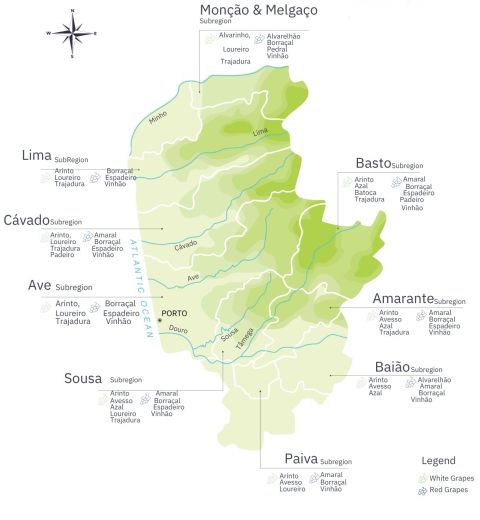
The map below shows the nine Vinho Verde subregions, which producers are starting to emphasise as Vinho Verde sheds its long-established but not always helpful reputation of light, low-alcohol whites with a slight spritz.
Juca red and white came a little later, the former a blend of fiercely local varieties from another old vineyard in Riba de Mouro. Ramos explained why he chose this name: ‘Juca was the band conductor in Riba de Mouro; he was the grandfather of my wife, Margarida, and was a very respected person back then and very known, especially in a time there was no TV or theatre, as the cultural escape back then was the music band. Naming the wine Juca was a tribute to him, but through him to the entire hamlet of Riba de Mouro.’
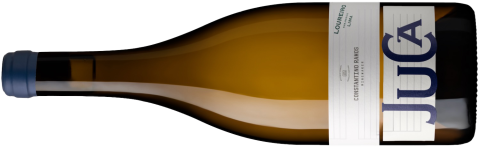
Juca Loureiro is from further south, on the banks of the River Lima, which is thought to be Loureiro’s place of origin. That and the slightly higher rainfall than in Monçao e Melgaço may explain why it is a perfect spot for this herbal-scented grape variety, whose name means ‘laurel’.
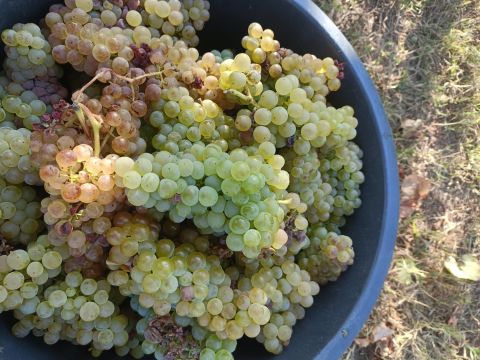
Loureiro is even more widely planted in Vinho Verde than Alvarinho (35% v 19%) but has, I think, less global recognition, perhaps because Alvarinho has the added connection with Albariño in Galicia in Spain. It has generally lower acidity and can be more aromatic than Alvarinho, with fruit that tends towards green apple and citrus, sometimes stone fruit, though the varieties are not that far apart when it comes to fruit flavours. (DNA analysis in 2003 suggested they were related.)
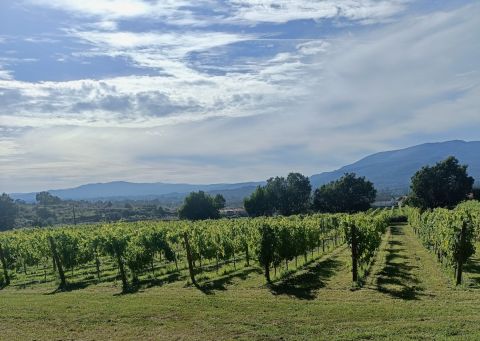
The Juca vineyards in Bertiandos, planted in 1999 and pictured above, are on the right bank of the river. The hand-picked grapes are destemmed and then spend a few hours with the skins to get as much flavour as possible without overly extracting tannins. They are then pressed and fermented in a stainless-steel tank. The wine spends 8–9 months on the lees, with lees stirring for the first three months only, adding texture but avoiding loss of freshness.
The 2024 is fragrant with laurel and fresh pears and a lively note of citrus. But there’s also a subtle stony-mineral side to it that tones down the fruit and the fragrance. It’s deliciously dry and elegant, finely shaped by fresh acidity and by the delicate but definite texture from the skin contact and lees ageing.
The newly released 2025, which I tasted last week, is intensely herbal but also sour-fresh, with flavours of quince and citrus and just a very slight floral note. It’s juicy yet tightly structured by the freshness; rounded and intensely crisp, pure and sustained.
Both vintages have just 12% alcohol and more than 6 g/l total acidity, making them mouth-watering and energising.
Ramos’s Vinho Verde wines are imported into the US by The Source Imports (contact: [email protected]) and into the UK by Festa, who have an online shop.
If you are after an equally refreshing and delicious Ramos red, the Zafirah 2022 is available in the UK (RRP £23); the Juca red 2024 is available in the US (RRP $23).
For more Vinho Verde options, see our tasting notes database.