The second week of January is traditionally Burgundy Week in London but has been considerably curtailed by Omicron effects this year. At the many tastings of 2020s originally planned for next week, the vast majority of wines shown would have been from the Côte d’Or, the east-facing ‘golden slope’ of limestone and marl that produces Burgundy’s most revered and most expensive wines.
But anyone studying a map will see that the southern end of the Côte d’Or wine region bleeds straight into the northern end of the Côte Chalonnaise wine region, named after its main town east of the vineyards, Chalon-sur-Saône. Côte Chalonnaise wine country clusters round the main wine villages, from north to south, Bouzeron, Rully, Mercurey, Givry and Montagny. Their wines are generally much, much less expensive than those of the Côte d’Or but the soils and elevation are very similar, and many vineyards enjoy the same sort of aspect, facing the rising sun, as most of those on the Côte d’Or.
So why are Chalonnaise wines seen as so decidedly inferior? The reasons are more historical and political than geographical. Napoleon was keen to give a strong character and focus to each of the départements into which the country had been so neatly divided after the French Revolution. The Côte d’Or département was to be focused on wine production while, to its immediate south, the focus of the Saône-et-Loire, named after its two most famous rivers, was to be farming, especially Charolais beef, and industry. To the west of wine country is Montceau-les-Mines, a mining centre as its name suggests that was an important source of coal throughout the 19th and early 20th centuries. The iron-ore deposits round Le Creusot, north of Montceau, gave rise to a rash of vast factories during the industrial revolution.
But everything changed. The ravages of the phylloxera louse towards the end of the 19th century left Côte Chalonnaise vineyards (like most vineyards on the planet) in a terrible state. And those who went off to fight in the First World War and managed to return were lured to work in the factories rather than among the vines. (The Côte d’Or had little industry to speak of so viticulture there was much less seriously ruptured.) The result was that the best vineyard sites, those on the slopes that were the most difficult to work, were abandoned in favour of the more fertile plains. Quantity was prioritised over wine quality and the Côte Chalonnaise became known as a source of cheap vin de soif for the local factory workers.
The Second World War was no kinder to vintners here. In the excellent and much-revised second edition of Inside Burgundy, Jasper Morris MW points out that the demarcation line between occupied and Vichy France cut right through the region and that at least one citizen was arrested for visiting her garden in Vichy France from her house in the occupied zone.
Seen in the great sweep of history, which shows that the Côte Chalonnaise has just as long a tradition of monastic viticulture as the Côte d’Or, it has been only relatively recently, in the late 20th century, that the better vineyard sites have been replanted. Vines take years to produce their best wine so you could argue the case for a second coming of the Côte Chalonnaise now, not least because there is quite a group of ambitious producers there today.
One of them is Domaine A et P de Villaine in Bouzeron, just two miles from Santenay in the Côte d’Or, which makes some of the most distinctive wines in the whole of Burgundy: single-vineyard expressions of Burgundy’s ‘other’ white wine grape Aligoté, which has long been regarded as a poor substitute for Chardonnay because it’s more difficult to ripen. Climate change has shown us, however, just how good fully ripe Aligoté can be, and this domaine makes many of the finest. The ‘A’ in its name (now changed to simply Domaine de Villaine) refers to Aubert de Villaine, who has just retired from leading the Côte d’Or’s most famous wine estate by a mile, Domaine de la Romanée-Conti. For many years he and his American wife Pamela lived in Bouzeron but they have now moved. Since 2000 the domaine has been run by his nephew Pierre de Benoist, whose parents own Sancerre’s Domaine du Nozay.

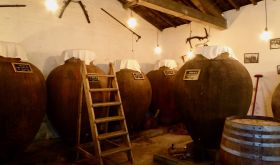
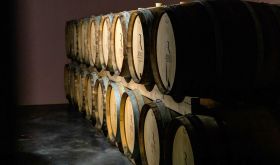
De Benoist, whose new cellar shown above was designed according to da Vinci’s golden ratio with Bouzeron stones and local water ‘dynamised’ with wine lees, says about his beloved Aligoté, ‘immediately when I tasted the wine I felt similarities with the Sauvignon in Sancerre’. It’s certainly as high in acidity and makes a great aperitif.
But most of the white wines of the Côte Chalonnaise are Chardonnays, just as the reds are Pinot Noirs – exactly the same as in the Côte d’Or. When I visited the region in September I was particularly taken by the single-vineyard Chardonnays of Domaine Feuillat-Juillot made by an all-female team. The great majority of grapes grown in Montagny’s pretty, east-facing amphitheatre go to the large co-op in nearby Buxy but Françoise Feuillat-Juillot, who grew up on the famous Mercurey domaine Michel Juillot, has grown her own domaine from eight to 15 ha (37 acres), replacing red wine vines with Chardonnay, and bottles everything herself with her daughter Camille.
Perhaps the grandest domaine of the Côte Chalonnaise in terms of its holdings is the historic Domaine Thénard of Givry, which enjoys the enviable position of being the second-biggest owner of the fabulously expensive white wine vineyard in the Côte d’Or, Le Montrachet, where it owns almost two whole hectares. Even the billionaire entrepreneur François Pinault has been able to acquire only 0.04 ha (0.1 acre) of Le Montrachet vines, at a price that – as long as ten years ago – was rumoured to be a million euros.
But there are some fine reds too. Ones to watch are those currently being made by owner Philippe Pascal and winemaker Guillaume Marko in the spectacular new four-floor, gravity-fed winery of the restored Cistercian Domaine du Cellier aux Moines on a steep slope overlooking Givry that is surely one of the region’s finer vineyard locations. This is just one property where young vines produce better-quality wine that the older vines, because the previous owners planted poor-quality clones of Pinot Noir.
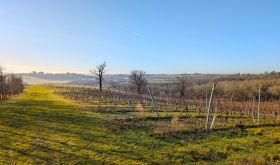
Perhaps it’s the desire to signal clearly which are the best vineyard sites that has propelled what you might call rampant premier cru inflation in the Côte Chalonnaise. Almost 60% of Montagny’s vineyards are classified as premier cru, which seems a little excessive, however many hillside vineyards there are (see main image). The proportions in Rully and Givry in the north of the region (less than a quarter) perhaps provide a more useful guide to us potential customers.

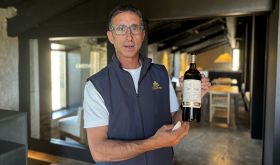
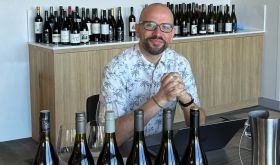
This is very much a region in transition but, as Anne-Cécile (above), daughter of vigneron François Lumpp in Givry, assured me while showing off their latest vintage, the Côte Chalonnaise is on the rise.
Recommended Côte Chalonnaise producers
Domaine Belleville, Rully
Domaine du Cellier aux Moines, Givry
Domaine Dureuil-Janthial, Rully
Domaine Faiveley, Mercurey
Domaine Feuillat-Juillot, Montagny
Domaine de la Folie, Rully
P & M Jacqueson, Rully
Domaine Claudie Jobard, Rully
Domaine Bruno Lorenzon, Mercurey
Domaine François Lumpp, Givry
Domaine Jean-Baptiste Ponsot, Rully
Domaine Ragot, Givry
Domaine Suremain, Mercurey
Domaine de Villaine, Bouzeron
Tasting notes in Côte Chalonnaise – the tasting notes and in our tasting notes database. International stockists on Wine-Searcher.com.