
24 December 2010 This is a longer version of an article also published in the Financial Times.
Most of the year I write about what to serve and drink, but during this festive season I'd like to focus on what to serve and drink wine from.
I have noticed that wine professionals are much more casual in their approach to entertaining with wine than those who know less about the subject. It is a widespread belief, fostered by those selling wine glasses, that it is absolutely essential to have a new glass for each wine, preferably one tailor-made for the precise sort of wine served in it, but this is far from professional wine practice.
In fact at trade tastings we tend to clasp one increasingly besmirched glass throughout an entire tasting, first using it for dry whites, then pinks, then reds and finally sweet wines. We might, just might, go in search of a new glass for a sweet white if we have been tasting reds, but that is really only for cosmetic purposes so that we can judge the colour accurately. In practice, the effect of traces of the previous wine are so effectively overpowered by the impact of its replacement that it really doesn't matter if a glass has held more than one wine.
In fact, for many sensitive tasters, the real potential distraction from the characteristics of the wine being tasted is the possibility of traces of washing up liquid or heavily chlorinated water left in a supposedly 'clean' glass. So much so than it is common practice, especially in Italy for some reason, to 'wine' the glass by pouring a small initial sample into the tasting glass before use and then carefully tilting and turning the glass so that every square inch of its interior has been rinsed by the favoured liquid.
When entertaining at home I certainly don't insist on this palaver, but I do tend to give guests just two wine glasses for most of the meal, and use the same ones brutally for dry whites then reds. The size and shape of those two glasses depends more on their being obviously different from each other rather than being the perfect glass for the wines I intend to serve. This is because I usually serve two different wines with each course since I am incorrigibly curious about wine and I always learn from comparisons (and if I had more glasses and a bigger table, I might routinely inflict three wines at a time on my guests). Because of this multiple-choice business, by cheese time it can get very confusing indeed if all the glasses are identical.
I regularly attend professional or hardened amateur wine dinners and tastings at which far more different wines are served than my usual pair of whites followed by two pairs of reds. It is not uncommon in my experience to sit down to a dozen different glasses at each place. Well-practised establishments, especially in Asia, use small coloured stickers on the base of the glasses matching those on the list of wines to prevent tasters from confusing their Pétrus with their Pin. I'm sure washable felt tip pens could be used to the same effect, and many tasting organisers have special large sheets of white paper printed with numbers, or the names of all the wines, inside circles for each glass – with the same result.
This was the approach adopted at the recent International Riesling Symposium at the Schloss Reinhartshausen hotel in the Rheingau near Frankfurt, where, four times over, a skilful young team needed just half an hour to pour 22 delicate, chilled Rieslings for each of more than 200 tasters as shown below.

As you will gather, I am not too dogmatic about precise glass shapes. Famous Austrian wine glass manufacturer Georg Riedel has demonstrated time and again that having the right glass for the right wine can increase one's enjoyment of it, but the practicalities of having a set of the perfect glasses for each wine type defeat me and my cupboard space. The main thing is to have clear glass that is as thin as possible with a bowl on a stem that goes in towards the rim so that you can swirl to release aroma without losing either wine or vapour. The most useful size of bowl is one that would contain about a third to a half of a bottle if filled to the rim, but we winos like to fill glasses only about a third full so as to leave lots of space for the all-important swirling and resultant aromas.
Riedel no longer has the wine glass market to himself, and an increasing proportion of the newer wine glasses have an angle in them rather than being gently bulbous – presumably to maximise the surface area of an ideal serving.
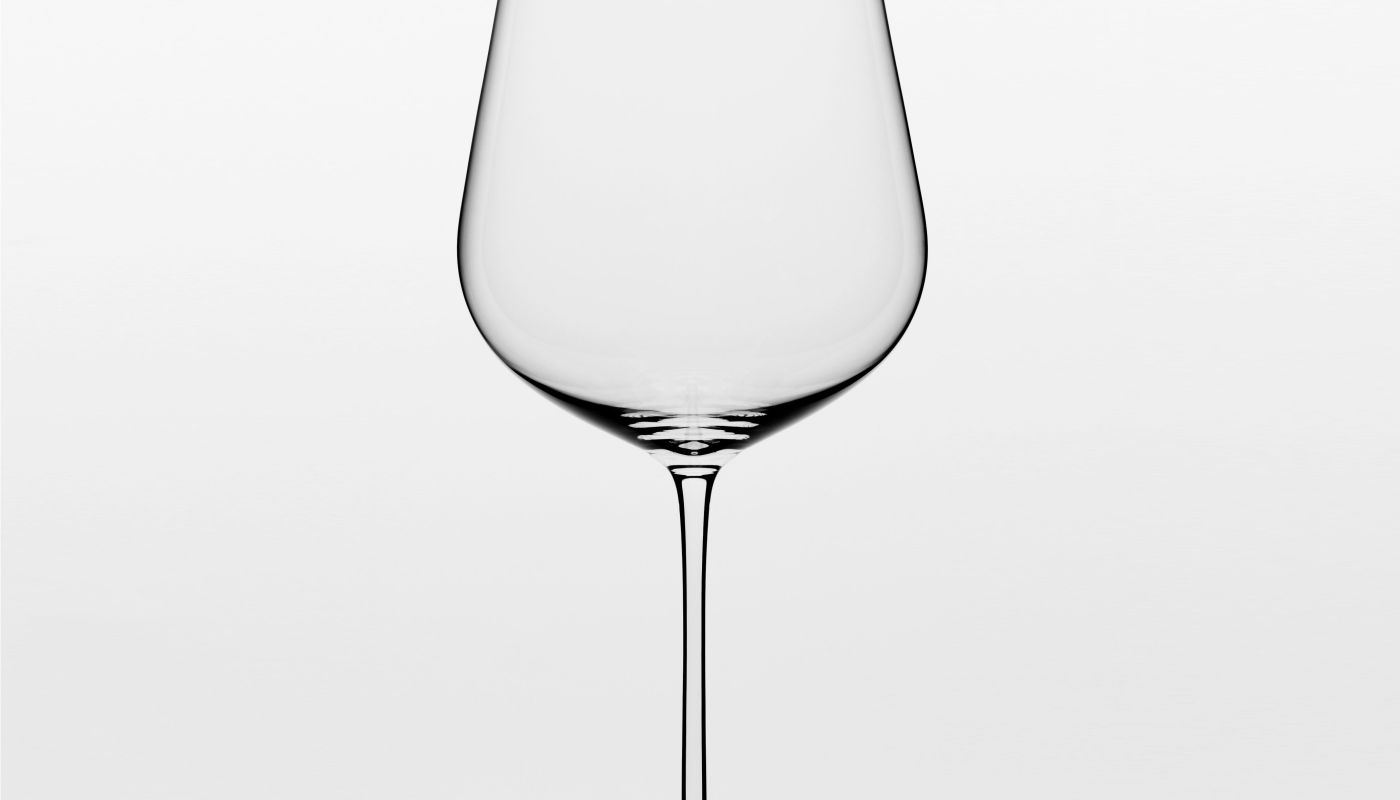
A rather more fanciful reason is evinced for the glasses that have most impressed me recently, from Zalto, with a similarly rather Scandinavian shape. They are designed by 'the wine priest, Father Denk' and 'the bowls are tilted at the angles of 24, 48 and 72 degrees, which are in accordance to the tilt angles of the earth'. Who knew?
What I love is that Zalto glasses are the thinnest and most delicate glasses I have come across, yet seem springy and almost elastic in the hand. The Zaltos were originally Venetian, but the glasses are made in northern Austria and over the border in the Czech Republic. Best of all, the manufacturers say they are best washed in a regular dishwasher. At £26 for one of the 'Universal' model from Around Wine in London W1, they are not cheap, but they are cheaper than many of Riedel's top models and would give any serious wine lover a real thrill over the closeness of contact they offer. 
Riedel now make a series of particularly stylish decanters, but I tend to scour antique shops and junk shops for older ones. One modern shape I have found very useful for aerating really tight, taut young wines is Spiegelau's Graal decanter shown here. It's effectively shaped like a giant Paris goblet, big enough to hold two bottles of wine and to offer a vast surface area when filled with one. It stands on a stem and has a little spout for neat pouring.
The one problem with traditional decanters with narrow necks is cleaning them, especially when they are left with red wine stains. I fill them with a warm solution of denture-cleaning powder. Unromantic but delightfully effective.
www.zaltoglas.at
www.riedel.com
www.aroundwine.co.uk
www.spiegelau.com/products/view/decanters_int/graal/













