The Cornish fishing authorities appear to be at it again. I refer to the current plans to rename some of their fish and shellfish to make them more attractive to the British public, and more popular with the fish-buying members of your family as well as, more importantly in terms of influence, leading restaurant chefs.
Specifically, they have now decided to rename the megrim sole the ‘Cornish sole’ and the not-so-beautiful spider crab will apparently be marketed as ‘Cornish king crab’.
Both of these actions can be seen either as opportunities that are long overdue, or as knee-jerk reactions to the current conditions. Until 31 December 2020 over 90% of all megrim soles landed in Cornwall were exported to Spain where Spaniards call them gallo, or rooster. This destination, like so many in mainland Europe, is now effectively closed to them because of the UK’s decision to leave the EU and the ensuing bureaucracy. The same is true of spider crabs, which are presumably unlikely to appeal to anyone suffering from arachnophobia.
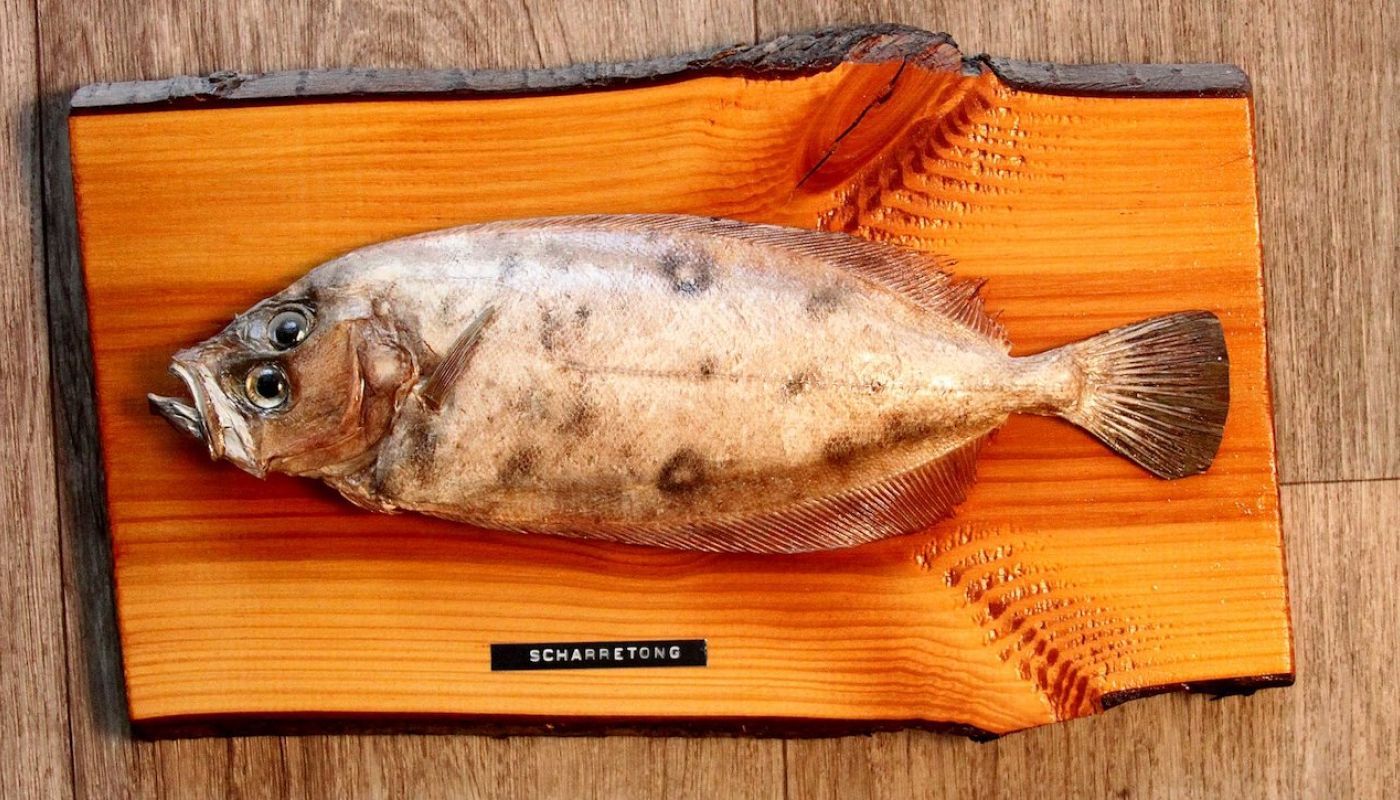
Let me deal specifically with the megrim sole. Although plenty are caught off the coasts of Cornwall, they are not exclusive to these waters. Megrims are found in the north-east Atlantic and in the Mediterranean at depths of between 100 and 700 metres (330 to 2,300 ft) below sea level. They are also found around the Hebrides and off the east coast of Africa. By many in the business, megrims are considered to be less attractive than either Dover or lemon soles. But what is a sole?
Megrim soles in fact boast a grander ancestry than lemon soles. They are from the same family as the turbot and the brill and have softer flesh and a thin skin that can be easily crisped during cooking. And the fish we call lemon sole is actually a righteye flounder, more closely related to the halibut or the dab than to a Dover sole. Underneath, both megrim sole and lemon sole have white flesh but the Dover sole is a lot firmer with a stronger flavour. In the UK Dover soles outsell megrims 30 to one and lemon soles outsell megrims by 15 to one, with a significant price differential: Dover soles fetch £48 per kilo, lemon soles £32 per kilo, megrims just £19.
The overall potential catch available is quite large. According to the figures available from the FAO (Food and Agriculture Organisation – part of the United Nations), 15,000 tonnes of megrim can be caught in a single year, of which the UK is allowed to catch up to 3,000 tonnes. That is a lot of inexpensive fish – if amateur and professional chefs can be persuaded to buy them.
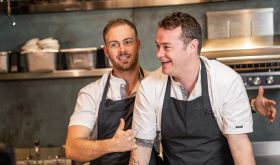
To cook megrim well is easy. When I was in the Quality Chop Shop earlier this week I bumped into its head chef Shaun Searley and asked him for his opinion of them. ‘They can be a little on the mushy side but roasted on the bone whole and served with any kind of creamy sauce they can be delicious’, he assured me. Sensing that I could not quite interpret the expression behind his face mask, he gave me the thumbs up.
I next turned to another chef called Shaun. Shaun Hill first made me aware of megrim soles when I ate a megrim sole caught off the Cornish coast with a watercress beurre blanc in his restaurant The Walnut Tree, Abergavenny. I still remember how terrific it was, even though this meal was over 13 years ago.
Time seems to have stood still for Hill even though he has been cooking for over 50 years, first in London’s Gay Hussar, at the Capital Hotel, for Paul and Kay Henderson at Gidleigh Park in Devon, then on his own at The Merchant House in Ludlow before taking over from the highly respected Franco Taruschio at The Walnut Tree. Over the years Hill has not lost his charm, his smile, his slight bolshiness when provoked, his scepticism when called upon, and the authority acquired over the years in choosing just the right ingredients and turning them into the most trustworthy recipes. (I have just made my annual pots of marmalade, from Hill’s Gidleigh Park recipe book written in 1990, which HRH described as ‘my best ever’.)
‘I like cooking with megrim soles’, came Hill’s enthusiastic response to my first question, ‘for their size and their price. I like preparing them for a "sole Colbert" and their low price means that I don’t have to charge £50 for the dish, which I would if I were using a Dover sole. And if we have a fritto misto on the menu, they’re fantastic because it means that we don't need a fryer as big as you would find in a fish and chip shop to prepare the fried fish’.
This praise out of the way, prompted Hill to philosophise. ‘The thing is’, he continued, ‘that as an island race we British seem to care very little about the fish in the waters that surround us. And by this I am not just referring to the post-Brexit fiasco. But the fish dish that this island is best known for has to be fish and chips, a dish that was brought here by the Jews in the middle of the nineteenth century.’
‘I love cooking fish and I usually have more fish dishes on the main course menu at The Walnut Tree than even meat: normally four fish, three meat and one vegetarian. In fact, people often say that what we run is actually a fish restaurant. But that is fine with me. One of the interesting aspects of running any restaurant is watching it become a self-filtering operation. You continue to attract those customers who like your food while those who don’t, choose not to come back. Watching this happen, running the kitchen, being enthralled by the atmosphere in the restaurant as the evening progresses, having the freedom to enjoy all of these very different ingredients is what keeps me here after all these years.’
He is a particular fan of the megrim sole. ‘What I enjoy most about cooking and eating megrim soles is their size and weight. They are the right portion size and as I get older I find that my appetite for food gets somewhat smaller (although I have to say, not my appetite for wine). I think they are the perfect size for one. Well, for me anyway.’
As to the renaming of the megrim, Hill is sceptical. ‘It reminds me of the time when I and the late Gary Rhodes were called in by Nicholas Soames who was then at the Ministry for Food and Fisheries. Whenever there was an issue [this time an attempt to improve the British diet], the answer always seemed to be to throw money at it rather than think the problem through.’
This move to rename the megrim sole comes after several successful attempts to rename other fish. In 1977 the Patagonian toothfish was renamed ‘Chilean sea bass’, while pilchards are now sold as ‘Cornish sardines’, anglerfish as ‘monkfish’, and orange roughy is today sold as ‘slimehead’ – or vice versa as they are both part of the slimehead family and both names are arguably equally off-putting.
It is the name megrim, I am informed, that puts people off buying and ordering megrim sole because it includes the word ‘grim’ and that apparently is enough. Television chefs have been hired to promote ‘Cornish sole’ and, with all British restaurants temporarily closed, that is probably the most direct route to persuading us all to change our minds about this fish which, in the right hands I have always found, can belie its relatively low price and its lack of good looks.