
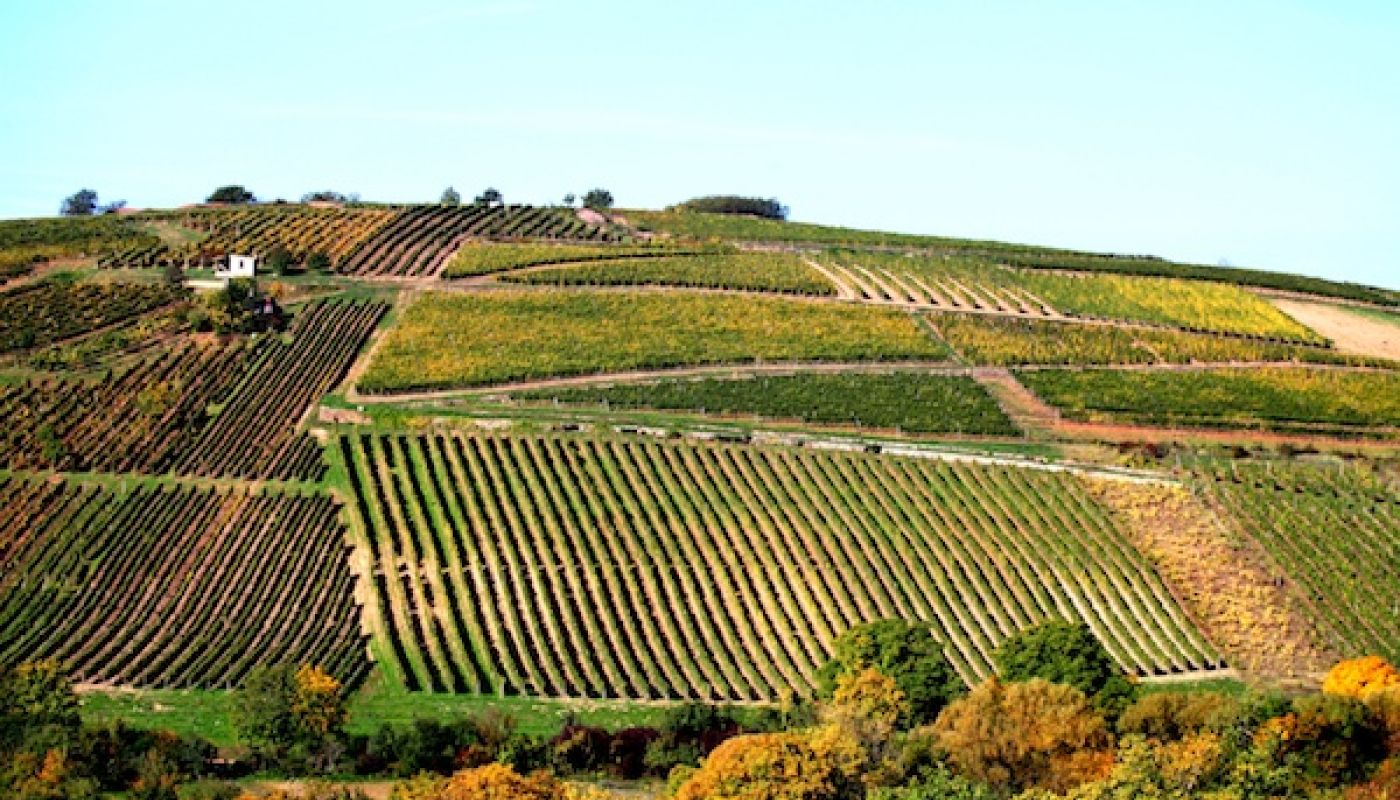
Did you know that this is Furmint February? You may well not even know what Furmint is. Not a breath freshener nor a sweetmeat but the signature grape variety of Hungary’s most famous wine, known as Tokaji (from Tokaj) in Hungarian and once known widely as Tokay. In the eighteenth century, when sweet wines were the height of fashion, Tokaji was regarded as an elixir of life and was perhaps the most famous wine in Europe.
When communism fell, western wine companies flooded into the Tokaj region in the volcanic north-east of Hungary to invest in its vineyards and its network of cellars, typically and distinctively lined with thick black mould, as in Szepsy's cellar below.
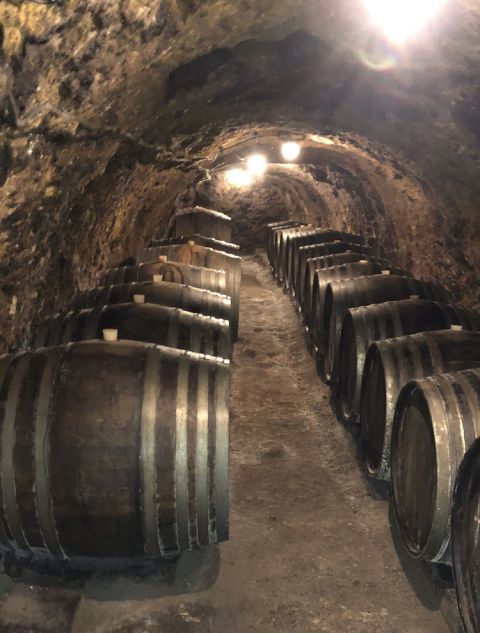
Since then there has been nothing short of a revolution that has resulted in the most impressive upgrade in the quality of this historic wine, not least because local expertise has been allowed, nay encouraged, to flourish rather than simply being harnessed to churn out cheap sticky stuff for Soviet markets.
But this has been a distinctly qualified success. The problem is that sweet wines are, regrettably, so unfashionable. So that although the nobly rotten sweetness of Tokaji is amply compensated for by crystalline acidity that can preserve the wine for decades, people still aren’t buying this sort of wine, known as Tokaji Aszú, in great quantity.
Another problem is that summers here, as elsewhere, have been getting hotter and drier, so that the number of vintages in which the noble rot fungus, which needs humidity, does its sugar-concentrating work, has declined from an average of about six per decade to three. So the really sweet wines that characterise Tokaji are much, much more difficult to make nowadays.

In 2000, when he was making wine for Anthony Hwang’s Királyudvar enterprise, Tokaj’s uncrowned king of winemaking István Szepsy (seen above with local rocks and map) experimented with making a dry wine from the Furmint grown in a particularly characterful vineyard, Úrágya, in the delightfully named wine village of Mád. At a presentation of his wines at a wine fair I attended in Budapest in 2010 he explained, ‘It was made by chance. I didn’t want to make dry wines because I didn’t believe in them then, but we didn’t have enough Aszú grapes to work with. I tasted this and thought – hmmm.' It was still a miracle of complexity at 10 years old, even if it lacked the absolute tension of Szepsy’s next attempt at a dry Furmint, for his own estate, in 2003. This beautiful wine was made from a part of the highly regarded Szent Tamás vineyard (pictured at the top of this article) that he reckoned wasn’t suitable for sweet wine production.
It came to general attention among Tokaj wine producers that these dry wines were rather good, and might be considerably easier to sell than necessarily more expensive sweet wines. Furthermore, without the overlay of noble rot, dry wines are particularly good at expressing fashionable vineyard character.
Since then such wines, and dry varietal Furmint in general, have really caught on, particularly on export markets, and single-vineyard wines have become a real focus for Tokaji producers. Royal Tokaji, for example, the producer founded with encouragement from my fellow wine writer Hugh Johnson and now wholly Hungarian-owned, made their first dry Furmint in 2009, and recently renamed their entry-level version The Oddity in an attempt to persuade people to try it out of curiosity. Today most of the 120 producers in the Tokaj region tend to assign a good half of their grapes to dry wine initially and then leave the rest on the vine, hoping that noble rot will eventually arrive and yield the Aszú berries needed for a sweet wine. But, as Hungarian wine writer Laszlo Balint pointed out in a recent seminar on Furmint in London, ‘Hoping for Aszú can be a real risk. If you went all out for Aszú you’d go bankrupt in a year.’
Furmint is an ancient grape variety that seems to have originated in Tokaj, where it is by far the dominant grape, although there is also a little perfumed Hárslevelű and grapey Muscat. Furmint is also now grown in other parts of Hungary, in Croatia, and in north-eastern Slovenia, where it is known as Šipon, and where some rather well-priced dry varietal examples such as those from Verus and Dveri-Pax can be found.
Although Furmint has a wonderfully strong character – all fire and brimstone on a dried apricot base – it is not that easy to make a fine dry wine from it. It has particularly thick skins, with those skins full of chewy phenolics, so care is needed to make dry whites that are not too astringent. For the same reason, yields should not be too low. Otherwise dry Furmints would be just too concentrated. In the early days of widespread experimentation with dry Furmints, about 10 years ago, producers tried converting the harsh malic acid in the grapes to the softer lactic acid, the so-called malolactic conversion that is de rigueur for most of the world’s red wines, but found that the resulting Furmints tended to age too rapidly.
This year is the second in which this month has been designated Furmint February and 36 producers came to London to drum up enthusiasm for the grape. I concentrated on the dry wines and found quite a variation in styles, which included the sparkling wines that have a long history in Hungary. Some of the wines were slightly too obviously oaky, others were relatively simple wines made in stainless steel. Clearly dry Furmint has the ability to age; the Füleky 2014, for example, was still fresh and remarkably lively for a five-year-old wine. But in some other older wines I found a slightly stale beeswax character that was a little off-putting.
Most of them were 100% Furmint and I assumed that blending in other grapes might dilute the quality but in fact Gizella’s Furmint with 15% Hárslevelű was delightful. This producer seems particularly conscientious, making wines with notable purity. But the producer whose wines really stood out was, perhaps not surprisingly in view of the prices, Szepsy. Dry Furmints tend to retail in the UK for about £12 to £25 a bottle but a retail price of £34.50 was given in the tasting booklet for Szepsy’s Estate Furmint, and the famous Úrágya and Szent Tamás single-vineyard bottlings were £58.50 and nearly £100 respectively.
Other producers whose wines stood out for me, for quality and/or value, were Barta, Carpinus, Disnókő, Dobogó, Grand Tokaj, Szarka and Zsirai.
Recommended dry Furmints
With recommended retail prices, and UK importers where relevant.
For value
Kardos 2018
£12 Boutinot
Patricius 2018
£13.95 Enotria & Coe
Grand Tokaj 2018
£14.60 Pol Roger
Barta, Egy Kis 2018
£14.95 Corney & Barrow
Disnókő 2018
£15 González Byass
Hétszőlő Organic 2018
£16 Les Caves de Pyrène
Füleky 2014
£17.50 Amathus Drinks
Nobilis, Rány 2018
£17.50 Novel Wines
Royal Tokaji, Mézes-Mály 2017
£20 Bibendum
Gizella 2018
£21 Wine Rascals
Zsirai 2016
£21.35 Jascots
Dobogó 2016
£23 Liberty Wines
Szarka, Juharos 2018
£24.49 Top Selection
For quality
Any Szepsy wine
£34.50–£97.48 Top Selection
Zsirai, Szent Tamás 2018
£30.62 Jascots
Sauska, Birsalmas 2017
£37.50 Berkmann
Tasting notes in Furmint – Hungary's trump card? Retail stockists at Wine-searcher.com.













