Mexican food, tequila and mezcal may be the height of fashion but Mexican wine has yet to have its moment in the sun. Or, rather, the fierce Mexican sun and notoriously dry climate have clouded both the image and reality of Mexican wine.
The image is of rustic, burly reds. The current reality is that the dominant wine region, Valle de Guadalupe in Baja California in the far north-west of the country, is running out of water, and resources are increasingly being diverted away from wine production to the lively tourist scene there.
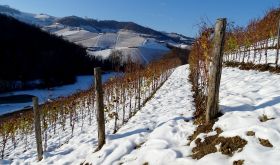
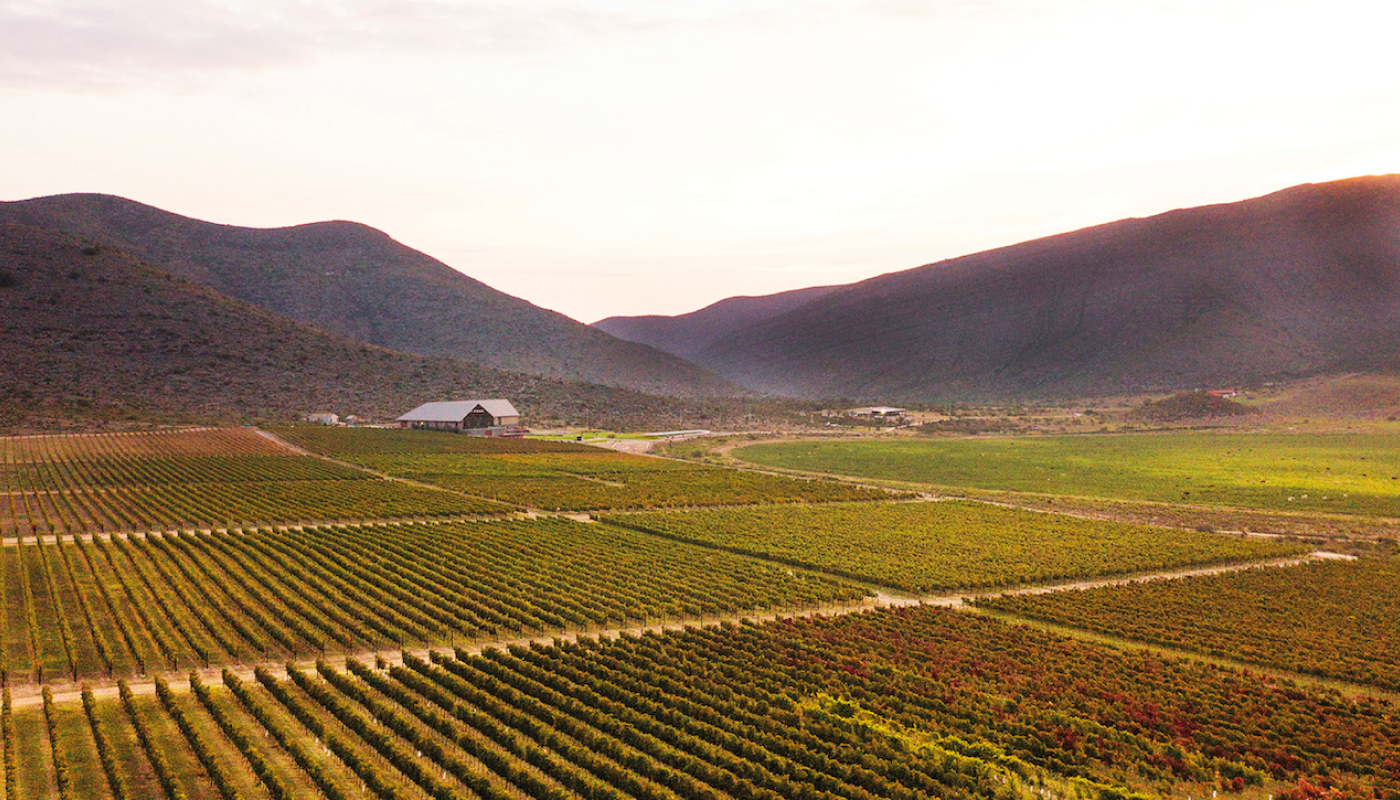
But there are exciting developments on the horizon, as I learnt during a five-hour tasting of mostly new-wave Mexican wines chosen by three leading local wine experts in Mexico City last month. Sommeliers and wine writers Carlos Borboa and Manuel Negrete and wine consultant Sandra Fernández chose 27 wines for me to taste and provided impressive background information on each, including many a picture of the dramatic landscapes in which pioneers of newer wine regions are planting grapes.
Today wine is grown in 15 of Mexico’s 31 states, mostly in the north and centre but as far south as Puebla, south of Mexico City, where I was told someone manages to grow the finicky, cool-climate Pinot Noir grape.
Until I flew over the country, I hadn’t realised just how mountainous it is. The cool temperatures associated with high elevations are a great compensation for low latitudes such as those of Mexico, roughly the same as Saudi Arabia’s. Quite a few of the wines I tasted came from vineyards at between 1,800 m and 2,000 m (5,900–6,560 ft), higher than many vineyards in Mendoza, Argentina’s most important Andean wine region.
Among the wines I tasted, which do not yet represent the majority of Mexican wine produced but were chosen to show what is possible, were a fine, recognisably varietal Riesling from 12-year-old vines at 1,800 m (5,900 ft) ‘in the middle of nowhere’ (actually Cosío in Aguascalientes); a very creditable riposte to champagne; a sophisticated Sauvignon Blanc based on a certified clone from Ch d’Yquem in Bordeaux; wines made next to astronomical observatories; creditable rosés from both Sangiovese and Malbec; a beautifully pure Syrah that could well withstand international comparison; and quite a few hearty red blends that were a bit closer to the current Mexican wine norm.
A significant proportion of the winemakers involved came from outside Mexico, presumably bringing expertise and a new view of what is possible. I was told that until recently Mexicans tended to value concentration, oak and alcohol – the sort of wines that were fashionable at the turn of the century – but that there are signs that tastes are beginning to change towards the fresher styles favoured elsewhere.

Mind you, wine is drunk by only a minority of Mexicans, most of whom are likely to prefer beer or tequila, although for a certain sort of younger Mexican, wine drinking is a signifier of sophistication – just as it has been in China. ‘Wine is becoming increasingly important in Mexico, and people will pay anything!’ I was told. According to my informants, some Mexican wines successfully sell for the equivalent of US$200 a bottle, even if in some cases the brand owners put far more into packaging and marketing than the wine itself. Labels are all-important.
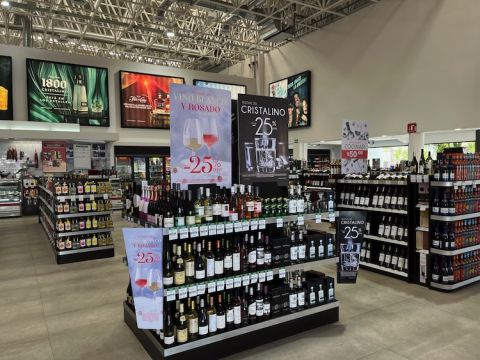
They told the story of serving a range of Mexican wines blind to some fellow Mexican wine professionals, including the bargain Viognier from L A Cetto, Mexico’s biggest wine producer, currently based in Valle de Guadalupe but, like many others, developing other areas with better access to water. L A Cetto famously offers some great-value wines in their efforts to develop a market for wine in Mexico. The Viognier won acclaim, but when the tasters saw the label, they scorned L A Cetto’s delicious Don Luis Viognier, a bottle of which I bought later in a very sophisticated liquor store in Puerto Vallarta (shown below) for 267 pesos, the equivalent of US$15.
Like almost all Mexican wine producers, L A Cetto is owned by a Mexican family. An obvious exception is Domecq, owned by González Byass, but even this Spanish subsidiary concentrates on the domestic market, operating the Domecq Academy in Mexico City which will soon offer wine courses from the global leader in wine education, WSET, to the general public.
In general you have to be relatively well off to drink Mexican wine, which is taxed far more heavily than most imports. (Chilean wine dominates.) When I suggested that this seemed unfair, I was told that wine is still seen as something foreign, an import associated with the Spanish conquistadores rather than part of the country’s indigenous agricultural heritage. ‘But wine production would grow fast if the taxes were removed’, was the wistful prediction of Borboa, who describes himself as someone who loves wine in general but is one of the fiercest critics of Mexican wine.
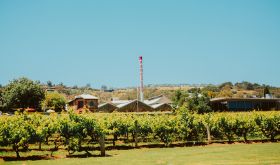
Nevertheless, my three fellow tasters were obviously extremely proud of Don Leo’s 2013 Cabernet Sauvignon Gran Reserva, even going so far as to prise one of the owner’s last bottles out of his personal cellar. This was the wine that was crowned World’s Best Cabernet in 2020 in an international competition in which wines from all over the world are tasted blind by the association of French sommeliers. It comes from an estate founded as recently as 2000 at 2,100 m (6,890 ft) elevation (pictured at the top of this article) in the far northern state of Coahuila just south of Texas.
Many hopes for the development of Mexican wine production are pinned on Coahuila, where already 25 of the country’s 400+ wineries are based. Coahuila is also the home of Casa Madero, the oldest winery in the Americas, very possibly the oldest continuously operating winery outside Europe. It is now a leading proponent of organic viticulture – which should be relatively easy in Mexico’s dry climate. Most of the newer wineries are based on virgin soils; only Valle de Guadalupe’s soils have been pummelled over the years by agrochemicals.

Mexico has become an increasingly attractive destination for American tourists – and not just under-21 college students seeking a lawful alcoholic blast. Mexico City (above) was awash with tourists apparently unfazed by negative travel advisories. (While we were in Mexico, the United States and the scarily random and mass shootings reported there seemed much more dangerous.) And a fair number of Americans are now relocating to Mexico. San Miguel de Allende, 274 km (170 miles) north-west of Mexico City, described by my fellow tasters as ‘Mexico’s Tuscany’, has been voted World’s Best Small City three times by Condé Nast and is a popular home for American retirees.
One of the wines I tasted came from a winery in San Miguel de Allende, and was fermented in a mixture of tank, amphora and Tuscan terracotta – very on trend! Mexican winemakers are already dabbling in orange and minimal-intervention wines. Clearly Mexico is no wine backwater. Although a bit more water would certainly help.
Impressive Mexican wines
Name of producer is followed by name of wine, region then state. Listed in the order they were served.
Sparkling
El Cielo, Hypatia Brut 2018 Valle de Guadalupe, Baja California 12%
White
Bodegas del Altiplano, Anónimo Riesling 2020 Cosío, Aguascalientes 13%
L A Cetto, Don Luis Viognier 2021 Valle de Guadalupe, Baja California 13%
El Cielo, G&G by Gina Sommelier Sauvignon Blanc 2018 Valle de Guadalupe, Baja California 12.7%
Monte Xanic, Reserva Gran Ricardo Sauvignon Blanc 2021 Valle de Guadalupe, Baja California 13.6%
Rosé
Villa Montefiori, Rosato 2022 Valle de Guadalupe, Baja California 12.5%
Camino Corazón, Rosado 2022 Valle de Parras, Coahuila 13.9%
Red
Vereda de Plata, Tres Ríos Malbec 2020 Satevó, Chihuahua 13%
El Secreto, Viña Secreta Syrah 2020 Cosío, Aguascalientes 14%
Viñas de la Erre, Enoteca Rocha Zazueta Mezcla Bordalesa Gran Reserva 2012 Valle de Guadalupe, Baja California 13.8%
Parvada, Reserva 2018 Valle de Parras, Coahuila 13.8%
Don Leo, Gran Reserva Cabernet Sauvignon 2013 Valle de Parras, Coahuila 13.8%
Viñas del Sol, Santos Brujos Tempranillo 2018 Valle de Guadalupe, Baja California 13.5%
Puerta del Lobo Merlot 2019 El Marqués, Querétaro 13.9%
Tasting notes and more in New-wave Mexican wines tasted.