
19 October 2016 Sierra de Gredos is a wine region that has been attracting the attention of many wine professionals and wine lovers recently. Some of the reasons for the increased interest are its proximity to Madrid, the emergence of newcomer producers in a region traditionally dominated by co-operatives, the quality potential of the old vines, and the stylistic profile of their delicate Garnachas, a world away from the concentrated, broad and dark Garnachas from Aragon or Priorat.
The region does not have its own appellation yet as it is part of three different provinces. In the south of Avila province, wines are labelled as Vino de la Tierra de Castilla y León. In the north of Toledo province is small area within the Méntrida appellation. And west of Madrid the wines are labelled Vinos de Madrid but are very different from other areas within that denomination such as Navalcarnedo and Arganda.
As Luis Gutierrez reported in 2011 in Offbeat Spain – Gredos Garnacha, under the three different appellations there is a single geographical unit where Garnacha has ruled peacefully for decades together with the local white grape Albillo Real (see this wine of the week, for instance).
Gredos has already received recognition as a unique wine region, but I hope they will be given their own appellation as nothing looks more like a real geographical unit than the Sierra de Gredos.
It is a mountainous region, flooded with old Garnacha vines planted at an elevation of between 600 and 1,200 m (1,970-3,940 ft). The soils are mainly granitic and sandy with some areas including slate around the village of Cebreros in Avila province. The climate is certainly continental but the topography is extremely varied and there are many different mesoclimates within the region.
Sierra de Gredos might be divided into three different valleys, which guided me in planning this tasting of 42 Gredos Garnachas.
Firstly I present the wines of the Valle de Alberche, which is slightly hotter and drier than most of the Gredos region. The renowned village of Cebreros is here and Alberche is home to some of the finest producers, as you can deduce from the remarkable scores I gave Arrayán, Marañones, Rubén Díaz and 4 Monos.
Next are the wines from the Valle Alto Alberche, which is extremely continental and really cold at nights. It is the latest to be harvested and is higher in elevation peaking at 1,200 m. Some of the wines from Alfredo Maestro and Comando G are noteworthy in terms of quality and style.
Finally come the wines from the Valle del Tiétar, which is much rainier. Elevations are up to 1,000 m (3,280 ft) and the climate is Mediterranean with producers such as Canopy and Daniel Landi achieving some of the higher scores of the tasting.
Gredos wines taste very burgundian, less extracted, more ethereal and lighter than the majority of Spanish Garnachas. The alcohol perception might be high but the wines manage to retain some lightness, generating a unique and recognisable style.
However, treating Grenache like a Pinot Noir requires great skill, knowledge and experience, which is not a possibility open to every winery. Some wines showed an excess of oak and premature evolution while others displayed great finesse, delicacy and ethereal expression.
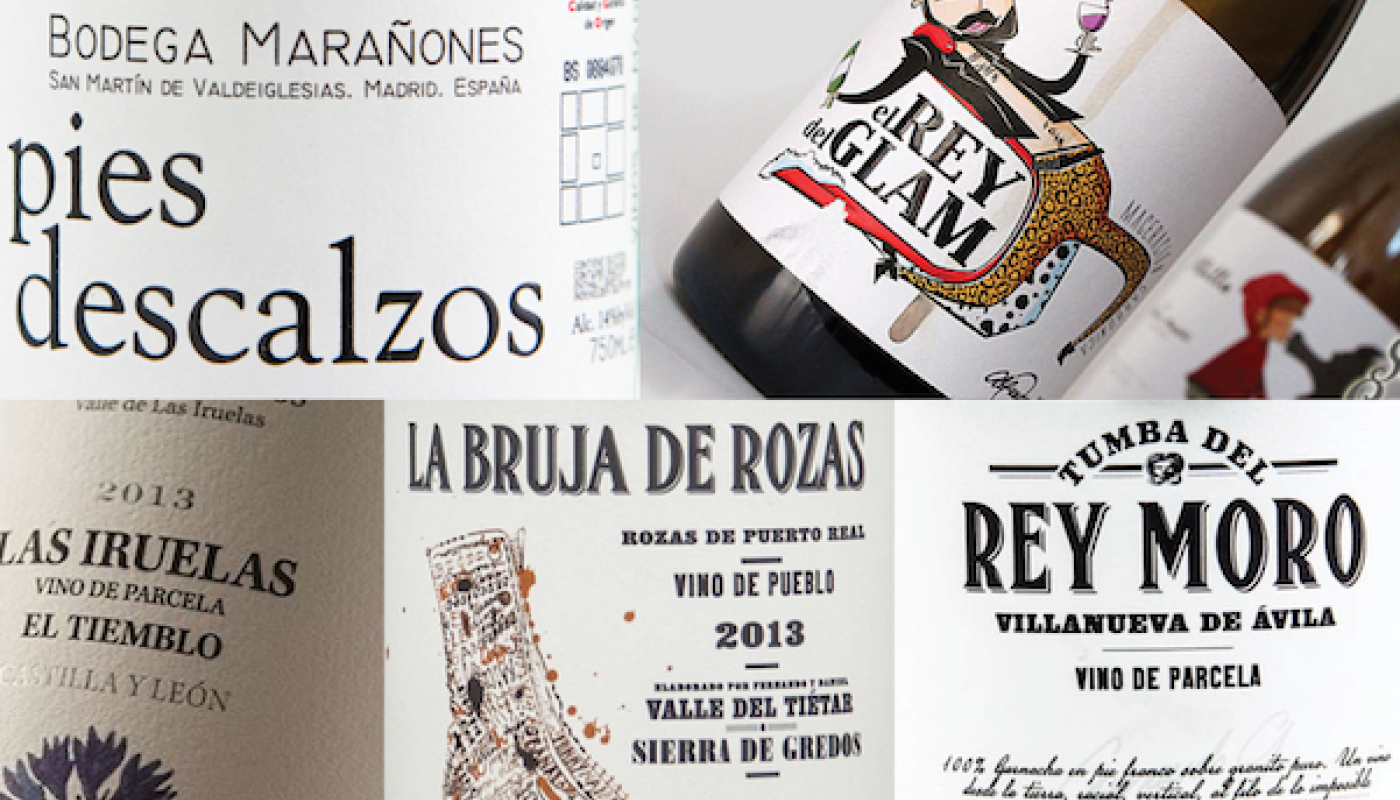
The younger versions and wines made by semi-carbonic maceration are also remarkable; El Rey del Glam from Alfredo Maestro is a great example of this.
The winemaking concept practised in general is also significant: Very limited production, lots of producers using wild yeast, little sulphur, long and gentle skin contact during maceration, up to 60 days for wines such as Tumba del Rey Moro, a fascinating bottle achieving 17.5. It seems that producers intensely search for authenticity over perfection, taking risks in the winemaking process so that I detected advanced oxidation and farmyard aromas in some wines. I am not sure Garnacha, with its limited acidity, is the best grape to take such risks with. On the other hand, when accurate winemaking is practised, it can be magnificent, as in the case of Daniel Landi’s Las Iruelas, which displayed great elegance and depth.
There is no doubting the potential of this new style of Garnacha from Spain, although I think there is still a long way to go. Most of the wines are priced ambitiously at a level that requires a high standard, ageing potential and the assurance that quality will remain over the years – factors that only the best wine regions can assure in the majority of their wines. Time will tell if this is the case in Gredos.
The labelling merits a comment. Most Gredos labels are very lively and trendy. They don’t look classical at all and the name of the vine grower tends to dominate the name of the winery, as in Burgundy in a very terroir-driven approach. You will also find lots of single-vineyard wines from superb hidden plots retrieved and re-evaluated by Sierra de Gredos producers.
A little white wine is produced in a rich, creamy, broad style. I particularly liked the superbly burgundian Pies Descalzos Albillo. I would also like to highlight an astonishing Albillo produced in an old solera system. Tone 7 by Rubén Díaz merits a rating of 18 and can be compared to a great Amontillado – although it is not fortified.
Finally I have selected a few sentences from two remarkable producers, as they perfectly encapsulate what is happening today in Sierra de Gredos.
Fernando Garcia from Bodega Marañones and Comando G points out, ‘It is not so long ago that our region was producing just bulk wine’ and continues, ‘The Gredos wines express clearly their location and origin; they are wines that listen to their terroir.'
José Benavides Jimenez Landi says, ‘The wines from Gredos are the finest and more elegant expression of Garnacha in Spain'.
I am very thankful to all the producers who sent samples for me to taste in relaxed circumstances in my office. The majority of the wines are complex and far from facile so they really deserve time and effort to be correctly assessed.
The 45 wines are grouped by valley, and within each group the wines are in alphabetical order by producer (sur)name. However, you can now use our brand new tasting-note sorting feature to rearrange the order within groups. If you do change the order, you can get back to the original version by choosing 'default'.
VALLE DE ALBERCHE

70-year-old, single-vineyard Garnacha located in the San Martin...
40-year-old Chasselas planted on granitic soils at 750 m...
40-year-old Albillo planted on granitic soils at 750 m. Limited...
40-year-old Garnacha planted on granite soils at 850 m. Limited...
Garnacha. Old vines planted in 1950, situated at Real de San...
100% Garnacha. 60-year-old vines planted in slate soils at...
Chasselas Doré. Oxidative white wine produced without...
Albillo produced in a solera system started in 2004, taking a...
Old-vine Garnacha planted on granitic soils. 12 months' ageing...
Old-vine Garnacha, unoaked but aged for 14 months in concrete...
Old-vine Garnacha. Single vineyard and aged for 12 months in 500...
Garnacha planted on granitic soils. Fermented with indigenous...
Garnacha. Fermented with wild yeast and aged for 13 months in...
Garnacha. Single-vineyard wine planted on granitic soils at 850...
Albillo Real. 50-year-old single vineyard planted on granitic...
Garnacha from 50- to 70-year-old vines. Granitic soils and...
Garnacha. High elevation and sloped single vineyard planted in...
Albillo from Cebreros village. Very old vines planted on...
Garnacha. 70-year-old single vineyard planted on granite soils...
Old-vine Garnacha, a single vineyard located in Navarrevisca...
VALLE ALTO ALBERCHE
Garnacha. Limited yields of 3,500 kg/ha. Stainless-steel wild...
Garnacha yielding 3,000 kg/ha. Hand-harvested, sorting table...
Garnacha. Single vineyard, over 85 years old planted at 1,100 m...
Garnacha. It is a 55-year-old single vineyard, planted on...
Garnacha. 60 to 70 years old and planted on granitic sandy soils...
Garnacha from four different plots. 60-year-old vines planted on...
Ungrafted 70-year-old single vineyard Garnacha. 0.5 ha planted...
Garnacha. 70-year-old vines found in Navarredondilla (Avila) at...
Garnacha. 70-year-old vines planted at 1,100 m in...
VALLE DEL TIÉTAR
Garnacha Blanca from two different plots (58 and 60 years old)...
Garnacha. 45-year-old vines. Cold maceration, aged in new and...
Syrah. 21-year-old vines planted on sandy soils. Cold maceration...
Garnacha. 60-year-old vines coming from granitic soils. Cold...
Garnacha. Single-vineyard wine from 65-year-old vines planted on...
Garnacha. 50- to 65-year-old vines planted on slate soils. Cold...
80-year-old Garnacha vines planted on granitic soils at 1,000 m...
Garnacha, Syrah. Extreme continental climate. The vineyard is...
Garnacha, Syrah, Cabernet. Extreme continental climate. The...
60-year-old and single vineyard Garnacha. It is planted on sandy...
40- to 60-year-old Garnacha planted from 750 to 850 m on sandy...
Garnacha. 70-year-old single vineyard planted on slate and red...
Garnacha. Single vineyard and 70-year-old vines planted on slate...
Mainly Garnacha from two different plots, 65 and 85 years old...
Mainly Garnacha planted in 1936. North-facing slope of 20%...
Mainly Garnacha. Produced gathering three different small plots...













