Haisma on hail, and Burgundy vintages

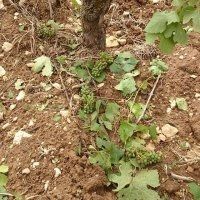
Here in the western Languedoc, much of the talk is about hail, the hail that on Sunday night wiped out some of the many vineyards between Carcassonne and Lézignan-Corbières, especially those between the little Minervois villages of La Redorte and Pépieux, just west of the memorably named Homps on the Canal du Midi. This is disastrous for anyone depending solely on viticulture for a living but at least summer hail is (so far) fairly uncommon in this part of France – although see this excellent article on the changing science of hail by Andrew Jefford for Decanter.com. Hail seems to be affecting Bordeaux vineyards increasingly, as just a month ago in the northern Médoc.
But nowhere has been more frequently and more disastrously ravaged by hail than the Côte de Beaune in Burgundy which has recently suffered its third drastic summer hailstorm in three years. Below is a report from Burgundy producer Mark Haisma on this worrying phenomenon and some of the consequences of which not all consumers are aware.
You have no doubt heard already that Burgundy has had another episode of hail.
What can be done about it and what will be done about it are two different things. The unfortunate truth is that there is not a lot that can be done. Burgundy has already invested in 'cloud seeding'. This is a practice where silver iodide, potassium iodide or dry ice (frozen carbon dioxide) are dispersed into potential hail-forming clouds by plane or land-based canon. The idea is to create rainfall before the formation of ice and therefore hail. It can also decrease the severity of the hail episode, in that the storm may last less time, produce less hail or even decrease the size of the hailstones.
The most recent episode on 28 June has caused terrible damage, especially in Beaune, Pommard and Volnay. The canon were used but we do not know whether it had an effect or not. I only trust that it lessened the storm. However that is little consolation to the growers who have lost a large percentage of their crop, again. We must remember this happened in the same areas last year.
Another option is netting. Netting is banned under AOC law and it takes years for that to change (you must remember this is French bureaucracy). To get all the growers working together to make this happen is a crazy thought – remember Burgundy is a patchwork of small/medium/large parcels of land, all owned by different people, some of whom don't even speak to each other.
And lastly and most significantly the netting would stop significant vital sun rays getting to the vines. That alone will stop this idea in its tracks. In parts of the world where sunshine is plentiful it would actually make for finer, more elegant wines, maybe not a bad idea. However side netting which would protect the fruit zone could be an option, but I'm not sure if that would be allowed or not. Its effects on sun exposure would be less. I still see other issues but it could still work. The unfortunate side effect is that it costs a lot of money so it may be viable for Premier Cru and Grand Cru vineyards, or if you were Domaine de la Romanée-Conti, but covering all the village vineyards really would start making things expensive. But I suppose better than losing everything.
Le goût de grêle
I wish the effects finished right there, a theoretical discussion on the pros and cons of hail prevention. However the after-effects are potentially huge and very real. Disease pressure will now increase, all the damaged berries can get mouldy and if they do not dry out or are not treated will spread to the rest of the bunch, causing further fruit loss.
Canes that have grown this year and should be the wood for next year could be damaged, along with the buds that have formed on those canes. This winter, if the vines are not carefully pruned and a lot of damaged canes are left, it could have an effect on fruit volumes in 2015.
The morale of growers takes a beating as well as the vines. Some of these guys have seen their work smashed over three consecutive years. Apart from the obvious financial pressure, they have to get out of bed and walk into vineyards that look completely devastated.
However, with all that done and dusted we are then going to have to make wine from those grapes. We have an expression called le goût de grêle, the taste of hail. One of the effects of hail is that the affected berries die and shrivel up. This is a good thing on one hand, mostly they fall off and do not affect the rest of the bunch, leaving the remainder of the bunch to mature as normal. However, these little, shrivelled-up guys don't always fall off, and if they are not sorted at the sorting table they will enter into the fermentation tank. This is when we potentially get this hail taste and unfortunately it doesn't take much affected fruit to cause this character.
In 2012 I dealt with it beautifully, pat on the back!
In 2013 I failed. My Volnay 2013 is affected with this horrid character. It's a nasty mouldy flavour that comes out on the back of the palate after swallowing. You can also pick it up on the nose: wet carpet, mouldy hay that's gone dry. It's not nice and it's really not great drinking. So unfortunately the results of hail in 2013 are still having an affect.
The dark side of Burgundy
Now here comes the rub.
Firstly here is how I work, for those new to my ramblings. I am a micro-négociant. I do not own any land. I source fruit from growers who work really hard and produce beautiful fruit. I have built some great relationships with these growers and I buy fruit from five or six growers each year. I now pick some of these parcels myself and I even do all the hand work in my vineyards in Santenay, Volnay and just-replanted Chassagne-Montrachet. I bring all this fruit to a winery I share with a local producer in Gevrey-Chambertin. Here I vinify all my wines. I cannot afford vines but I have managed to secure access to some beautiful parcels of vines. This is a common way to produce wine in Burgundy. Buy fruit and make it yourself, no problems with Mother Nature.
You will be all aware of the big négociant houses. However it is important to distinguish between certain types of négociant. There are some that are not overly fussed about quality or provenance. It's more about a name and quick turnover. In certain years they may produce wines of indifferent quality. This is part of the nightmare that is Burgundy. Look at a shelf full of Gevrey-Chambertin; what on earth do you choose? Unless you really know the area, well, it is very difficult. One needs to learn about certain producers and if you like them you need to stick with them, regardless of whether it's Grand Cru or AOC Bourgogne.
On the other hand, there is a band of smaller (and some bigger) négociants who are really making super wines. They may not own land but the wines are delicious. This is where I try to be.
Be warned that just because they say they are a Domaine, doesn't mean it's any better. There is rubbish at Domaine level also.
In Burgundy there is a massive bulk market working all around us. You can buy just about any kind of appellation if you are suitably connected and willing to pay the price. The bulk market is huge. You can buy fruit, finished wine – in bulk or in bottle – you can buy unfinished wine, anything. However, is it any good? Most of these sales are done by a courtier, the middle man. I am lucky, I have built up real relationships with the growers, I still work with my courtier but I can speak directly with the grower.
So now back to my dilemma. My Volnay 2013 is not fit for labelling under my label. My conscience says I should ditch it, however I can't afford to do that, so I will sell it back to the bulk market. I will get my money back but make no profit.
Unfortunately that wine will absolutely be bought. There is a major lack of Volnay, especially 2013. It will then be blended into another village Volnay and be lost. I hope they have a few tricks up their sleeve to sort the wine out; I am neither clever enough nor willing to try.
However, this story brings us back to the problem we face when we look at a shelf full of burgundy, which Volnay village 2013 should I buy? Can I be sure that Mark's crap has not been blended into one of these I am looking at?
So please learn about your producers, find the ones you like and stick with them.
Drinking - it's the point surely!
A lot of people have asked about when to drink or how long we should cellar my wines. I come from the school of 'if it's drinking, then drink it'.
Sometimes some wines go to bottle and they are just lovely, open wines that offer a lot of instant pleasure. Others need time. Unfortunately this is never the same for each person; or maybe that's a good thing. You see, my strawberry will never be your strawberry. I find it difficult to follow descriptions such as 'fruit bowls' and 'shots of spice', I really do. Often you will find a glazed look come over my eyes when the conversation gets too descriptive, although I understand we need to be able to communicate between us about what we see or taste and sometimes the use of those terms becomes necessary. Some people are extremely good at it, the best I have seen are not even professional, they are keen collectors who love wine. I take my hat off to them, but I am not one of them.
To describe one's own work is fraught with danger, best to seek out independent opinion.
What I feel about my wines should only be used as a guide, at the end of the day you will find when is right for you. I try not to use too many descriptors, I try and talk more about how a wine feels or behaves on the palate. And any description would be short.
A point on style
I sense my wines will always be more approachable and drinkable at younger ages. My winemaking has always sought to capture freshness and play on the aromatics of the grapes I work with. Power, structure, indefinite ageing, black colours are not my thing. I crave elegance, lift, verve, acidity, balance, poise - in a word nervosity, something slightly on edge, not quiet calm.
For me my wines are alive. We see the wines evolve from the raw juice to wine, we then watch as it develops. This is a cycle, it happens at certain times when predicted, others when it's good and ready. And each wine will be different. When it is young I feel it is more affected by the seasons. Wine when it goes through its first winter is a different creature in the following spring. To imagine that there is no effect when it has its first year in bottle is a mistake. It is still too recently linked to the cycle of the seasons and ground from which it grew.
The first winter in barrel, my wines close down. Then once in bottle they will close down again for their first winter in bottle. However, over the years this cycle becomes less pronounced, the wines shed this seasonal transformation and take on the life of bottled wine. This is what I call maturity, or maybe, simply put, drinkability! It is here where we all have our own opinion, and that is the beauty of wine.
What's drinking?
2009 I'm probably drinking too many of these at the moment, but they are lovely wines, ripe and forward, giving lots of pleasure.
2010 This is a classic vintage and will require some patience. My St-Romain is taut and fine. The reds are minerally and the tannins grippy.
2011 For me they have closed down. The Gevrey has become grumpy and even the Bourgogne is sulky. The Volnay, which was always a seductive creature capable of all manner of mischief in a glass has become surly and twisted. The bottle I had was left on the table after a glass and I came back to it a couple of days later. The twisted witch had left and was replaced by the delightful princess, I remember. So fear not, it's just that most of the 2011 is not drinking.
I feel 2012 will be far more approachable than both 2010 and 2011 when young, but will reward several years of bottle maturing. Assessing young wine before it's had a few months in bottle is hard; wine does a strange thing once it's bottled and it often surprises me. As usual the wines allow a brief glimpse of its future but will normally close down, I would say by the end of its first winter in bottle you could start to get the better part of drinking.


- 存取 297,050 条葡萄酒点评 & 16,151 篇文章
- 存取《牛津葡萄酒指南》及《世界葡萄酒地图集》
- Access askJancis, our AI wine assistant


Everything in “Member”, plus:
- Early access to the latest wine reviews, 48 hours in advance
- Early access to the latest articles, 48 hours in advance
- 存取 297,050 条葡萄酒点评 & 16,151 篇文章
- 存取《牛津葡萄酒指南》及《世界葡萄酒地图集》
- Access askJancis, our AI wine assistant
- 提前 48 小时获取最新葡萄酒点评与文章
- 可将最多 25 条葡萄酒点评与评分 用于市场宣传(商业用途)
Everything in “Professional”, plus:
- 可将最多 250 条葡萄酒点评与评分 用于市场宣传(商业用途)
- Access to submit wines for review
- Offer memberships to your employees and manage them from a single place
- API access available for an additional fee
More Free for all




More from JancisRobinson.com







