See full tasting notes and scores for all 58 wines on Purple pages.
Just as I was about to set off for the biggest blind tasting ever of superior English sparkling wine against its competition, I was rung by an old friend, very excited at being taken on by hedge funder Mark Driver, a Sussex neighbour who intends to plant 250 acres of chalky downland with Pinot and Chardonnay over the next few years and produce around 800,000 bottles of English fizz from the estate he has called Rathfinny and describes as ‘the sunniest vineyard on the South Downs’. He has already recruited a fulltime viticulturist, from Hawkes Bay in New Zealand.
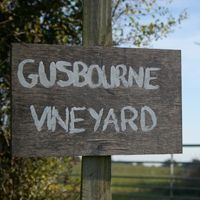
Not far away at Nyetimber, the estate that put England’s answer to champagne on the map, Dutchman Eric Hereema, the latest in a series of owners, has also been planting furiously and aims to have 350 acres of vineyard dedicated to fizz in production before long. Nearby RidgeView, whose many wines have recently been winning more plaudits than Nyetimber, has access to nearly 90 acres of vines, so many that RidgeView now produces enough wine to supply own-label bottlings for the likes of Laithwaites and Marks & Spencer. Gusbourne is another ambitious estate in this blessed corner of Sussex, started recently by a South African orthopaedic surgeon, Andrew Weeber, with 50 acres planted so far. Meanwhile Hambledon, Major-General Sir Guy Salisbury-Jones’s vineyard in Hampshire that pioneered modern English viticulture, is being expanded with the aim of producing 750,000 bottles a year.
Even longstanding luminaries in the established world of wine such as wine writer Steven Spurrier and Christian Seely, head of AXA’s many wine interests in France and further afield in mainland Europe, have recently invested in the future of English sparkling wine.
All of these are trying to make as close a copy as possible of the champagne recipe, growing the champagne grapes Pinots Noir and Meunier and Chardonnay, pressing the grapes particularly gently to produce delicate still base wines which are blended and then given a second fermentation in bottle to produce the bubbles and extra flavour, just as is done in the cellars of Rheims and Epernay in France’s Champagne region.
These relative newcomers are systematically changing the profile of the vine varieties grown in England, from the hybrids and crossings deliberately bred to maximise ripeness in cool climates, the likes of Seyval Blanc and Reichensteiner to the champagne grapes. The million dollar question is whether the market can take such a dramatic increase in the quantity of English fizz produced – particularly since Sussex downland is not cheap, start-up costs for any wine producer are high, and English vignerons pay exactly the same duties as are levied on wines imported from wine regions established centuries ago. The price of English sparkling wine can vary from around £13 to almost £40 a bottle. Cava and Prosecco are both popular and cheaper, so it will have to deliver more pleasure if it is to thrive commercially.
Master of Wine, author and consultant specialising in English wine Stephen Skelton organised the recent tasting designed to test award-winning English sparkling wines, those that had a track record therefore as opposed to the allcomers tasted in the UK Vineyards Association annual competition, blind against imported wines retailing at around the same price. Of the 58 wines we tasted blind, 52 were English, four were from Champagne (the market leader Moët & Chandon Brut Imperial and three own-label wines from Sainsbury’s) plus Codorniu Cava from Spain and Cloudy Bay’s Pelorus from New Zealand.
The first thing to say is that it was pretty obvious which were the champagnes – although we didn’t know how many there were. About the Moët, I wrote ‘Not a thrilling champagne but a very competent one. By which I mean that the acidity is not out of kilter.’ The thing that distinguished the four champagnes was that they tended to be a bit more complex and less obviously tart than the English wines. I don’t think that this was just because Champagne is a little further south and therefore warmer than England (especially in recent vintages). I suspect that the time the wines spend on the lees of the second fermentation is a factor. In the Champagne region there are strict rules about the minimum period of such ageing, because contact between maturing wine and the dead yeast cells tends to encourage interesting flavours caused by yeast autolysis that can offset the naturally high acidity of a fine sparkling wine. Such nuances were rarer in the English fizzes we tasted.
When I raised this point with Stephen Skelton after the tasting, he reminded me that some early vintages of Nyetimber may have suffered from having spent too long on the lees, which may have turned English vignerons against the practice. He also pointed out just how much capital is tied up by giving wines decent bottle ageing and suggested that this could be just one cost too many for a nascent wine enterprise. But I wonder whether it is not asking a bit too much of patriotism to ask Brits to pay £25 for a bottle of the native ferment when it is so much more callow than a special offer champagne at the same price?
That said, there were certainly some very winning English wines and the best were well made with great vivacity, verging in some cases on tartness. In fact my favourite wine of all, the only one to which I gave a score of 17 out of 20, was English and a maiden vintage at that, Gusbourne Brut Reserve 2006.(Quite coincidentally, this was the vineyard from which Richard Hemming sent us his Year in the vines reports.) On the other hand, I was not at all impressed blind by Gusbourne’s 2006 all-Chardonnay Blanc de Blancs. Gusbourne’s grapes are vinified at RidgeView whose own wines performed particularly well, winning three out of the first six places once the scores of all seven of us tasters had been averaged.
Five of the eight wines from RidgeView in the tasting, and all four champagnes, were included in the 15 wines I scored 16 or above, while I gave both the Cava and the New Zealand 15.5.
It was generally obvious when grapes other than the classic champagne grapes had been used but I did think that Will Davenport’s organic Limney Estate Blanc de Blancs 2005, made entirely from Germanic Reichensteiner grapes and costing only about £16.50, could have been a particularly zesty Blanc de Blancs champagne.
All in all, I think the best English sparkling wines, the ones listed on the previous page, acquitted themselves well, but the lesser ones did nothing at all for our national pride, especially considering their price.
These were my favourite English wines in the recent blind tasting with approximate retail prices:
Gusbourne Brut Reserve 2006 £22
Chapel Down, Blanc de Blancs 2007 £25
Davenport, Limney Estate Blanc de Blancs 2005 £16.50
Ridgeview, Grosvenor Blanc de Blancs 2007 £22
Ridgeview, Laithwaites South Ridge, Cuvée Merret 2007 £20
See full tasting notes and scores for all 58 wines on Purple pages.