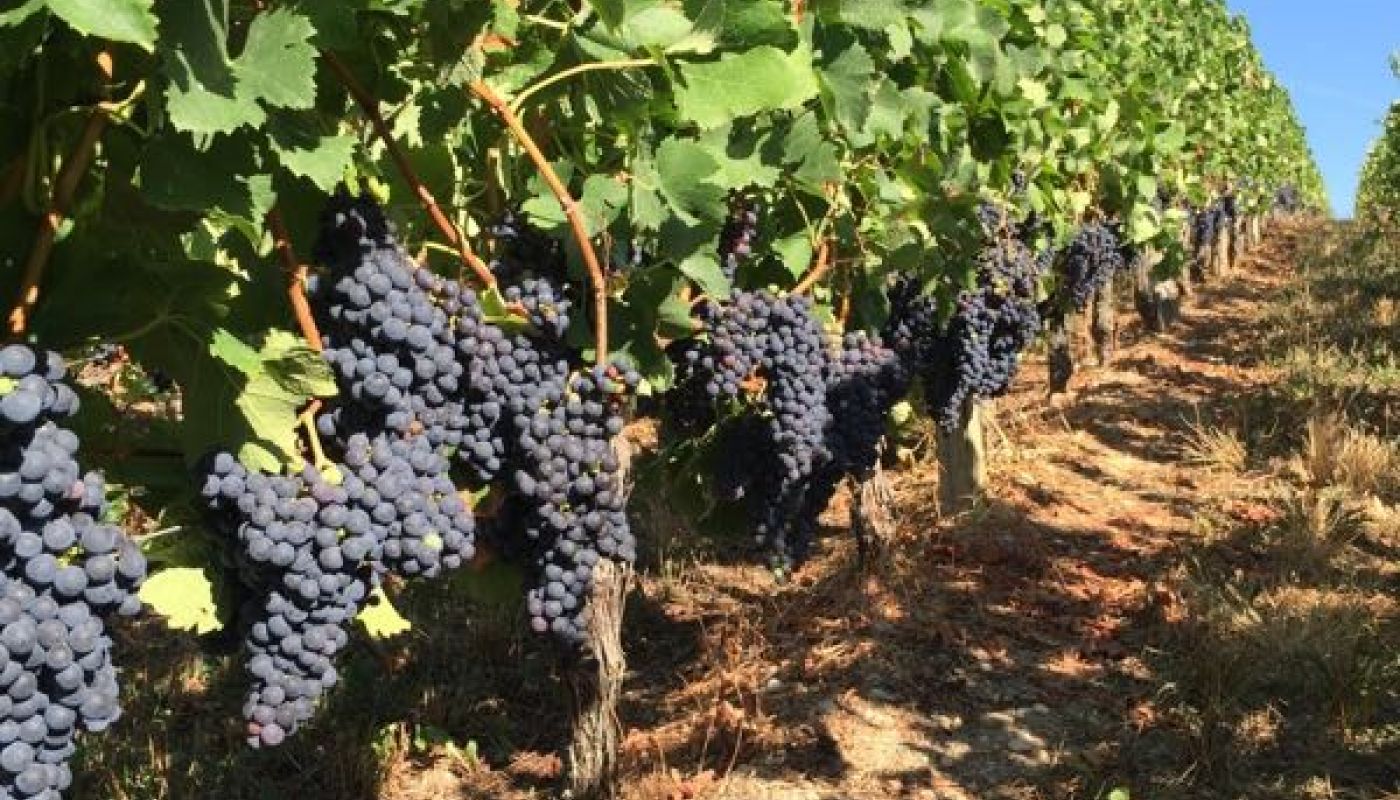
The wine trade and press descend on Bordeaux next week for the official en primeur tastings of the latest vintage. There’s little doubt, to my mind, that they’ll find a great many exciting wines, both in the Royal Circle and in the more affordable stalls. At the top end, the wines will not be cheap when prices emerge later on but there’ll be scores of others that offer terrific bang for your buck – or even for your pound. Here, as a precursor to these tastings of young wines from barrel, is a graphical look at how the weather made the vintage.
Here’s how the vintage panned out. I’ll start with a few graphs and tables, and then show a few photos to give you an idea of what was happening in the vineyard.
There was plenty of rain between January and March after a dry end to 2015. Water reserves were further bolstered by a damp spring but, as you can see, the second quarter was not abnormally wet compared with the 30 year average. I’ve used six regions here that are spread out across Bordeaux – three on the left bank and three on the right bank and Entre-Deux-Mers.

The strange thing was that the flowering in early June – especially on the Merlot – was remarkably successful, given the up and down weather, and this set the scene for the biggest crop per hectare since 2004.
The summer was fairly hot, as you can see below, yet extraordinarily dry. Many areas saw just a tenth of the normal rainfall during a 12-week stretch from (the infamous date of) 23 June to 13 September. It was seriously hot at times during August but note how the night-time temperatures were much cooler. This was hugely beneficial to the evolution of the grapes.
Overall, I can’t remember a better summer than 2016 for holidaymakers.

The heavy rain on the night of 13 September was most welcome, just before the white harvest in the main, and in good time to refresh the reds.
Rain on 13 and on 30 September accounted for most of the September rain – much better than multiple days of drizzle. The amount of rain varied from one area to another.
2016 was a ’wet spring, dry summer vintage’ but I’d add another critical chapter: the harvest phase saw much cooler temperatures after 13 September (see above) with prolonged dry spells and just the occasional bout of helpful rain. I include within this phase the really important (and often anxious) run up to the harvest for the reds, as well as the picking itself.
The dry whites were harvested in September in mostly fine weather, with good yields. The Merlot harvest started in the last week of September with the most activity during the first week of October – and then later still. Cabernet Sauvignon began in the first week of October, with many estates waiting until the week of the 10th. There was virtually no rot on the red grapes for the third year in succession.
Here’s a comparison of rainfall figures with previous vintages. I’ve highlighted other years when the July and August were dry too – 2005, 2010 and 2012 – but none was as dry as 2016.


What of the wines?
The primeur tastings should reveal no shortage of exciting wines at all levels.
2016 should be right up there with the very best. In so many ways, the vintage was quite unlike 2005 and 2010 but these were also years with warm, dry summers and fine weather during the harvest.
The flowering in 2016 was certainly the best since 2005, especially for Merlot, and this gives the wines more roundness, I feel.
There won’t be many wines with a feeble colour – but more than that, they should have opaqueness, intensity and a lovely ’robe’. Simply the way that great red wine looks in the glass.
The quality red wines should have gorgeous, luscious fruit, ripe tannins and a lovely fluidity. The conditions in the build up to the harvest will have given the wines the freshness that the Bordelais really look for in their reds. Acidity will be reasonably high – in a good way – but everything should be in balance.
The alcohol levels should be about right. Many people here feel that while 2010 is the greatest vintage to date, just trumping 2009, the alcohol can be pretty high on many wines. Remember that Merlot, all other things being equal, can be a degree or so higher in alcohol than for the Cabernet Sauvignon. The late, great Paul Pontallier of Château Margaux told me that he could have Cabernet Sauvignon at 12.5% from some terroirs and Merlot in other plots at 14.5% on the same day.
Great colour, heady aromas, lovely ripe fruit, good length and intensity, refreshing acidity, supple fine-knit tannins, a lovely aftertaste and not too much alcohol. And above all, balance. Oh, and approachable in the not too distant future yet with great ageing potential. I don’t think that’s asking too much…
Quantity as well as quality
Overall, the crop was the largest for a decade and the highest yield per hectare since 2004. I covered this in some detail in Bordeaux 2016 – the largest harvest since 2006.
It’s perhaps worth reiterating, prior to the primeur campaign, that by far the bulk of the production comes from less glamorous appellations than the likes of Margaux, Pauillac, St-Julien and Pomerol.

Still, the 2016 yields in the top appellations were strong. These seven notable appellations account for just 10% of the total area, and by no means all of the wines from these areas are sold en primeur.

Some images of the growing season
It can be useful to see what was happening in the vineyards at specific stages. You can see, for example, that the grapes are barely formed in June and that red varieties are still green at the end of July.
Only a few Bordeaux vineyards were hit by the late April frosts that so drastically reduced yields elsewhere in France. This was 29 April.

Below, the same vines on the same date – 23 May – but four very different years: top left 2016 (normal), top right 2013 (very late), bottom left 2011 (early), bottom right 2009 (after May hailstorm).

The flowering in early June was remarkably successful, given that the weather was mixed. The photo below was taken in St-Julien on 13 June.

Many of the more ambitious vineyards green harvested their heavily laden Merlot plots. The next photo was taken in Pauillac on 28 July.

Veraison in August, when the grapes changed colour, was protracted after weeks of no rain, as shown below in Margaux, 3 August.

Despite the drought, the Merlot was plentiful and in good shape at the end of the summer. Here are our vines at Bauduc, 31 August:

Young vines with shallow roots on dry, porous soils suffered with the lack of rain. Pomerol, 21 August:

The heavy rain on the night of 13 September, pictured below, was most welcome, just before the white harvest in the main, and in time to refresh the reds.

The dry whites were harvested in September in mostly fine weather, with good yields.

The Merlot harvest was in full swing during the first week of October. Pomerol, 4 October:

The Cabernet Sauvignon harvest began in the first week of October, with many estates waiting until the week of the 10th. Pauillac, 7 October:

There was virtually no rot on the red grapes for the third year in a row, even as late as these Cabernet Sauvignon on 21 October: