24 May 2017 Simon Reilly draws the phenomenon of state controls on drinking to our attention.
On a recent trip to Oslo it occurred to me that over a three-day break I drank the same Riesling by the glass in three of the six restaurants I dined in. This is not the sort of thing I would usually do. Whether I am drinking in a restaurant or at home, I actively seek to try as many different wines as I can. Not only does it make articles such as this a lot less dull and repetitive, but the variety that wine offers is what I love about it. Life's too short to drink the same stuff day in, day out.
Fortunately the wine in question, Weingut Wittmann's 2015 Estate Trocken Riesling, was a food-friendly delight, so on this occasion it was no great heartache. The trip was to celebrate my wife's birthday so whinging about the lack of choice on Oslo’s wine lists could wait until I got back to my laptop.
The reason for this lack of choice is the alcohol laws in Norway requiring that any sale of beverages of more than 4.75% alcohol be made through the state-owned Vinmonopolet (or wine monopoly) chain of shops or consumed in licensed restaurants, bars and hotels and other hostelries. It is heavily taxed to keep the cost high in an effort to restrict consumption.
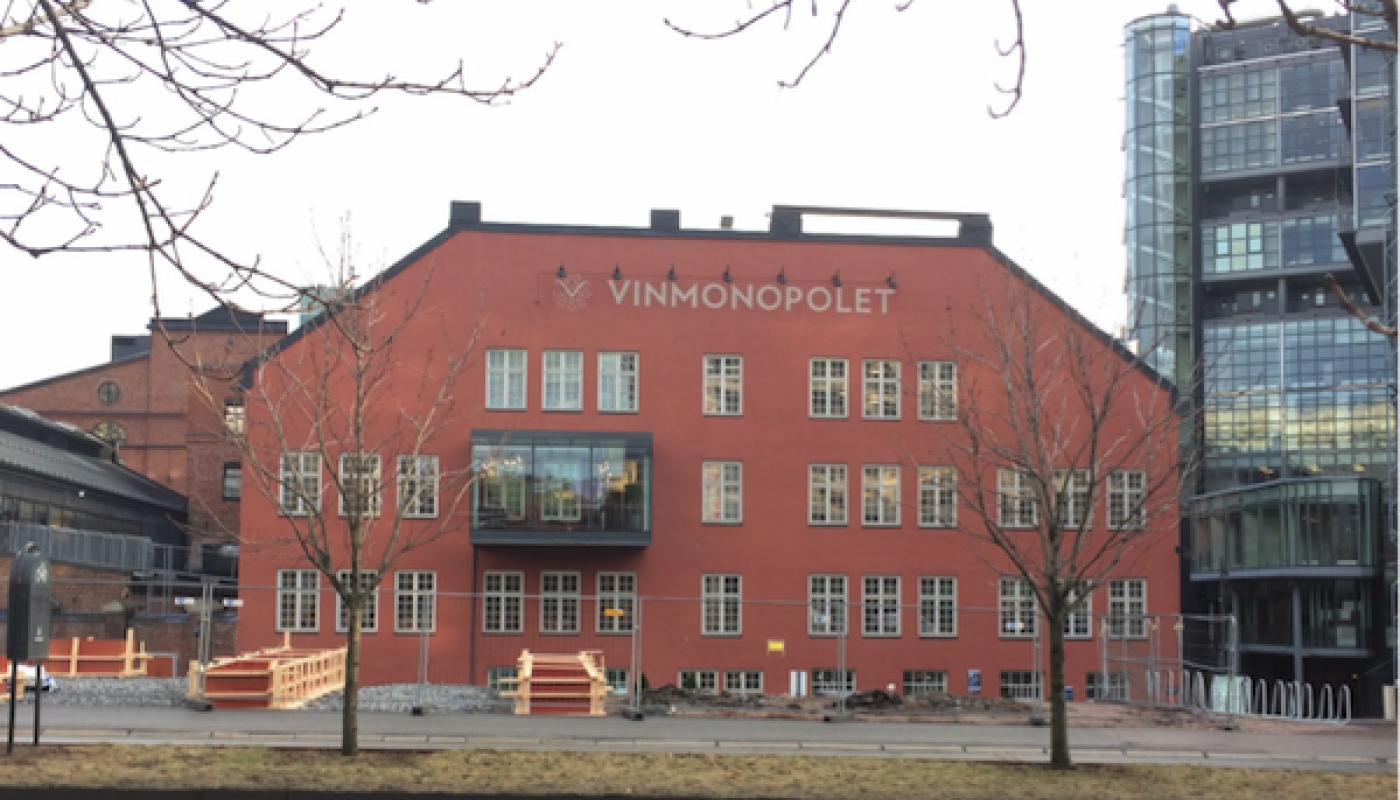
This practice dates back to the Norwegian referendum of 1921 when the people of Norway voted for alcohol to be banned, in an effort to curb the growing alcohol problems of the time. The following year, the government created the Vinmonopolet (new headquarters pictured here), which controlled alcohol sales and priced them at a level which encouraged restraint. The Alcohol Act was created in 1927. It has been modified a couple of times since then but is still largely in place.
The effect I saw of the Alcohol Act was a relatively limited range of wines at very high prices. However, this was most noticeable at the lower end of the wine list. I don’t think I saw a glass of wine available for under £10, with most prices starting somewhere between £10 and £13. The same applied to beer, typically starting at about £10 for a pint of beer, with stronger craft beer at about £13 and more. Even a bottle of Peroni was £9 in our hotel bar.
The limited range of wines available is a result of the controls in place for new wines imported into Norway. There is a relatively complex tender process run by the Vinmonopolet for new wines to be accepted into the country and the state-run monopoly ultimately decides which wines may be sold into the country, based on a set of quality criteria that involve a blind tasting. They are also very much in favour of organic production in selecting the wines for their portfolio.
Concealed Wines, one of the Norwegian wine importers I contacted, estimates that there are about 18,000 lines in total, with about 300 new lines introduced each year. This is more than the neighbouring Swedish state monopoly, which imports higher volumes of a more limited product range. So despite the relatively limited choice (compared with more open markets such as the UK), the Vinmonopolet seems to offer more choice than some other state monopolies. This has led to a significant increase in interest in and sales of wine in Norway over the last 20 years, particularly among younger drinkers.
How did it affect me?
The cost of alcohol in Oslo definitely curbed my consumption over the few days we were there. My wife and I estimated that we drank about 30-40% less than if we'd been in London or Paris. If we popped into a bar for a pint after a day's sightseeing, it was one pint, not two or three. With lunch it was one glass of wine each, rather than sharing a bottle, and we passed on the pre-dinner glass of fizz.
All this restraint seemed to make us feel a bit better about ourselves on the flight home and a lot fresher in the office on Monday morning. As well as cutting down volumes, we sought out the very best drinks possible, whether it be wine or a local craft beer. We made sure each drink counted.
That is when it dawned on me that the Alcohol Act didn’t punish every wine drinker (there is no doubting it does punish beer drinkers – £13 a pint, come on!). Those seeking a quality glass are not much worse off than if they were in London or Paris. It is not a progressive tax like VAT, but works like a flat-rate duty, based on the amount of alcohol in the wine. Therefore as you step up in the quality of wine, the fixed alcohol duty becomes less and less material. If you’re buying a case of Lafite, you probably don’t worry too much about the duty…
The bars and restaurants in Oslo seem to have worked this out, so although you are paying more for the cheapest wine on the list, it is generally of a much higher quality than the cheapest wine on the list in the UK. If you take the Weingut Wittmann as an example, Winebarn are the UK stockist of this wine, selling it for £15.15 per bottle. As a rough rule of thumb most restaurants in London sell wine at about three to four times the retail price (a quick random check of this assumption shows Carluccio’s Covent Garden selling Planeta’s La Segreta at £22.50 per bottle, compared with a retail price of £6.45 at Italvinus, which is a multiple of 3.5).
If you were to use a three to four multiple to give an equivalent by-the-glass price, the Wittmann would cost somewhere between £9-12 per glass (based on the ubiquitous 150-ml pours we had in Oslo) if bought in London, so pretty much the same as I paid in Oslo. The Norwegian system may force drinkers to spend more, but if bars and restaurants play it right you should be drinking wines of better quality than you'd expect at the bottom of the list.
What about other countries?
There is certainly momentum towards the introduction of a similar structure in other countries. In 2012 in an effort to curb alcohol-related illnesses and deaths, the Scottish Parliament passed a bill to set a minimum retail price of 50p (60 euro cents/65 US cents) for a unit of alcohol. This would mean the minimum price for a bottle of wine in Scotland would be £4.50. The bill has not been implemented to date due to a legal challenge by the Scotch Whisky Association. This was overturned in October 2016 by the Court of Session but is expected to go to the Supreme Court before it is resolved. [The challenge was rejected in November 2017 – see the note at the top of this article.] There have also been claims from wine-producing countries in Europe that it contravenes EU trade laws.
Despite these appeals, it appears to be gathering momentum in other countries. In 2015, the Welsh Government published its own proposals for a minimum charge of 50p per unit of alcohol. Elsewhere in Europe, other countries have made changes to drinking laws in an effort to curb alcohol problems. Examples include Portugal, where the legal drinking age was increased from 16 to 18 in 2015, and the Netherlands, where the drinking age was also increased from 16 to 18 in 2014. Last year the UK government re-set the recommended maximum alcohol consumption levels from 21 to 7 units per week. Surely it is only a matter of time before a stronger line is taken and a Norwegian or Scottish model is applied to the rest of the UK and further afield.
I remember the outcry when the ban on smoking in public places came into UK law in 2006, but ten years on I can't imagine going to a bar where people are smoking. More importantly I hardly know anyone who smokes anymore, so the benefits to the health of the nation are undeniable.
If Norwegian- or Scottish-style legislation were to come into force, aside from the health benefits, I think it could be positive for wine drinkers. Any such move would be aimed primarily at cutting out stronger drinks and spirits but from a wine perspective, surely it would put more focus on quality, thus raising the quality of wines at lower price points. That must be a good thing for wine drinkers. And if it leads to us drinking a glass or two less, then that could be a good thing too.